
How to Increase Breast Milk Supply Naturally - 7 Proven Methods
Quick Answer: Yes, you can naturally increase your breast milk supply. The key is frequent feeding/pumping, proper nutrition, and hydration. Most mothers produce enough milk - low supply is often a perception issue, not reality.
Is Your Milk Supply Actually Low?
Before trying to increase supply, let’s check if you actually have low supply. Many mothers worry unnecessarily.
Signs your supply is FINE:
-
Baby is gaining weight steadily (check with your pediatrician)
-
6+ wet diapers per day after day 4
-
Baby seems satisfied after feeds
-
You hear swallowing during feeding Signs you may need to boost supply:
-
Baby is not gaining weight as expected
-
Fewer than 6 wet diapers daily
-
Baby seems hungry immediately after long feeds
-
Very little output when pumping (though pumping output varies)
Reassurance: Most mothers produce enough milk. If baby is gaining weight and having adequate wet diapers, your supply is likely fine!
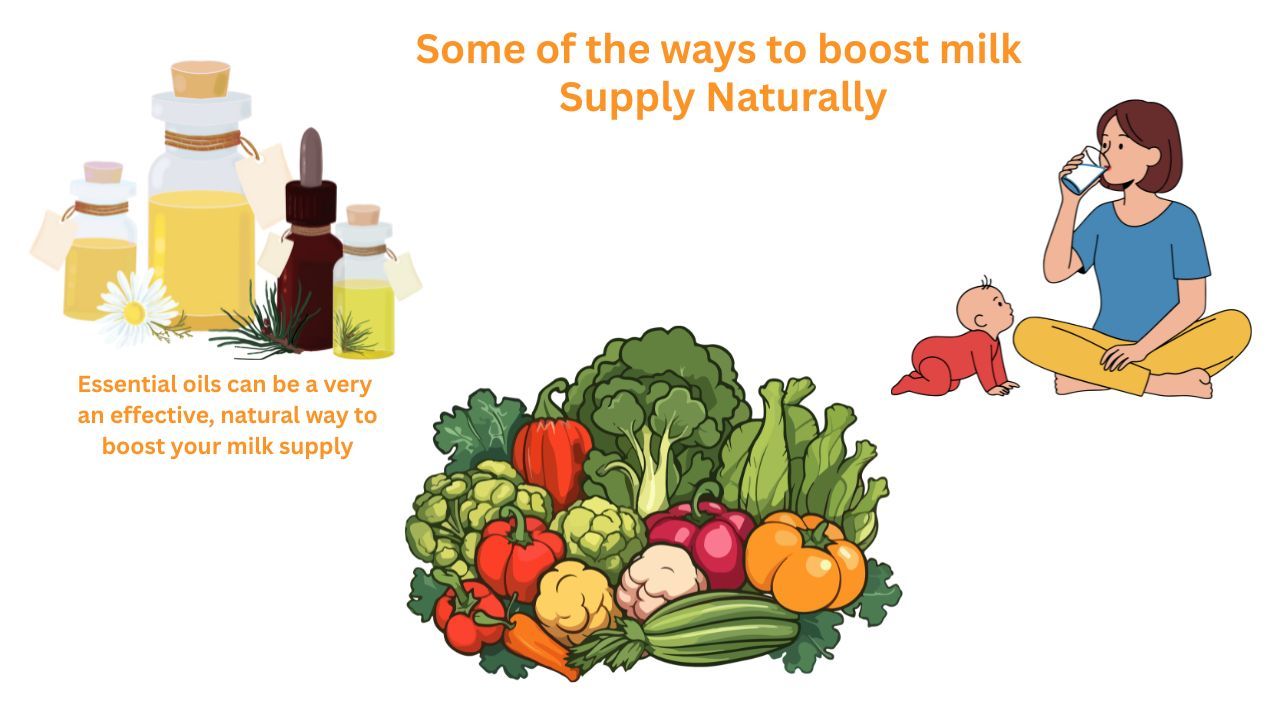
7 Natural Ways to Increase Breast Milk Supply
1. Feed More Frequently (Demand = Supply)
Breast milk works on supply and demand. The more you empty your breasts, the more milk you’ll produce.
What to do:
- Feed every 2-3 hours in the early weeks
- Don’t watch the clock - feed on demand
- Offer both breasts at each feeding
- Allow baby to finish one breast before switching For working mothers: Pump at the same times your baby would normally feed to maintain supply.
2. Power Pumping (Pump Badhane Ka Tarika)
Power pumping mimics cluster feeding and signals your body to produce more milk.
How to power pump (do once daily for 3-5 days):
- Pump for 20 minutes
- Rest for 10 minutes
- Pump for 10 minutes
- Rest for 10 minutes
- Pump for 10 minutes Best time: Evening hours when prolactin levels are naturally higher.
3. Indian Galactagogues (Doodh Badhane Wale Foods)
These traditional Indian foods have been used for generations to boost milk supply:
| Food | How to Use | Notes |
|---|---|---|
| Methi (Fenugreek) | 1 tsp seeds in water overnight, drink in morning | Most effective galactagogue |
| Jeera (Cumin) | Add to dal, buttermilk | Aids digestion too |
| Saunf (Fennel) | Saunf water or in food | Reduces colic in baby too |
| Ajwain | In parathas, laddoos | Good for post-delivery gas |
| Dalia (Broken wheat) | As porridge | Rich in iron |
| Dry fruits | Especially almonds (badaam) | 5-6 soaked almonds daily |
| Desi ghee | 1-2 tsp in food | Provides healthy calories |
Traditional recipes:
- Methi laddoo
- Gond ke laddoo (with edible gum)
- Panjiri
4. Stay Hydrated (Paani Peete Raho)
Dehydration directly affects milk supply.
Daily target: 3-4 liters of fluids
Good options:
- Plain water
- Milk
- Coconut water (nariyal paani)
- Buttermilk (chaach)
- Soups and dal Tip: Keep a water bottle near your feeding spot. Drink a glass every time you feed.
5. Eat Enough Calories
Breastfeeding burns 500+ extra calories daily. You need to eat more, not diet.
Daily requirements for breastfeeding mothers:
-
Calories: 2,300-2,500
-
Protein: 65-70g
-
Include: whole grains, vegetables, fruits, protein Foods to include:
-
Oats (jaee) - great for milk supply
-
Green leafy vegetables (palak, methi)
-
Lentils and dals
-
Eggs (if you eat them)
-
Fish (helps baby’s brain development too)
6. Rest and Reduce Stress
Stress hormones can interfere with milk production.
Tips:
- Sleep when baby sleeps (this is real advice, not just a saying)
- Accept help from family
- Practice deep breathing
- Skin-to-skin contact with baby boosts oxytocin and milk flow
7. Proper Latch and Positioning
Even with good supply, poor latch means baby can’t extract milk effectively.
Signs of good latch:
- Baby’s mouth covers most of areola, not just nipple
- Lips are flanged outward
- You hear swallowing
- No pain (after initial latch) If latch is painful: Consult a lactation expert. Babynama offers lactation consultations.
What to Avoid (Milk Kam Karne Wali Cheezein)
These can decrease milk supply:
- Peppermint (pudina) - occasional use is fine, avoid large quantities
- Sage (salvia) - avoid completely
- Cabbage leaves - used to DRY up supply, avoid
- Alcohol - wait 2-3 hours after drinking before feeding
- Smoking - reduces supply and affects milk quality
- Birth control pills - some types reduce supply, ask your doctor
When Will I See Results?
- Power pumping: 2-3 days
- Galactagogues: 3-5 days
- Increased feeding frequency: 1-2 days
Important: If you’ve tried these methods for 1-2 weeks with no improvement, consult a lactation specialist or your pediatrician. Sometimes underlying issues (thyroid, retained placenta, PCOS) need medical attention.
Frequently Asked Questions
Q: How do I know if baby is getting enough milk?
A: Track wet diapers (6+ daily after day 4) and weight gain. If baby is gaining weight steadily and producing wet diapers, your supply is adequate.
Q: Can I take medication to increase milk supply?
A: Medications like Domperidone are sometimes prescribed, but only after natural methods fail. Always consult your doctor - don’t self-medicate.
Q: Is it normal for breasts to feel soft?
A: Yes! After 6-8 weeks, breasts regulate and may feel softer. This doesn’t mean low supply - your body has learned to produce the right amount.
Q: My baby wants to feed constantly. Does that mean low supply?
A: Not necessarily. Cluster feeding (frequent feeding for a few hours) is normal, especially in the evenings and during growth spurts. It’s actually helping BUILD your supply.
Q: Pump se kam doodh aa raha hai - is my supply low?
A: Pump output doesn’t equal actual supply. Many mothers with great supply pump very little. Your baby is much more efficient than a pump.
Q: Can I breastfeed if I’m sick?
A: Usually yes! Your milk will contain antibodies that protect your baby. Check with your doctor about any medications you’re taking.
When to Get Professional Help
Consult a lactation expert if:
- Baby is not gaining weight
- Painful breastfeeding persists beyond 1-2 weeks
- Cracked, bleeding nipples
- You suspect tongue tie or lip tie
- Baby refuses breast consistently
- Signs of mastitis (fever, red painful lump)
This article was medically reviewed by pediatricians at Babynama. Last updated: January 2026
Need personalized help? Book a lactation consultation with our experts on Babynama.
Need personalized guidance? Book a consultation with our pediatricians or explore our Care Plans for 24/7 expert support!
Need Expert Breastfeeding Support?
Get personalized guidance from certified lactation consultants.
Explore Breastfeeding Program