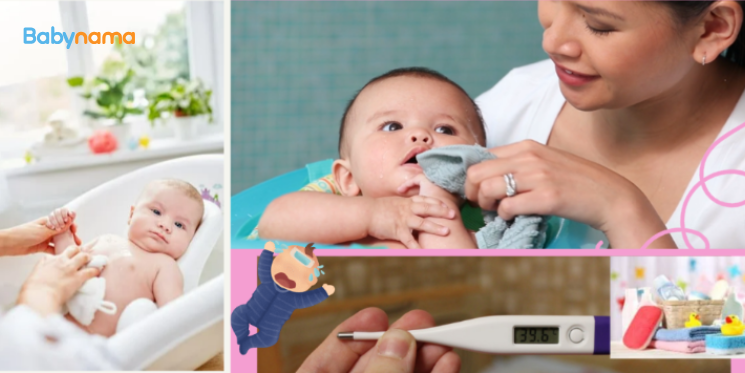
Quick Answer: Should I Give Sponge Bath for Fever?
The mainstay of fever care is paracetamol (or ibuprofen) for comfort, plus keeping your child well hydrated. Tepid sponging (gungune paani se sponge) is optional — only for a very distressed child with a very high fever. It is not more effective than medicine, and many children dislike it, so stop if it distresses your child. If you do sponge, do it about 30 minutes after a dose of medicine that was already due, and never use cold water.
A note on the tradition: Many Indian grandmothers have sponged children for generations. It is a comfort measure, not a cure — guidelines (NICE NG143) do not recommend it as a routine treatment, and studies show it works less well than medicine. The goal of fever care is your child’s comfort, not chasing the number down.
When to Give Sponge Bath for Fever
| Fever Level | Sponge Bath? | Action |
|---|---|---|
| Below 100.4°F (38°C) | No | Usually no medicine needed; keep hydrated, watch how your child looks |
| 100.4-102°F (38-38.9°C) | Not needed | Give paracetamol only if your child is uncomfortable; monitor |
| 102-103°F (38.9-39.4°C) | Optional | Treat for comfort; sponge only if a distressed child finds it soothing |
| Above 103°F (39.4°C) | Optional | Treat for comfort and hydrate; sponge is optional, stop if it distresses the child |
| Above 104°F (40°C) | — | Seek urgent medical care now, regardless of how the fever responds |
How your child looks and behaves matters more than the number. A child who looks unwell, drowsy or floppy between fever spikes needs to be seen by a doctor whatever the thermometer says. If you do sponge, do it about 30 minutes after a dose of medicine that was already due — never give an extra dose just to sponge.
Step-by-Step Guide: How to Give Sponge Bath for Fever
What You’ll Need
- Lukewarm water (gunguna paani) - NOT cold
- Soft cotton cloth or sponge
- Large towel
- Light cotton clothes for after
- Thermometer
Step 1: Prepare the Water
- Fill a basin with lukewarm water (same temperature as comfortable bath water)
- Test with your elbow or inner wrist - should feel neutral, not cold or hot
- Water temperature: Around 85-90°F (29-32°C)
- NEVER use cold water, ice, or alcohol
Step 2: Undress Your Child
- Remove all clothing except diaper/underwear
- Lay child on a towel on a flat surface
- Keep room warm and free from drafts
Step 3: Start Sponging
- Dip cloth in lukewarm water, wring lightly
- Gently wipe these areas (in order):
- Wipe the whole body gently with the lukewarm cloth — forehead and face, neck, arms, chest and back, legs and feet
- Keep re-wetting the cloth as it warms up
- Stop if the child shivers or is distressed
Step 4: Watch for Shivering
- STOP immediately if child starts shivering (kaanpna)
- Shivering means body is trying to generate more heat = fever will increase
- Cover child and try again in 15-20 minutes with slightly warmer water
Step 5: Duration
- Continue for 15-20 minutes
- For babies: 10-15 minutes maximum
- Don’t let child get too cold
Step 6: After Sponging
- Pat dry gently (don’t rub vigorously)
- Dress in light, loose cotton clothes
- Check temperature after 30 minutes
Why Sponge Bath Works for Fever
When lukewarm water evaporates from your child’s skin, it takes a little heat with it (evaporative cooling), which can feel soothing. Remember this is a comfort measure only — it does not treat the infection causing the fever, and it works less well than medicine.
Why NOT cold water?
Cold water causes blood vessels to constrict (become narrow), which:
- Traps heat inside the body
- Causes shivering (body generates MORE heat)
- Can actually INCREASE temperature
- Is uncomfortable and distressing for the child
Fever Medicine: How to Dose Paracetamol Safely
Paracetamol is dosed by your baby’s weight, not age: 15 mg/kg per dose, no more often than every 4–6 hours, maximum 4 doses (60 mg/kg) in 24 hours. Syrup strengths differ — Calpol/Crocin come as 120 mg/5 ml and 250 mg/5 ml, so always check the bottle. Do not give to a baby under 3 months without a doctor seeing them first. Confirm the exact mL with your pediatrician.
⚠️ Paracetamol safety: one dose every 4–6 hours, MAXIMUM 4 doses in 24 hours. Do not give an extra dose just so you can sponge — only sponge within the cover of a dose that was already due. Underdosing leaves fever untreated; overdosing can damage the liver. When in doubt, call your pediatrician.
Timing: Give the due dose of medicine, wait about 30 minutes, then sponge if needed. This lets the medicine start working.
Common Mistakes to Avoid
1. Using Cold Water or Ice
Never use cold water thinking it will cool faster. It does the opposite!
2. Treating the Number Instead of the Child
Fever care is about comfort, not chasing the thermometer down. Paracetamol for comfort and good hydration are the mainstay; sponging is an optional extra. Never give an extra dose of medicine just so you can sponge.
3. Sponging Immediately After Medicine
Wait 30 minutes. Let the medicine start working first.
4. Continuing When Child Shivers
Stop immediately if child shivers. Shivering increases body heat.
5. Adding Alcohol to Water
Old practice - DANGEROUS! Alcohol can be absorbed through skin and cause toxicity.
6. Keeping Child in Wet Clothes
Dry the child properly after sponging. Wet clothes in AC/fan can cause more problems.
7. Sponging for Low-Grade Fever
Not needed for fever below 102°F. Save it for high fevers.
When to Rush to Doctor
⚠️ In a baby under 3 months, ANY fever of 100.4°F (38°C) or higher is a medical emergency — see a doctor the same day, even at night. Do not give paracetamol and wait. This applies even after a vaccine.
Emergency signs during fever — seek urgent care now:
- Fever above 104°F (40°C) — seek urgent care regardless of how it responds to medicine
- Baby under 3 months with any fever
- Febrile seizure (fits/convulsions)
- Child is limp, unresponsive, or extremely drowsy
- Difficulty breathing
- Rash that doesn’t fade when pressed
- No wet diapers for 6+ hours
- Continuous vomiting
- Stiff neck
🚨 Call 112 (national emergency) or 108 (ambulance), or go straight to the nearest hospital, if you see: difficulty or noisy breathing; swelling of the face, lips or tongue; widespread hives with vomiting; pale, grey or blue skin; floppiness or unresponsiveness; or a seizure. If an adrenaline auto-injector has been prescribed, use it first, then go. Do not wait for a clinic appointment.
Consult doctor if:
- Fever persists beyond 3 days despite treatment
- Fever keeps returning after normal periods
- Child refuses to drink fluids
- You’re unsure about the cause of fever
Sponge Bath for Newborns (0-3 Months)
IMPORTANT: For babies under 3 months, ANY fever (100.4°F or above) is an emergency. Go to hospital immediately.
However, if you need to cool baby while getting ready to go:
- Use lukewarm water only
- Sponge gently for 5-10 minutes maximum
- Focus on forehead and armpits
- Keep room warm
- Don’t delay hospital visit
Expert Insight: Our pediatricians remind parents: Fever is usually the body’s normal response to infection and is not harmful in itself — but how your child looks and behaves matters more than the number, and some situations (newborns, danger signs) always need a doctor.
FAQs
Q: Can I give sponge bath for 102°F fever?
A: For 102°F, medicine alone usually works. Sponge bath is more helpful for higher fevers (103°F+). If you choose to sponge at 102°F, wait 30 minutes after giving Calpol.
Q: My child shivers during sponge bath. What should I do?
A: Stop immediately! Shivering means the water is too cold or the room is too cool. Wrap your child in a towel, wait 15-20 minutes, then try again with warmer water in a warmer room.
Q: How many times can I give sponge bath in a day?
A: Sponging is optional and you can repeat it if your distressed child finds it soothing — but do not give an extra dose of paracetamol just to sponge. Paracetamol is one dose every 4–6 hours, maximum 4 doses in 24 hours; only sponge within the cover of a dose that was already due. If fever keeps spiking to 103°F+ despite medicine, consult a doctor.
Q: Can I use AC while child has fever?
A: Keep room comfortable (around 25-26°C). Avoid direct AC blast on the child. After sponging, ensure child is dry before turning on AC/fan.
Q: Baby has fever after vaccination. Should I do sponge bath?
A: Vaccine fever is usually mild (100-102°F) and doesn’t need sponging. Give paracetamol only if your baby is uncomfortable. In a baby under 3 months, any fever — including after vaccination — needs a doctor. Do not give paracetamol before a vaccine to prevent fever unless your pediatrician advises it.
Q: What if fever doesn’t come down after sponge bath?
A: Check temperature 30 minutes after sponging. If still above 103°F and you’ve given medicine, consult a doctor. Some infections cause persistent high fever that needs medical treatment.
This article was reviewed by a pediatrician. Last updated: February 2026.
This article is general information for Indian parents, not a substitute for examination by your pediatrician. In an emergency, call 112 or 108.
Need personalized guidance? Book a consultation with our pediatricians or explore our Care Plans for 24/7 expert support!
Related Tools