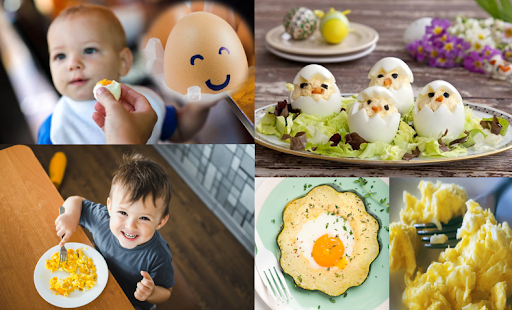
Quick Answer: Yes! Eggs are one of the best foods for children - they’re packed with protein, healthy fats, vitamins, and choline for brain development. For most babies you can introduce eggs (including egg yolk AND white) from around 6 months when starting solids. About 2% of children have egg allergies, and most children outgrow it — roughly half by age 2-3 and around 80% by school age. Start with well-cooked eggs and watch for reactions. If your baby has moderate-to-severe eczema, a known food allergy, or a strong family history of severe egg or nut allergy, talk to your pediatrician before the first egg.
Why Eggs Are Great for Kids
Eggs are often called “nature’s multivitamin” for good reason:
| Nutrient | Why It Matters for Kids |
|---|---|
| Protein | Building muscles, growth |
| Choline | Brain development, memory |
| Vitamin D | Strong bones, immunity |
| Vitamin B12 | Energy, nervous system |
| Iron | Prevents anemia |
| Healthy fats | Brain growth, energy |
Nutrition in One Egg
| Nutrient | Amount in one large egg |
|---|---|
| Protein | ~6 g |
| Choline | ~147 mg |
| Vitamin D | ~41 IU |
| Vitamin B12 | ~0.6 mcg |
Good to know: The yolk contains most of the nutrients, especially choline for brain development! How much of a child’s daily need one egg meets depends on age — your pediatrician can guide quantity against ICMR-NIN Recommended Dietary Allowances for Indians (2020).
When Can Babies Start Eating Eggs?
Current Guidelines (Updated)
Start at 6 months - Both egg yolk AND egg white!
| Old Advice | Current Advice |
|---|---|
| Wait until 1 year | Start at 6 months |
| Introduce yolk first | Give whole egg |
| Delay if family has allergies | For most babies, early introduction is better than delaying |
⚠️ Important — high-risk babies first: If your baby has moderate-to-severe eczema, a known food allergy, or a sibling/parent with severe egg or nut allergy, talk to your pediatrician before the first egg at home. Some babies should be assessed (and occasionally allergy-tested) first. For most other, low-risk babies, introduce egg around 6 months when starting solids — there is no need to avoid egg “just in case.” (AAP, Pediatrics 2023;152(5):e2023062836, “Updates in Food Allergy Prevention in Children”.)
How to Introduce Eggs
Week 1: Start with a small amount (1-2 teaspoons) of well-cooked scrambled egg. Offer a new allergen when your baby is well, earlier in the day, and where you can watch them for a couple of hours — not delegated to someone who can’t observe. In a joint-family/jaapa setup, make sure whoever feeds the first egg knows what to watch for.
What to watch for:
- Hives or rash
- Swelling of face/lips
- Vomiting
- Difficulty breathing
🚨 EMERGENCY — call 112 (national emergency) or 108 (ambulance), or go straight to the nearest hospital, if you see: difficulty or noisy breathing; swelling of the face, lips or tongue; widespread hives with vomiting; pale, grey or blue skin; floppiness or unresponsiveness; or a seizure. These can be a severe allergic reaction (anaphylaxis). If an adrenaline auto-injector has been prescribed, use it first, then go. Do not wait for a clinic appointment.
If no reaction: Gradually increase the amount over 2-3 weeks.
How Many Eggs Can Children Eat?
| Age | Recommended Amount |
|---|---|
| 6-12 months | 1/4 to 1/2 egg daily |
| 1-3 years | 1 egg daily |
| 4-8 years | 1-2 eggs daily |
| 9+ years | 2-3 eggs daily |
Note: These are general guidelines. Children with high activity levels or those who need more protein can have slightly more.
Best Ways to Serve Eggs to Kids
By Age
| Age | Best Preparation |
|---|---|
| 6-8 months | Mashed hard-boiled egg, scrambled (soft texture) |
| 8-12 months | Egg strips for self-feeding, omelette pieces |
| 1-2 years | Scrambled, boiled, simple omelette |
| 2+ years | Any style - fried, poached, in recipes |
Healthy Egg Ideas
For Babies (6-12 months):
-
Scrambled egg with mashed banana
-
Hard-boiled egg yolk mixed into rice
-
Egg cooked into dal or khichdi For Toddlers:
-
Egg paratha or egg dosa
-
French toast (minimal sugar)
-
Egg fried rice
-
Egg sandwich fingers For Older Kids:
-
Omelette with vegetables
-
Egg bhurji with roti
-
Egg curry
-
Baked egg muffins
Understanding Egg Allergies
How Common Is It?
- About 2% of children have egg allergy
- One of the most common food allergies in children
- Most children outgrow it — roughly half by age 2-3 and around 80% by school age
Symptoms of Egg Allergy
| Mild Symptoms | Severe Symptoms (Emergency) |
|---|---|
| Skin rash, hives | Difficulty breathing |
| Itchy mouth/throat | Swelling of throat |
| Stomach pain, vomiting | Dizziness, fainting |
| Runny nose | Rapid heartbeat |
🚨 For any severe symptom — trouble breathing, swelling of lips/face/throat, repeated vomiting, sudden floppiness, or pale/blue skin — call 112 or 108, or go straight to the nearest hospital immediately. These can be a severe allergic reaction (anaphylaxis). Do not wait.
What to Do If You Suspect Allergy
- Stop giving eggs immediately
- Note symptoms - what happened, how quickly, how severe
- See your pediatrician - they may refer to an allergist
- Get tested if recommended (skin prick test or blood test)
Important: For most low-risk babies, don’t avoid eggs “just in case” — for them, delaying is not protective. Only avoid if there’s a confirmed allergy. (Babies with severe eczema, a known food allergy, or strong family history should be discussed with your pediatrician first — see the section above.)
Types of Eggs: Which Is Best?
| Type | What It Means | Better for Kids? |
|---|---|---|
| Regular eggs | Standard farm eggs | Good nutrition, affordable |
| Free-range | Hens can move around | Slightly more omega-3 |
| Organic | No pesticides in feed | Similar nutrition |
| Omega-3 enriched | Hens fed flaxseed | More healthy fats |
| Desi/Country eggs | From local breeds | May have more nutrients |
The Bottom Line
All eggs are nutritious! Choose what fits your budget. The difference in nutrition between types is small compared to the overall benefit of eating eggs.
Egg Safety: What Parents Should Know
Cooking Eggs Properly
| Cooking Method | Safe for Kids? |
|---|---|
| Hard-boiled | Yes - yolk should be firm |
| Scrambled | Yes - cook until no runny parts |
| Omelette | Yes - cook thoroughly |
| Sunny side up | Not for young children - runny yolk |
| Soft-boiled | Best avoided for young children - yolk may be runny |
| Raw (in smoothies) | Never for children |
Storage Tips
- Keep eggs refrigerated
- Use within 3-5 weeks of purchase
- Don’t wash eggs before storing (removes protective coating)
- Discard cracked eggs
Common Concerns About Eggs
”Will eggs increase cholesterol?”
Usually not a concern for healthy children. Kids need cholesterol for brain development and hormone production, and the body regulates it well in most healthy children. If your child has a known cholesterol/lipid disorder (such as familial hypercholesterolemia) or diabetes, follow your pediatrician’s advice on quantity.
”Can I give eggs every day?”
Yes, for most children. Daily eggs are fine for most healthy children and provide consistent nutrition. Vary preparation methods to keep it interesting. If your child has a known cholesterol/lipid disorder or diabetes, follow your pediatrician’s advice on quantity.
”Are brown eggs healthier than white?”
No difference! Shell color depends on the hen’s breed, not nutrition. Brown and white eggs are nutritionally identical.
When to Avoid Eggs
Don’t give eggs if:
-
Child has confirmed egg allergy
-
Child is sick with vomiting/diarrhea (hard to digest)
-
Egg is cracked, smells bad, or looks unusual Check with doctor if:
-
Family history of severe egg allergy
-
Child has other food allergies
-
Child has eczema (higher allergy risk)
Frequently Asked Questions
Q: Can I give raw egg in milkshakes for nutrition?
A: No! Raw eggs can contain Salmonella bacteria. Always cook eggs thoroughly before giving to children. Protein powders are safer if you want to boost nutrition.
Q: My baby doesn’t like eggs. What should I do?
A: Try different preparations - some babies dislike scrambled but love hard-boiled. Mix eggs into foods they already like (rice, dal). Keep offering without pressure - it can take 10-15 exposures!
Q: Are desi eggs better than farm eggs?
A: Desi eggs may have slightly more nutrients and darker yolks (more beta-carotene), but both are healthy choices. The difference isn’t significant enough to worry about.
Q: My toddler is allergic to eggs. Will they outgrow it?
A: Most likely yes! Most children outgrow egg allergy — roughly half by age 2-3 and around 80% by school age. Your allergist can do periodic testing to check. Some children can tolerate baked eggs (in cakes) before whole eggs.
Q: How do I know if an egg is fresh?
A: Do the water test: place egg in water. Fresh eggs sink and lie flat. Older eggs stand upright. If it floats, discard it - it’s too old.
Key Takeaways
- Eggs are excellent - One of the best foods for growing children
- Start at 6 months - Introduce early, including the white
- Daily eggs are fine - 1 egg per day for toddlers, 2-3 for older kids
- Cook thoroughly - No runny yolks for young children
- Watch for allergies - Symptoms usually appear within 2 hours
- Most outgrow allergies - roughly half by age 2-3 and around 80% by school age
This article was reviewed by pediatricians at Babynama. Last updated: February 2026
This article is general information for Indian parents, not a substitute for examination by your pediatrician. In an emergency, call 112 or 108.
Need personalized guidance? Book a consultation with our pediatricians or explore our Care Plans for 24/7 expert support!
Related Tools
Starting Solids? We Can Help!
Expert-guided nutrition plans for your baby.
Explore Nutrition Program