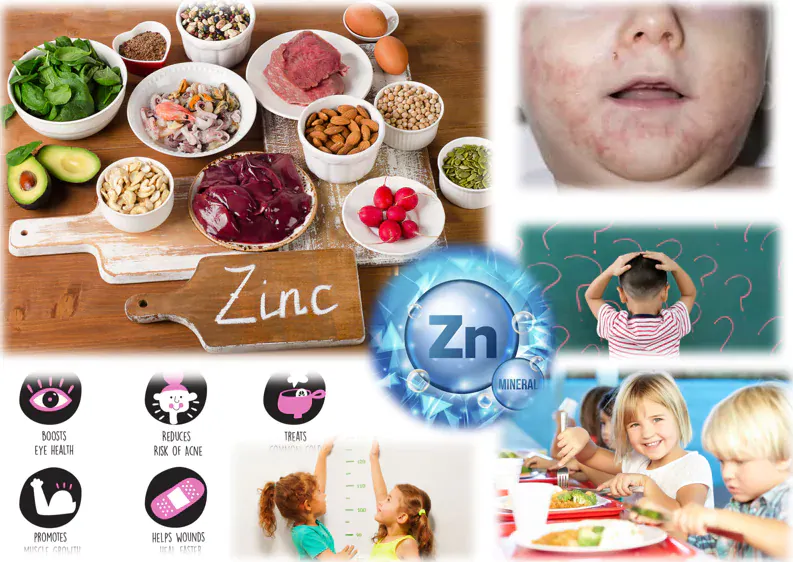
Quick Answer: Zinc is essential for children’s growth, immunity, and brain development. Most children get adequate zinc from a balanced diet including meat, dairy, legumes, nuts, and whole grains. Signs of deficiency include frequent infections, slow wound healing, and poor growth. Supplementation is usually only needed for zinc deficiency, during diarrhea illness, or in certain dietary restrictions. Don’t supplement without consulting your pediatrician.
Why Zinc Is Important for Children
Zinc is involved in over 300 enzyme reactions in the body, making it crucial for growing children.
Key Functions of Zinc
| Function | Why It Matters for Children |
|---|---|
| Immune function | Fights infections, reduces illness duration |
| Growth | Essential for cell division and development |
| Wound healing | Repairs skin and tissues |
| Taste and smell | Affects appetite |
| Brain development | Supports cognitive function |
| Protein synthesis | Builds muscles and tissues |
Daily Zinc Requirements
Recommended Daily Intake
| Age | Daily Zinc Needed |
|---|---|
| 0-6 months | ~2 mg (met fully by breast milk or formula) |
| 7-12 months | 3 mg |
| 1-3 years | 3 mg |
| 4-8 years | 5 mg |
| 9-13 years | 8 mg |
| 14-18 years (boys) | 11 mg |
| 14-18 years (girls) | 9 mg |
Zinc-Rich Foods for Children
Best Sources of Zinc
Approximate values; actual content varies by source and preparation.
| Food | Approx. Zinc | Serving Size |
|---|---|---|
| Beef/mutton | ~7 mg | ~85 g |
| Chicken (dark meat) | ~2.4 mg | ~85 g |
| Pumpkin seeds | ~2.2 mg | ~30 g |
| Chana (chickpeas) | ~2.5 mg | 1 cup cooked |
| Curd/yogurt | ~1.7 mg | 1 cup |
| Paneer/cheese | ~1.2 mg | ~30 g |
| Eggs | ~1.3 mg | 2 eggs |
| Milk | ~1 mg | 1 cup |
Note: foods like meat, seeds, and whole pulses are introduced gradually after 6 months in age-appropriate, soft forms. Nothing other than breast milk or formula should be given before 6 months of age.
Vegetarian Zinc Sources
| Food | Zinc Content | Tips |
|---|---|---|
| Legumes (dal, beans) | Good | Soak before cooking to improve absorption |
| Nuts (cashews, almonds) | Good | Age-appropriate forms |
| Seeds (pumpkin, sesame) | Excellent | Add to foods |
| Whole grains | Moderate | Choose whole wheat |
| Tofu/paneer | Moderate | Regular inclusion |
| Fortified cereals | Variable | Check labels |
Indian Foods Rich in Zinc
| Food | How to Include |
|---|---|
| Rajma | Rajma chawal |
| Chana | Chana masala, chana chaat |
| Moong dal | Khichdi, dal |
| Sesame seeds | Til laddoo, chutney |
| Pumpkin seeds | Roasted snack |
| Ragi | Ragi porridge |
Signs of Zinc Deficiency
Symptoms to Watch For
| Symptom | What to Notice |
|---|---|
| Frequent infections | More colds/illnesses than peers |
| Slow wound healing | Cuts take long to heal |
| Poor appetite | Not interested in food |
| Stunted growth | Not meeting growth milestones |
| Hair loss | Thinning or patchy hair |
| Skin problems | Rashes, dermatitis |
| Diarrhea | Chronic loose stools |
| Delayed development | Cognitive or motor delays |
Children at Risk for Deficiency
| Risk Factor | Why |
|---|---|
| Vegetarian/vegan diets | Plant zinc less well absorbed |
| Chronic diarrhea | Zinc lost in stool |
| Digestive disorders | Malabsorption |
| Sickle cell disease | Higher requirements |
| Picky eaters | Limited diet variety |
| Premature babies | Low stores at birth |

Improving Zinc Absorption
What Helps Absorption
| Factor | How to Apply |
|---|---|
| Animal protein | Enhances plant zinc absorption |
| Soaking legumes | Reduces phytates that block absorption |
| Fermentation | Idli, dosa improve zinc availability |
| Sprouting | Sprouted pulses have better absorption |
What Blocks Absorption
| Factor | How to Avoid |
|---|---|
| Phytates | Soak and sprout grains/legumes |
| Excess calcium | Don’t take supplements together |
| Tea/coffee | Avoid with zinc-rich meals |
| Too much fiber | Balance is key |
Zinc Supplementation
When Supplements Are Needed
| Situation | Action |
|---|---|
| Diagnosed deficiency | Doctor-prescribed supplements |
| During diarrhea | 10-20mg for 10-14 days (WHO recommendation) |
| Very restricted diet | May need supplementation |
| Specific health conditions | As advised by doctor |
Zinc for Diarrhea
WHO recommends zinc supplementation alongside ORS (Electral / WHO-ORS) during diarrhea:
| Age | Dose | Duration |
|---|---|---|
| Under 6 months | 10 mg/day | 10-14 days |
| Over 6 months | 20 mg/day | 10-14 days |
This reduces the duration and severity of diarrhea and lowers the risk of further episodes over the following 2-3 months. For infants under 6 months, give zinc only under your pediatrician’s guidance — do not start it on your own.
Supplementation Cautions
| Warning | Details |
|---|---|
| Don’t over-supplement | Can cause copper deficiency |
| Upper limit | 7-12mg for toddlers, 23mg for older children |
| Symptoms of excess | Nausea, vomiting, stomach cramps |
| Drug interactions | Affects some antibiotics |
Important: Always consult your pediatrician before giving zinc supplements.
Easy Ways to Boost Zinc
Meal Ideas for Children
| Meal | Zinc-Rich Options |
|---|---|
| Breakfast | Eggs + whole wheat toast, fortified cereal with milk |
| Lunch | Rajma chawal, chicken curry with roti |
| Snack | Roasted chana, trail mix with pumpkin seeds |
| Dinner | Dal + rice, paneer curry with roti |
Quick Zinc Boosters
-
Add pumpkin seeds to cereals
-
Include dal at every meal
-
Sprinkle sesame seeds on foods
-
Offer cheese as snacks

-
Use whole wheat instead of refined flour
Frequently Asked Questions
Q: Can my child get too much zinc?
A: Yes, excessive zinc (usually from supplements) can cause problems including nausea, vomiting, and interfere with copper absorption. Stick to food sources and only supplement if advised by your doctor.
Q: Is zinc safe during cold/flu?
A: Zinc lozenges may reduce cold duration in older children and adults, but aren’t recommended for young children due to choking risk. Focus on zinc-rich foods during illness.
Q: My child is vegetarian - should I worry about zinc?
A: Vegetarian children can get enough zinc with planning. Include plenty of legumes, nuts, seeds, and whole grains. Soaking, sprouting, and fermenting improve absorption. Your pediatrician can check levels if concerned.
Q: What’s better - zinc from food or supplements?
A: Food is always preferred. Zinc from animal sources is best absorbed, followed by properly prepared plant sources. Supplements are for specific situations only.
Q: Does zinc help with growth?
A: Yes, zinc is essential for growth. Deficiency can stunt growth. However, supplementing a child who isn’t deficient won’t make them grow taller - they need adequate, not excessive zinc.
Key Takeaways
- Zinc is essential for growth, immunity, and development
- Best sources: Meat, dairy, legumes, nuts, seeds
- Daily needs vary by age - check requirements
- Vegetarians need planning - soak, sprout, ferment foods
- Deficiency signs: Frequent illness, poor growth, slow healing
- Supplements only when needed - usually during diarrhea or deficiency
- Food first - most children get enough from diet
- Consult your doctor before supplementing
This article was reviewed by pediatricians at Babynama. Last updated: January 2026
Need personalized guidance? Book a consultation with our pediatricians or explore our Care Plans for 24/7 expert support!
Disclaimer: This article is for general information and is written for Indian parents following IAP guidance. It is not a substitute for an in-person consultation. Zinc supplements and doses must be decided by your child’s pediatrician. If your child has dehydration, persistent vomiting, blood in stool, lethargy, or any fever of 100.4°F (38°C) or higher in a baby under 3 months, seek same-day medical care. In an emergency, call 112 (national emergency) or 108 (ambulance), or go to the nearest hospital.
Starting Solids? We Can Help!
Expert-guided nutrition plans for your baby.
Explore Nutrition Program