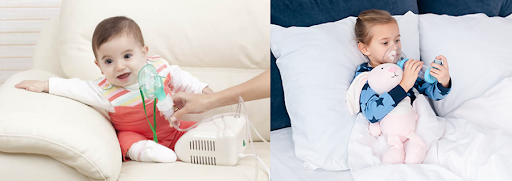
Quick Answer
Using an inhaler with a spacer is the most effective way to deliver asthma or wheezing medicine to your child’s lungs. For children under 5 years, always use a spacer with a face mask. For children 5 years and older, use a spacer with a mouthpiece. With practice, it becomes routine. The medicine works directly in the lungs, so much smaller doses are needed than with oral medicines.
Why Inhalers Are Effective and Well-Tested
Many Indian parents worry about giving their child an inhaler, fearing it’s “too strong” or causes dependency. Let’s address these myths with what the evidence actually shows:
Facts:
-
Inhalers deliver medicine directly to the lungs where it’s needed
-
Much lower doses reach the rest of the body compared to oral medicines
-
They do not cause addiction or dependency
-
Usually fewer side effects than oral medicines, though steroid inhalers can occasionally cause oral thrush or hoarseness (rinsing the mouth helps prevent this)
-
Used by millions of children worldwide for decades Myths Busted:
-
“Inhaler ki aadat pad jayegi” (Child will become dependent) - FALSE
-
“Baad mein kaam nahi karega” (Won’t work later) - FALSE
-
“Bahut strong hai” (It’s too strong) - FALSE
Types of Inhalers for Children
1. Metered Dose Inhaler (MDI)
- Most common type in India
- Uses a pressurized canister
- ALWAYS use with a spacer for children
- Brands: Asthalin, Budecort, Seroflo, Foracort
2. Dry Powder Inhaler (DPI)
- Requires strong breath to inhale
- Suitable for children 6+ years only
- No spacer needed
- Brands: Rotahaler, Revolizer
3. Nebulizer
- Converts liquid medicine to mist
- Good for babies and young children
- Takes longer (10-15 minutes)
- Used in hospitals and at home
Equipment You Need
For Children Under 5:
- MDI (inhaler)
- Spacer with face mask (covers nose and mouth)
- Spacer brands in India: Zerostat, Aerochamber, Able Spacer
For Children 5+ Years:
- MDI (inhaler)
- Spacer with mouthpiece
- Same spacer brands work
Step-by-Step Guide: Using Inhaler with Spacer
For Babies and Toddlers (0-3 years) - With Face Mask
Step 1: Prepare
-
Shake the inhaler well (20 times)
-
Remove inhaler cap
-
Attach inhaler to spacer
-
Check mask is clean and intact Step 2: Position
-
Sit with baby on your lap, facing you OR
-
Hold baby upright against your chest
-
Keep baby calm (difficult, but try!) Step 3: Apply Mask
-
Place mask firmly over baby’s nose and mouth
-
Create a good seal (no gaps)
-
Keep head straight, not tilted Step 4: Deliver Medicine
-
Press the inhaler once (1 puff)
-
Keep mask in place
-
Let baby breathe normally for 5-6 breaths
-
Count slowly: 1… 2… 3… 4… 5… 6… Step 5: Repeat If Needed
-
Wait 30-60 seconds
-
Shake inhaler again
-
Repeat steps if doctor prescribed 2 puffs Step 6: Finish
-
Remove mask
-
Wipe baby’s face with damp cloth
-
Give water to drink (if old enough)
-
Praise and comfort baby
For Young Children (3-5 years) - With Face Mask
Same steps, but:
- Explain what you’re doing: “Dawa leni hai taaki saans aaye”
- Practice with empty spacer first
- Make it a game
- Let them hold the spacer
- Count together
For Older Children (5+ years) - With Mouthpiece
Step 1: Prepare
-
Shake inhaler well
-
Remove cap
-
Attach to spacer
-
Child should be sitting or standing Step 2: Position
-
Child puts mouthpiece between teeth
-
Lips seal around mouthpiece
-
Chin slightly lifted Step 3: Breathe Out
-
Child breathes out gently (not into spacer)
-
Empties lungs before inhaling medicine Step 4: Deliver Medicine
-
Press inhaler once
-
Child takes slow, deep breath in
-
Hold breath for 5-10 seconds
-
Breathe out slowly Step 5: Repeat If Needed
-
Wait 30-60 seconds
-
Repeat for second puff Step 6: Rinse Mouth
-
Especially important for steroid inhalers
-
Gargle and spit water
-
Prevents oral thrush (fungal infection)
Common Mistakes to Avoid
Don’t Do This:
- Using inhaler without spacer - Most medicine gets stuck in throat
- Not shaking the inhaler - Uneven medicine distribution
- Multiple puffs at once - Only one puff, then breathe
- Tilting head back - Keep straight
- Breathing too fast - Slow, deep breaths work best
- Forgetting to rinse mouth - Causes mouth sores with steroid inhalers
- Not cleaning spacer - Wash weekly with soap and water
Troubleshooting Common Problems
”My baby won’t keep the mask on!”
- Try when baby is sleepy or just waking up
- Distract with phone video (just this once is okay!)
- Let baby play with mask (when not using)
- Stay calm - your anxiety makes baby anxious
- Practice with empty spacer daily
”My child says it tastes bad”
- Rinse mouth after use
- Give a small treat after (positive reinforcement)
- Remind them the medicine helps them breathe
”I’m not sure if the medicine went in”
- The spacer should “mist up” slightly
- You should NOT hear a whistling sound from the spacer (means the child is breathing too fast)
- A little coughing can happen, but persistent coughing or no improvement means the technique may need checking — ask your pediatrician to watch you do it once
”The inhaler seems empty”
- Count doses or mark on calendar
- Shake near ear - should hear liquid
- Some inhalers have dose counters
Cleaning and Maintenance
Weekly Spacer Cleaning:
- Remove from inhaler
- Wash with warm water and mild detergent
- Don’t rinse - let it air dry
- Don’t wipe (causes static that traps medicine)
- Check for cracks or damage
Inhaler Care:
- Store at room temperature
- Keep cap on when not in use
- Check expiry date
- Replace when dose counter shows low
When to Use the Inhaler
Rescue Inhaler (Blue - Asthalin/Levolin):
- When child has wheezing, cough, or breathing difficulty
- Before exercise if doctor advised
- During asthma attack - give immediately!
Preventer Inhaler (Brown/Orange - Budecort, Seroflo):
- Every day as prescribed
- Even when child seems fine
- Don’t stop without doctor’s advice
Emergency: Asthma Attack
Warning Signs:
- Rapid breathing
- Difficulty talking
- Using stomach muscles to breathe
- Blue lips or fingertips
- Not responding to rescue inhaler What to Do:
🚨 An asthma attack is a medical emergency. Call 112 (national emergency) or 108 (ambulance) or head to the nearest hospital straight away — do not wait at home to see if it settles. While you arrange help:
- Stay calm
- Give 4 puffs of the rescue (blue) inhaler through the spacer — one puff at a time, with about 4 breaths after each puff
- Wait 4 minutes
- If there is no improvement, give another 4 puffs the same way
- Keep repeating 4 puffs every 4 minutes while travelling to the hospital
- Blue lips, fingertips, or a child too breathless to talk needs emergency care immediately — call 112 or 108 now
This “4 puffs, 4 breaths, every 4 minutes” routine is a recognised first-aid measure, but it does not replace emergency medical care.
FAQs
Q: Will my child become dependent on the inhaler?
A: No! This is a common myth. Asthma medicine treats the condition - stopping won’t make the lungs stronger. Untreated asthma is dangerous.
Q: Why can’t I just give oral medicine instead?
A: Oral medicines affect the whole body and have more side effects. Inhalers deliver medicine directly to the lungs - more effective, fewer side effects.
Q: How do I know if the medicine is working?
A: You should see improvement in breathing within 10-15 minutes for rescue inhalers. Preventer inhalers take weeks to show full benefit.
Q: My child’s school doesn’t allow inhalers. What do I do?
A: Provide a doctor’s letter. Children with asthma have a right to carry their rescue inhaler. Meet with school authorities to explain.
Q: Can I give nebulizer at home instead of inhaler?
A: Inhaler with spacer is equally or more effective than nebulizer for most situations. It’s also faster and more portable. Nebulizer may be used for severe attacks or if child can’t use spacer.
This article was reviewed by Babynama Pediatricians.
Questions about your child’s inhaler technique? Chat with Babynama’s pediatricians on WhatsApp for a video demonstration.
Need personalized guidance? Book a consultation with our pediatricians or explore our Care Plans for 24/7 expert support!
General information for Indian parents, not a substitute for your pediatrician. In an emergency, call 112 or 108.