Quick Answer
YES, pelvic floor exercises (Kegels) are generally well-tolerated and widely recommended for pregnant women and new mothers! If you’re experiencing urine leakage (peshab ka tapakna) during pregnancy or after delivery, you’re not alone - this affects up to 50% of women. The good news is that regular pelvic floor exercises can significantly improve bladder control and support recovery.
Why This Matters for Mothers
During Pregnancy:
-
Growing baby puts pressure on bladder
-
Hormones relax pelvic muscles
-
May cause urine leakage when coughing, sneezing, or laughing
-
Preparing for delivery After Delivery:
-
Vaginal delivery stretches pelvic floor
-
C-section also weakens muscles due to pregnancy weight
-
Recovery time needed for strength
-
Prevents long-term bladder problems Common Issues from Weak Pelvic Floor:
-
Stress incontinence (urine leaks during activity)
-
Urge incontinence (sudden strong urge)
-
Pelvic organ prolapse (later in life)
-
Reduced intimacy satisfaction
Understanding Your Pelvic Floor
What are Pelvic Floor Muscles?
Think of them as a hammock or trampoline at the base of your pelvis that supports:
-
Bladder
-
Uterus
-
Bowels These muscles:
-
Control urine and bowel movements
-
Support your baby during pregnancy
-
Help with delivery
-
Affect intimate sensations
Step-by-Step Pelvic Floor Exercises
Finding Your Pelvic Floor Muscles
Method 1: The Stop Test
-
While urinating, try to stop the flow midstream
-
The muscles you squeeze are your pelvic floor
-
Don’t do this regularly - only to identify muscles Method 2: Visualization
-
Imagine you’re stopping gas from passing
-
OR imagine picking up a small marble with your vagina
-
The muscles that tighten are your pelvic floor
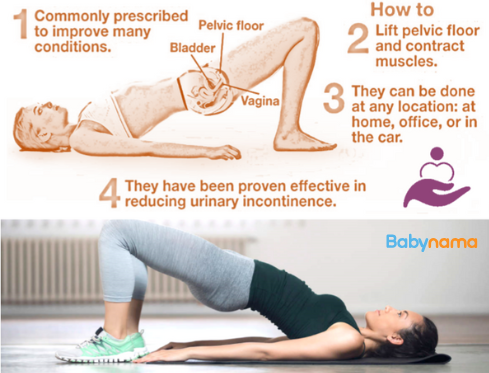
Basic Kegel Exercise
Exercise 1: Slow Squeezes
-
Sit comfortably or lie down with knees bent
-
Squeeze your pelvic floor muscles
-
Lift and hold for 5 seconds (work up to 10)
-
Release slowly for 5 seconds
-
Rest for 5 seconds
-
Repeat 10 times Exercise 2: Quick Pulses
-
Squeeze pelvic floor quickly
-
Release immediately
-
Repeat 10 times rapidly
-
Rest and repeat set Exercise 3: The Elevator
-
Imagine your pelvic floor is an elevator
-
Squeeze and lift to “floor 1” - hold 2 seconds
-
Squeeze higher to “floor 2” - hold 2 seconds
-
Squeeze to maximum “floor 3” - hold 2 seconds
-
Lower back down floor by floor
-
Repeat 5 times
Daily Routine
Morning Set:
-
10 slow squeezes (5-10 second holds)
-
10 quick pulses Afternoon Set:
-
Same as morning
-
Do while sitting at desk, cooking, or resting Evening Set:
-
Same as morning
-
Do before bed Total: 30 slow squeezes + 30 quick pulses daily
Exercise Timeline
| When | What to Do |
|---|---|
| During Pregnancy | Start gentle exercises from first trimester, continue throughout |
| After Vaginal Delivery | Start gentle exercises after 24-48 hours (or when comfortable) |
| After C-Section | Wait until catheter removed, start gentle exercises within a week |
| First 6 weeks postpartum | Focus on reconnecting with muscles, gentle holds |
| 6 weeks to 3 months | Increase hold duration and repetitions |
| 3+ months | Full routine, add progressions if needed |
Tips for Success
- Be consistent - Daily practice is key
- Don’t hold your breath - Breathe normally while squeezing
- Isolate the muscles - Don’t squeeze buttocks, thighs, or stomach
- Start gentle - Especially after delivery
- Do them anywhere - While cooking, watching TV, in auto/bus
- Set reminders - Link to daily activities (after meals, during tea)
- Be patient - Results take 4-6 weeks minimum
- Empty bladder first - Don’t exercise on full bladder
- Stay hydrated - Drink adequate water
- Track progress - Notice improvements in control
Common Mistakes to Avoid
Wrong:
-
Squeezing buttocks or thighs
-
Holding breath
-
Pushing down instead of lifting up
-
Doing too many too fast
-
Stopping when pregnant/postpartum feels hard
-
Only doing exercises when you remember Right:
-
Only pelvic floor muscles engaged
-
Breathing normally throughout
-
Lift and squeeze upward
-
Start slow, build gradually
-
Be consistent even on difficult days
-
Set reminders for daily practice
When to Worry (Red Flags)
Contact your doctor if you notice:
- No improvement after 6-8 weeks of consistent exercises
- Worsening leakage despite exercises
- Pain during pelvic floor exercises
- Heaviness or bulging sensation in vagina
- Complete inability to control urine or bowel
- Blood in urine
- Burning during urination
- Unable to identify pelvic floor muscles
Additional Support
Pelvic Floor Physiotherapy:
-
Available in major Indian cities
-
Specialist can assess muscle strength
-
Provides personalized exercise program
-
May use biofeedback devices
-
Ask your gynecologist for referral Products That May Help:
-
Kegel exercise apps with reminders
-
Pelvic floor weights (under guidance)
-
Biofeedback devices (under guidance)
Beyond Exercises: Lifestyle Tips
Do:
-
Maintain healthy weight
-
Eat fiber to prevent constipation
-
Drink adequate water
-
Practice good posture
-
Lift correctly (bend knees, not back) Avoid:
-
Straining during bowel movements
-
Heavy lifting without engaging pelvic floor
-
Chronic coughing (treat if present)
-
High-impact exercises without control
-
Smoking (causes chronic cough)
Frequently Asked Questions
Q: Delivery ke baad peshab control nahi ho raha - kya yeh normal hai?
A: Some leakage in the first few weeks after delivery is very common and usually improves with time and exercises. Start gentle Kegels as soon as you’re comfortable. If leakage continues beyond 3-4 months despite regular exercises, consult your doctor. Many women see significant improvement within 6-8 weeks of consistent practice.
Q: Can I do Kegels during pregnancy?
A: Yes! Pelvic floor exercises are generally well-tolerated and recommended throughout pregnancy. They help support the growing baby, prepare for delivery, and prevent incontinence. Start early and continue throughout. Just be gentle and don’t overdo it. If you feel any discomfort, pause and consult your doctor.
Q: How do I know if I’m doing Kegels correctly?
A: Insert a clean finger into your vagina and squeeze. You should feel pressure around your finger if done correctly. You should NOT be squeezing your buttocks, thighs, or holding your breath. Another test: You should be able to stop urine midstream (do this only once to test, not regularly).
Q: How long until I see results from pelvic floor exercises?
A: Most women notice improvement in 4-8 weeks with daily practice. Full strength may take 3-6 months to develop. The key is consistency - doing exercises every day. If you don’t see any improvement after 8 weeks of proper, daily exercises, consult a pelvic floor physiotherapist.
Q: Will pelvic floor exercises help with intimate life after baby?
A: Yes! Strong pelvic floor muscles improve sensation during intimacy for both partners. Many women report better satisfaction after regular Kegel practice. Wait until your doctor clears you for intimacy (usually 6 weeks postpartum) and ensure you’re physically and emotionally ready.
This article was reviewed by Babynama Pediatricians. Last updated: January 2025
General information for Indian parents, not a substitute for your doctor. In an emergency, call 112 or 108.
Need personalized guidance? Book a consultation with our pediatricians or explore our Care Plans for 24/7 expert support!
Related Tools