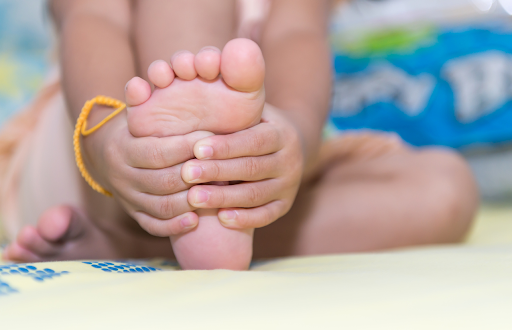
Quick Answer
Children’s foot pain (pair mein dard) is usually not serious and often has simple causes like growing pains, improper footwear, or overactivity. However, persistent pain, limping, or swelling needs evaluation. Most foot pain in children can be managed with rest, proper shoes, and simple home remedies. The good news is that children’s feet are resilient, and most conditions improve with basic care.
Common Causes by Age Group
| Age | Common Causes |
|---|---|
| Toddlers (1-3) | Learning to walk issues, ill-fitting shoes |
| Preschool (3-5) | Flat feet (usually normal), active play injuries |
| School-age (5-10) | Growing pains, Sever’s disease, overuse |
| Pre-teens (10-14) | Sever’s disease, sports injuries, plantar fasciitis |
What Causes Foot Pain in Children
Growing Pains (Badne Ka Dard)
- Age: 3-12 years
- Symptoms: Aching in legs/feet, usually evening/night
- Cause: Not actually “growing” - likely muscle fatigue
- Treatment: Massage, warmth, reassurance
Flat Feet (Pes Planus)
- Normal until: Age 5-6
- Symptoms: Fatigue during walking, foot rolling inward
- When to worry: If painful or affecting activities
- Treatment: Usually none; supportive shoes if needed
Sever’s Disease (Calcaneal Apophysitis)
- Age: 8-14 years (growth spurts)
- Symptoms: Heel pain, worse with activity
- Cause: Inflammation of heel growth plate
- Treatment: Rest, heel cushions, stretching
Ingrown Toenails
- Cause: Tight shoes, improper nail cutting
- Symptoms: Red, swollen, painful toe corner
- Prevention: Cut nails straight across
- Treatment: Proper cutting, sometimes doctor needed
Plantar Fasciitis
- More common in: Older children, active/overweight kids
- Symptoms: Heel pain, worst with first steps in morning
- Treatment: Stretching, proper footwear, rest
Overuse Injuries
- Cause: Sports, too much activity, sudden increase
- Symptoms: Gradual onset pain, worse with activity
- Treatment: Rest, ice, activity modification
Plantar Warts
- Cause: Viral infection (HPV)
- Symptoms: Hard bump on sole, may have black dots
- Treatment: Often resolve alone; sometimes need treatment
Symptoms to Watch For
Common (Usually Not Serious):
-
Pain after heavy activity that improves with rest
-
Occasional foot tiredness
-
Growing pains (evening/night, both legs)
-
Minor blisters or calluses Concerning (Needs Evaluation):
-
Pain that doesn’t improve with rest
-
Limping that persists
-
Swelling, redness, or warmth
-
Fever with foot pain
-
Pain that wakes child from sleep
-
Refusing to walk or bear weight
-
Pain in only one foot consistently
Home Remedies
For General Foot Pain:
-
Rest: Reduce activity for a few days
-
Ice: 15-20 minutes, wrapped in cloth, several times daily
-
Elevation: Prop up feet when resting
-
Massage: Gentle rubbing for muscle pain
-
Warm soak: Before bed for aching feet For Growing Pains:
-
Gentle massage
-
Warm compress or water bottle
-
Stretching exercises
-
Reassurance (they’re not serious!) For Sever’s Disease:
-
Heel cushions in shoes
-
Calf stretching exercises
-
Ice after activity
-
Reduce high-impact activities temporarily For Plantar Fasciitis:
-
Rolling foot on frozen water bottle
-
Calf stretches before getting up
-
Supportive footwear (not flat sandals)
-
Arch support insoles
When to See a Doctor
Seek Immediate Care If:
-
Unable to walk or bear weight
-
Significant swelling after injury
-
Obvious deformity
-
Fever with redness and warmth in foot
-
Severe pain that doesn’t improve Schedule Appointment If:
-
Pain persisting more than 1-2 weeks
-
Limping that doesn’t improve
-
Pain affecting sleep or daily activities
-
Recurring foot problems
-
Concerns about foot shape or development
Treatment Options
Conservative (First-Line):
-
Rest and activity modification
-
Proper footwear
-
Orthotics/insoles if needed
-
Physical therapy exercises
-
Over-the-counter pain relief (as appropriate for age) Medical Treatment (If Needed):
-
Prescription orthotics
-
Physical therapy referral
-
Treatment of infections
-
Removal of warts if persistent
-
Rarely, surgical intervention
Prevention Tips
Footwear Guidelines:
-
Well-fitting shoes (thumb’s width at toe)
-
Replace worn-out shoes regularly
-
Choose shoes with good support
-
Breathable materials (not plastic)
-
Appropriate shoes for activities Activity Guidelines:
-
Gradual increase in sports intensity
-
Proper warm-up before activities
-
Rest days between intense activities
-
Vary activities to prevent overuse
-
Don’t push through significant pain Foot Care:
-
Keep feet clean and dry
-
Trim nails straight across
-
Wear sandals in public showers/pools
-
Address blisters promptly
-
Regular foot checks for problems
Proper Shoe Fitting for Indian Children
| Age | How Often to Check | Signs of Poor Fit |
|---|---|---|
| 1-3 years | Every 2-3 months | Red marks, curled toes |
| 3-6 years | Every 3-4 months | Heel slipping, toe rubbing |
| 6-12 years | Every 4-6 months | Complaints of discomfort |
Best Practices:
- Shop in afternoon (feet swell during day)
- Both feet measured (one may be larger)
- Stand and walk in shoes before buying
- Allow for growth but not too loose
- Avoid hand-me-down shoes when possible
FAQs
Q: My child complains of foot pain at night - is this serious?
A: Night-time pain in both legs/feet is often “growing pains” - very common and not serious. These usually occur in evening, resolve by morning, and don’t cause limping. However, if pain is severe, in only one leg, or associated with swelling, fever, or limping, see your pediatrician.
Q: My 3-year-old has flat feet - should I be worried?
A: Flat feet are very common and usually expected in toddlers and young children. Most children have flat-appearing feet until age 5-6 when arches develop. Unless your child has pain, difficulty walking, or the flatness is severe, no treatment is needed. If you are unsure, your pediatrician can examine the feet.
Q: Does my child need special shoes for flat feet?
A: Usually not. Studies show special shoes don’t speed up arch development in normal flat feet. Focus on comfortable, supportive shoes. Only consider orthotics if there’s significant pain or functional problems - discuss with your pediatrician.
Q: My child’s feet hurt after playing cricket/sports - what should I do?
A: Some muscle fatigue after activity is normal. If pain is mild and resolves with rest, it’s usually fine. For persistent pain, try: proper warm-up, supportive footwear, gradual intensity increase, and rest days. If pain persists despite these measures, consult a doctor to rule out overuse injuries.
Q: At what age should children stop going barefoot?
A: Barefoot walking is actually good for foot development in safe environments! It strengthens muscles and improves balance. Let children go barefoot at home on clean surfaces. Outdoors in India, shoes protect from heat, injuries, and infections. As children become more active, proper footwear becomes more important.
Q: How do I know if my child’s foot pain is serious?
A: Be concerned if you see: pain in only one foot, swelling or redness, fever, refusing to walk, pain that worsens or doesn’t improve with rest, pain waking them from sleep, or limping for more than a day or two. These warrant a doctor visit.
This article was reviewed by a pediatrician. Last updated: January 2025
Need personalized guidance? Book a consultation with our pediatricians or explore our Care Plans for 24/7 expert support!
Related Tools
General information for Indian parents, not a substitute for your pediatrician. In an emergency, call 112 or 108.