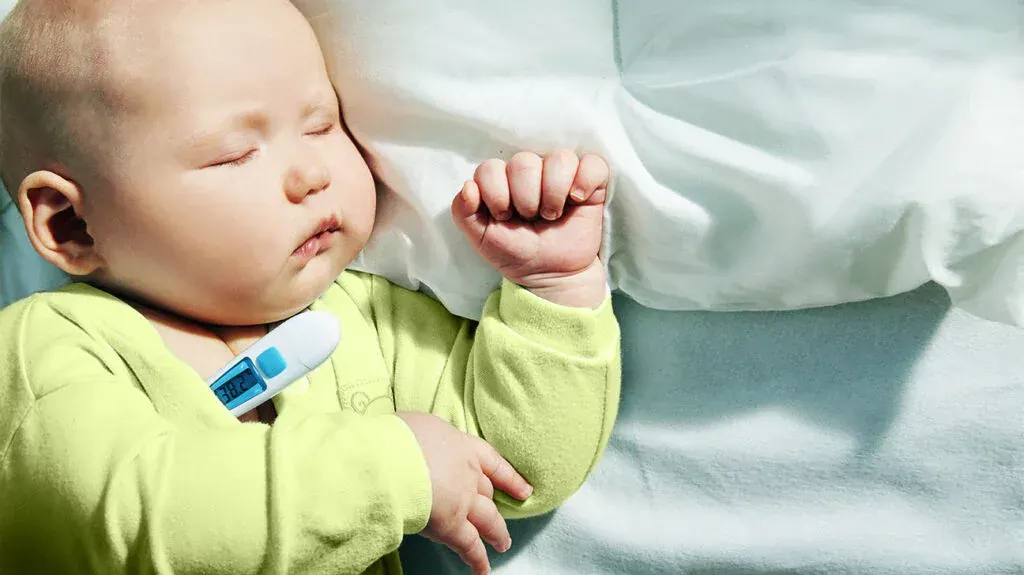
Quick Answer: Most fevers in children are mild viral infections that resolve on their own. However, seek immediate medical care — call 112 (national emergency) or 108 (ambulance), or go straight to your nearest hospital — if: your baby is under 3 months with any fever, your child has fever with difficulty breathing, severe lethargy, purple rash, stiff neck, or seizure. Also see a doctor if fever persists beyond 3 days, goes above 104°F (40°C) repeatedly, or your child looks very unwell. In India, remember that a persistent or high fever is not always “just a virus” — it can be dengue, malaria, typhoid or enteric fever, which need testing. Trust your instincts - you know your child best.
⚠️ In a baby under 3 months, ANY fever of 100.4°F (38°C) or higher is a medical emergency — see a doctor the same day, even at night. Do not give paracetamol and wait. This applies even after a vaccine.
Understanding Fever in Children
Fever itself isn’t an illness - it’s the body’s natural response to infection. Most fevers in children are caused by common viral infections and usually don’t require emergency care — but always watch for the danger signs below, and in India keep dengue, typhoid and malaria in mind for a fever that persists.
What Counts as Fever
| Method | Fever Is |
|---|---|
| Rectal | 100.4°F (38°C) or higher |
| Oral | 100°F (37.8°C) or higher |
| Armpit | 99°F (37.2°C) or higher |
| Ear | 100.4°F (38°C) or higher |
| Forehead | Varies by device |
Note: Rectal temperature is most accurate for babies. For children 4+, oral thermometers work well.
Emergency Signs (Go Immediately)
For ANY Age — Call 112 (national emergency) or 108 (ambulance), or Go Straight to the Nearest Hospital If:
| Emergency Sign | What It May Indicate |
|---|---|
| Difficulty or noisy breathing | Struggling, ribs showing, nostrils flaring |
| Pale, grey or blue lips, face or skin | Lack of oxygen |
| Seizure | Even if it stops on its own |
| Can’t be woken / floppy or unresponsive | Extremely difficult to rouse |
| Purple/red rash that doesn’t fade when pressed | Possible meningitis |
| Stiff neck with fever | Possible meningitis |
| Severe headache | Especially with neck stiffness |
| Confusion or acting very strange | Altered mental status |
Do not wait for a clinic appointment if you see any of these.
For Babies Under 3 Months
| Any Fever Over | Action |
|---|---|
| 100.4°F (38°C) | Medical emergency — see a doctor the same day, even at night |
⚠️ In a baby under 3 months, ANY fever of 100.4°F (38°C) or higher is a medical emergency — see a doctor the same day, even at night. Do not give paracetamol and wait. This applies even after a vaccine.
Babies this young can become seriously ill quickly, and fever may be the only sign (IAP/AAP). Do not give paracetamol at home to a baby under 3 months without a doctor seeing them first.
Signs to See a Doctor (Same Day/Next Day)
Based on Symptoms
| Symptom | Why It Matters |
|---|---|
| Fever above 104°F (40°C) | High fever needs evaluation (IAP) |
| Fever lasting 3+ days | May indicate bacterial infection, or in India dengue/typhoid/malaria — needs testing |
| Looks unwell even after fever comes down | A child who stays lethargic or poorly between fever spikes (even after medicine drops the temperature) is a red flag |
| Not drinking fluids | Risk of dehydration |
| No wet diapers for 6+ hours | Sign of dehydration |
| Persistent vomiting | Can’t keep fluids down |
| Ear pain | Possible ear infection |
| Sore throat with no cough | Possible strep throat |
| Painful urination | Possible UTI |
| Rash with fever | Needs evaluation |
Based on Child’s Behavior
| Concerning Behavior | What to Do |
|---|---|
| Extremely fussy, inconsolable | See doctor |
| Very sleepy, hard to wake | Seek immediate care |
| Not making eye contact | Seek immediate care |
| Refusing to eat for 24+ hours | See doctor |
| Crying when touched or moved | See doctor |
Based on Age
| Age | See Doctor If |
|---|---|
| 0-3 months | ANY fever over 100.4°F (38°C) — same-day emergency (IAP/AAP) |
| 3-6 months | Fever over 102°F (38.9°C) or lasting 24+ hours |
| 6-24 months | Fever over 102°F (38.9°C) lasting 24+ hours |
| 2+ years | Fever lasting 3+ days or other concerns |
Extra caution (seek care sooner): a child who is immunocompromised, has a chronic condition, or lives in / recently returned from a dengue, malaria or typhoid area should be seen early — do not assume “just a viral fever.”
Dehydration danger signs in infants (beyond fewer wet diapers): sunken soft spot (fontanelle), no tears when crying, dry mouth, sunken eyes, and unusual drowsiness. In India’s hot weather, offer extra fluids and watch for these closely.
When You Can Manage at Home
Fever Is Usually Okay If:
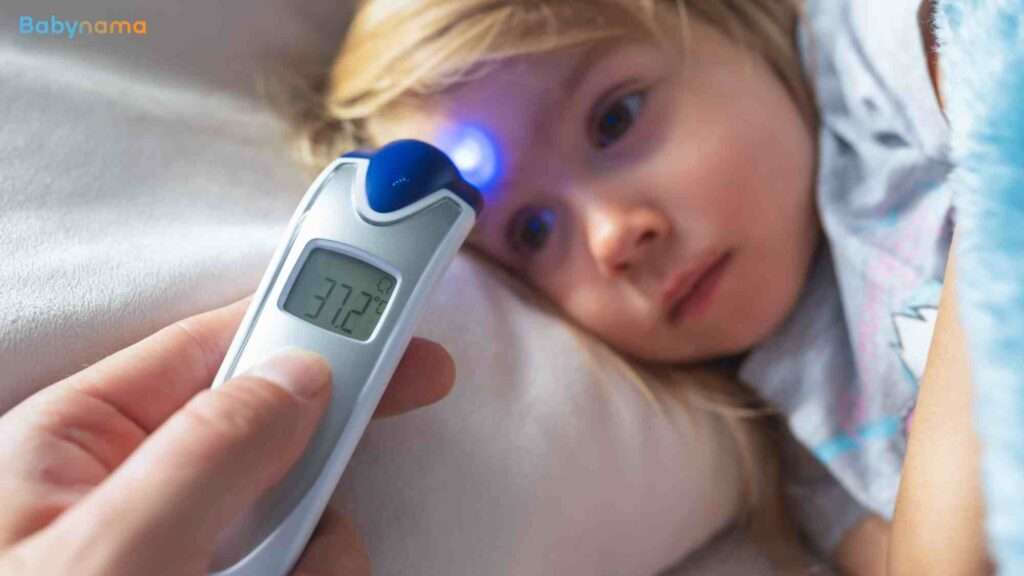
| Sign | Meaning |
|---|---|
| Child is alert | Playing when fever is down |
| Drinking fluids | Taking sips regularly |
| Making wet diapers | At least every 6-8 hours |
| Color is normal | Not pale or blue |
| Responds to you | Makes eye contact, interacts |
| Improves with fever medicine | Acts better when fever drops |
Home Care for Fever
Medication Guidelines
Paracetamol (Crocin / Calpol): Paracetamol is dosed by your baby’s weight, not age: 15 mg/kg per dose, no more often than every 4–6 hours, maximum 4 doses (60 mg/kg) in 24 hours. Syrup strengths differ — Calpol/Crocin come as 120 mg/5 ml and 250 mg/5 ml, so always check the bottle. Do not give to a baby under 3 months without a doctor seeing them first. Confirm the exact mL with your pediatrician (IAP/WHO).
| Medicine | Notes |
|---|---|
| Paracetamol (Crocin/Calpol) | See weight-based dose above; from 3 months with a doctor’s guidance |
| Ibuprofen | Usually from 6 months and over; dose by weight, confirm with your pediatrician |
| Aspirin | NEVER for children |
| Mefenamic acid (Meftal-P) | Do not self-prescribe; only if your pediatrician specifically advises it |
| Antibiotics | Do not demand or self-start; viral fevers do not need them |
Other Care Measures
| Action | How to Do It |
|---|---|
| Fluids | Offer frequently, small sips okay |
| Rest | Let child sleep, don’t force activity |
| Light clothing | Don’t bundle up |
| Room temperature | Comfortable, not too warm |
On sponging: Antipyretics (paracetamol), fluids and light clothing are the mainstays. Tepid (lukewarm) sponging is not routinely recommended (NICE/AAP) — it gives no lasting temperature reduction and is only for comfort if the child finds it soothing. Never use cold water or ice.
What NOT to Do
| Avoid | Why |
|---|---|
| Cold baths | Can cause shivering, raises core temp |
| Alcohol rubs | Dangerous, can be absorbed |
| Over-bundling | Traps heat |
| Alternating medications without guidance | Can cause dosing errors |
Fever and Specific Conditions
Fever After Vaccination
| Timeframe | What to Expect |
|---|---|
| 24-48 hours post-vaccine | Low fever is normal |
| Usually mild | Under 102°F (38.9°C) typically |
| Action | Paracetamol if needed, observe |
Febrile Seizures
| Fact | Details |
|---|---|
| What it is | Seizure triggered by rapid fever rise |
| Age | Usually 6 months - 5 years (IAP) |
| Scary but usually not harmful | Most children are fine afterward, but always get the child checked |
| What to do | Keep safe, lay them on their side, time it, then seek care |
During a febrile seizure — the DON’Ts: do not put anything in the mouth; do not restrain the child; do not put them in water. Lay the child on their side on a safe surface. Call 112/108 immediately if the seizure lasts more than 5 minutes, if breathing looks difficult, or if another seizure follows.
Breakthrough Fever
Fever that returns or rises despite medication:
| If This Happens | Action |
|---|---|
| Fever returns before next dose | May alternate medicines (ask doctor) |
| Fever above 104°F (40°C) on medicine | See doctor |
| Child acts very sick | See doctor |
Tracking Your Child’s Illness
What to Monitor
| Track | Why |
|---|---|
| Temperature readings | Pattern helps doctor |
| Fluid intake | Detect dehydration early |
| Wet diapers/urination | Hydration status |
| Behavior changes | Alertness, activity level |
| Other symptoms | Cough, vomiting, rash |
When to Call Back
Even after seeing a doctor:
-
Fever pattern changes or worsens
-
New symptoms develop
-
Child seems sicker
-
You’re worried
Frequently Asked Questions
Q: Should I try to bring the fever down to normal?
A: You don’t have to get it to normal - just making your child comfortable is the goal. A slight reduction is fine. Fever helps fight infection, so complete suppression isn’t necessary.
Q: My child feels hot but thermometer shows normal - what do I trust?
A: Trust the thermometer over touch. Warm skin can be from activity, blankets, or environment. However, if your child seems unwell despite normal reading, see a doctor anyway.
Q: Can fever cause brain damage?
A: Fevers from infection (even high ones like 104°F / 40°C) do not in themselves cause brain damage — the body has natural limits. The dangerous situation is the body overheating from outside (heatstroke) — for example a hot car or extreme summer heat — where temperatures go well above the normal fever range. That is a medical emergency. In India’s summer, keep infants cool and well hydrated.
Q: Should I wake my child to give fever medicine?
A: Generally no. Sleep is healing. If they wake and seem uncomfortable, you can give medicine then. Exception: if doctor specifically advises regular dosing.
Q: How high can fever safely go?
A: The number matters less than how your child looks and acts. A child with 103°F (39.4°C) who is playful is less concerning than one with 101°F (38.3°C) who is lethargic. That said, fevers over 104°F (40°C) warrant medical evaluation.
Key Takeaways
- Most fevers are mild - Viral infections are common, but watch the danger signs
- Baby under 3 months = see doctor - Always with any fever
- Watch the child, not just the number - Behavior matters most
- Emergency signs require ER - Difficulty breathing, rash, stiff neck
- 3+ days of fever = see doctor - May need evaluation; in India consider dengue, typhoid or malaria — these need testing, not just home antipyretics
- Unwell between fever spikes = red flag - If the child stays lethargic even after medicine brings the temperature down, seek care
- Keep child hydrated - Most important home care
- Trust your instincts - You know when something is wrong
- When in doubt, get checked - Better safe than sorry
This article was reviewed by pediatricians at Babynama. Last updated: February 2026
This article is general information for Indian parents, not a substitute for examination by your pediatrician. In an emergency, call 112 or 108.
Need personalized guidance? Book a consultation with our pediatricians or explore our Care Plans for 24/7 expert support!
Related Tools