Quick Answer
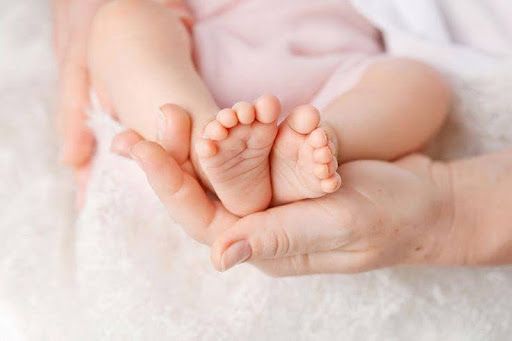
Most foot concerns in babies are common and part of healthy development. Flat feet, inward-turning toes, and curled feet are typical in infants and usually correct naturally as your baby grows. Babies’ feet (pair) are mostly soft cartilage at birth and gradually develop bones and arches over the first few years. Unless there’s pain, persistent deformity, or asymmetry, there’s usually nothing to worry about.
Normal Foot Development by Age
| Age | What’s Normal | What Baby Can Do |
|---|---|---|
| 0-3 months | Soft, flexible feet; toes curl inward; no arch | Kicks legs, curls toes when touched |
| 4-7 months | Feet strengthening; may push on surfaces | Pushing up, preparing for crawling |
| 8-12 months | Flat feet normal; feet turn slightly inward | Crawling, pulling to stand, cruising |
| 12-18 months | Still flat feet; wide-based walking | First steps, wobbly walking |
| 18-24 months | Arch begins forming; gait improving | More confident walking, running attempts |
| 2-3 years | Low arch developing; feet straightening | Running, jumping, climbing |
| 5-6 years | Arch fully formed in most children | All movement patterns established |
Key insight: True arches usually don’t fully develop until age 5-6. Flat feet before this age are very common and usually nothing to worry about.
Note on milestones: The ages above are typical ranges, and healthy babies vary widely. Most babies take their first independent steps somewhere between 12 and 18 months. See your pediatrician if your child is not walking at all by 18 months, or if your child loses a skill they previously had.
Common Foot Variations (Usually Normal)
Flat Feet (Pes Planus)
- What it is: No visible arch when standing
- Normal until: Age 5-6 years
- Why it happens: Fat pad under arch, flexible ligaments
- Action needed: Usually none - develops naturally
In-toeing (Pigeon Toes)
- What it is: Feet point inward when walking
- Common ages: 1-4 years
- Why it happens: Normal bone rotation, often hereditary
- Action needed: Usually self-corrects by age 8
Out-toeing
- What it is: Feet point outward when walking
- Common ages: Early walkers
- Why it happens: Hip rotation, muscle development
- Action needed: Usually resolves within months of walking
Curled Toes
- What it is: Toes overlap or curl under
- Common in: Newborns and young infants
- Why it happens: Position in womb
- Action needed: Gentle stretching, usually resolves naturally
What Causes Foot Pain in Children?
Growing Pains (Most Common)
-
Age: 3-12 years
-
Timing: Usually evening/night
-
Location: Calves, thighs, behind knees (not usually feet)
-
Treatment: Massage, warm compress, reassurance Sever’s Disease (Heel Pain)
-
Age: 8-14 years (during growth spurts)
-
Common in: Active, sporty children
-
Symptoms: Heel pain after activity
-
Treatment: Rest, proper footwear, heel cushions Ingrown Toenails
-
Cause: Tight shoes, improper nail cutting
-
Symptoms: Red, swollen, painful toe corner
-
Prevention: Cut nails straight across, proper shoe fit Plantar Warts
-
Cause: Viral infection
-
Symptoms: Hard, rough bumps on sole
-
Treatment: May need doctor intervention Fungal Infections
-
Cause: Wet feet, shared footwear
-
Symptoms: Itchy, peeling skin between toes
-
Prevention: Keep feet dry, clean socks
Home Care for Healthy Feet
Daily Foot Care:
- Wash feet daily with mild soap
- Dry thoroughly, especially between toes
- Let feet breathe - barefoot time is good!
- Check for cuts, blisters, or redness regularly
- Trim nails straight across, not too short Footwear Guidelines for Indian Climate:
| Age | Recommendation |
|---|---|
| 0-9 months | Barefoot is best! Soft socks if cold |
| 9-12 months | Soft, flexible shoes for protection outside |
| 1-3 years | Lightweight, breathable shoes; barefoot at home |
| 3+ years | Well-fitted, supportive shoes for school/play |
Choosing Right Shoes:
-
Measure both feet (one may be larger)
-
Thumb’s width between big toe and shoe end
-
Breathable materials (canvas, leather) - not plastic
-
Flexible sole that bends at ball of foot
-
Avoid hand-me-down shoes (mold to previous wearer’s foot)
-
Replace when outgrown (every 3-4 months for babies) Indian Climate Tips:
-
Open-toe sandals (Hawaii chappals) are fine for older children
-
Avoid synthetic material shoes in summer
-
Ensure feet are dry before wearing closed shoes
-
Cotton socks absorb sweat better
When to See a Doctor
Seek Immediate Care If:
- Foot injury with severe swelling, bruising, or inability to walk
- Fever with foot redness/swelling (could indicate infection). In any baby under 3 months, a fever of 100.4°F (38°C) or higher is a same-day emergency — see a doctor right away rather than waiting.
- Sudden onset of limping without known injury
- Blue or very pale feet (circulation issue)
🚨 For any life-threatening sign — your child stops breathing, turns blue, is unresponsive, or has uncontrolled bleeding — call 112 (national emergency) or 108 (ambulance) or go to the nearest hospital immediately. Schedule Appointment If:
- Child complains of persistent foot pain
- Limping that lasts more than a few days
- One foot developing differently than the other (asymmetry)
- Bowing of legs worsening after age 2
- In-toeing not improving by age 4
- Child’s shoes wear unevenly on one side
- Stiffness in feet or ankles
- Numbness or tingling sensations
- Walking difficulties beyond normal clumsiness
- Toe walking that persists after age 2
Exercises for Strong Feet
For Babies (with supervision):
-
Tummy time (strengthens whole body including feet)
-
Bicycle movements with legs
-
Letting baby grip your fingers with toes
-
Textured mat play for sensory development For Toddlers and Older:
-
Walking barefoot on grass, sand
-
Picking up objects with toes (fun game!)
-
Standing on tiptoes, then heels
-
Drawing circles with feet
-
Walking on balance beam (line on floor works!)
FAQs
Q: My baby’s feet look flat - is this normal?
A: Yes! All babies have flat-looking feet due to a fat pad under the arch and flexible ligaments. The arch develops gradually and may not be fully visible until age 5-6. Unless there’s stiffness, pain, or significant asymmetry, flat feet in young children are usually nothing to worry about.
Q: Should I buy special shoes for my baby who just started walking?
A: For new walkers, less is more! Barefoot walking at home is actually best for foot development. When shoes are needed (outdoors, rough surfaces), choose soft, flexible shoes that mimic barefoot walking. Avoid stiff, heavy shoes. The purpose of baby shoes is protection, not correction.
Q: My toddler walks with toes pointing inward - should I be worried?
A: In-toeing (pigeon toes) is very common in toddlers and usually resolves on its own by age 8. It’s typically caused by the normal position of thigh bones or shin bones, which straighten as children grow. Corrective shoes are NOT needed and don’t help. See a doctor only if it’s severe, worsening, or affecting only one leg.
Q: When should babies start wearing shoes?
A: Babies don’t need shoes until they’re walking outdoors! Before walking, barefoot or soft socks are best for development. Once baby starts walking outside (around 12-15 months), use soft, flexible shoes to protect feet. Indoors, barefoot walking helps build foot muscles and coordination.
Q: My child complains of foot pain at night - what could it be?
A: Night-time leg/foot pain is often “growing pains” - very common in children ages 3-12. These aren’t harmful and don’t indicate a serious problem. Massage, warm compress, and reassurance help. However, if pain is severe, in only one leg, present during daytime, or accompanied by swelling, see your pediatrician.
Q: Are flat feet hereditary?
A: Yes, flat feet often run in families! If you or your partner have flat feet, your child may too. Flexible flat feet (most common type) rarely cause problems and may not need treatment. Only stiff or painful flat feet require medical attention.
Q: Is walking barefoot safe for my baby in India?
A: Barefoot walking indoors is great for foot development! Outdoors in India, supervise carefully due to rough surfaces, insects, and hot ground. At home, let baby walk barefoot on clean, safe surfaces. This helps with:
- Better sensory feedback
- Stronger foot muscles
- Improved balance and coordination
- Natural arch development
This article was reviewed by Babynama Pediatricians. Last updated: January 2025
General information for Indian parents, not a substitute for your pediatrician. In an emergency, call 112 or 108.
Need personalized guidance? Book a consultation with our pediatricians or explore our Care Plans for 24/7 expert support!
Related Tools