Quick Answer
Managing a child’s food allergy feels overwhelming, but with proper planning, your bachcha can live safely and happily! Food allergies require vigilance but don’t have to limit your child’s life. The key is: knowing your child’s allergens, reading labels, carrying emergency medication, and educating everyone involved in their care. Most children with food allergies thrive with proper management!
🚨 Call 112 (national emergency) or 108 (ambulance), or go straight to the nearest hospital, if you see: difficulty or noisy breathing; swelling of the face, lips or tongue; widespread hives with vomiting; pale, grey or blue skin; floppiness or unresponsiveness; or a seizure. These can be a severe allergic reaction (anaphylaxis). If an adrenaline auto-injector has been prescribed, use it first, then go. Do not wait for a clinic appointment.
Understanding Food Allergies (Food Allergy Samjhein)
What Is a Food Allergy?
Food allergy = immune system overreaction to a food protein
- Body mistakenly sees food as “dangerous”
- Releases chemicals causing symptoms
- Can be mild (hives) to severe (anaphylaxis)
- Different from food intolerance (digestive issue)
Common Food Allergens
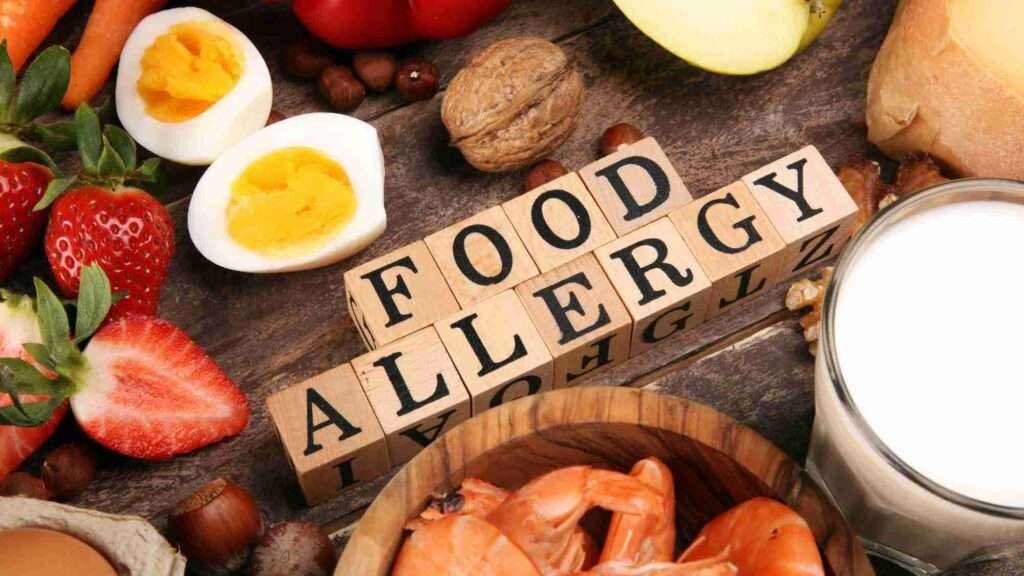
Major allergens (most common): (sesame is now also recognised as a major allergen — often called the “Big 9”)
| Allergen | Common Sources | Hidden In |
|---|---|---|
| Milk (doodh) | Dairy products, ghee, paneer | Baked goods, chocolates, many Indian sweets |
| Eggs (anda) | Eggs, mayonnaise | Cakes, pasta |
| Peanuts (moongphali) | Peanut butter, groundnut oil | Sauces, Indian sweets, snacks |
| Tree nuts | Almonds, cashews, walnuts | Desserts, pesto, marzipan |
| Wheat (gehu) | Roti, bread, pasta | Soy sauce, many processed foods |
| Soy (soya) | Soy milk, tofu | Many processed foods, oils |
| Fish (machli) | All fish | Fish sauce, Caesar dressing |
| Shellfish | Prawns, crabs, lobster | Fish sauce, some soups |
Common in India:
- Sesame (til)
- Chickpeas (chana)
- Lentils (dal)
Note on egg allergy and vaccines: Egg allergy does not prevent routine childhood vaccination — children with egg allergy can safely receive their IAP-schedule vaccines, including most influenza vaccines. Discuss the rare egg-containing vaccines with your pediatrician.
Protective Measures (Suraksha Ke Upay)
Step 1: Know Your Child’s Allergens
Document clearly:
-
Exact foods that cause reaction
-
What form triggers reaction (some can tolerate baked milk but not fresh)
-
Type of reaction (mild vs severe)
-
How quickly reaction occurs Keep records of:
-
Allergy test results
-
Previous reaction descriptions
-
Doctor’s recommendations
Step 2: Learn to Read Labels
Label reading is ESSENTIAL!
Look for:
- Allergen clearly listed in ingredients
- “Contains” statements
- “May contain” or “Processed in facility with” warnings Allergen names to watch:
| Allergen | May Also Be Called |
|---|---|
| Milk | Casein, whey, lactose, ghee, paneer |
| Egg | Albumin, globulin, lysozyme |
| Wheat | Gluten, semolina (suji), maida, atta |
| Peanut | Groundnut, arachis |
| Soy | Soya, lecithin (sometimes) |
Read labels EVERY TIME - ingredients can change!
Step 3: Create a Food Allergy Action Plan
Written plan should include:
- Child’s information
- Name, photo, age
- Allergen(s)
- Severity of allergy
- Symptoms to watch for
- Mild: hives, itching, single vomit
- Severe: breathing trouble, swelling, multiple symptoms
- Emergency steps
- When to give antihistamine (mild symptoms only)
- When to give adrenaline (epinephrine auto-injector, if prescribed)
- When to call an ambulance (112 / 108)
- Emergency contacts
- Parents’ numbers
- Doctor’s number
- Nearest hospital Share this plan with: School, grandparents, caregivers, birthday party hosts
Step 4: Carry Emergency Medications
Always have with child:
| Medication | When to Use |
|---|---|
| Antihistamine (cetirizine/Allegra) | Mild symptoms - hives, itching, single symptom |
| Epinephrine auto-injector (EpiPen) | Severe/anaphylaxis - breathing trouble, multiple symptoms |
| Asthma inhaler (if asthmatic) | Wheezing, breathing issues |
⚠️ Important for Indian families: Adrenaline auto-injectors (EpiPen and similar) are not always easily available or affordable in India and require a prescription. Do not assume you can buy one off the shelf. Discuss with your pediatrician or allergist what your emergency plan is — this may be an auto-injector if available, or a written plan to give intramuscular adrenaline / reach the nearest emergency room immediately.
Antihistamines treat only mild itching/hives — they do NOT treat anaphylaxis and must never delay adrenaline. Use only the brand, dose and age your pediatrician has prescribed. Never use an antihistamine to “buy time” in a severe reaction.
Rules for medication:
- Check expiry dates regularly
- Keep at proper temperature
- If an auto-injector is prescribed and available, keep one with the child and a spare at home/school where possible
- Everyone caring for child should know where it is
Step 5: Prevent Cross-Contamination
At home:
-
Separate cooking utensils for allergic child (if needed)
-
Clean surfaces before preparing safe food
-
Store allergen-free foods separately
-
Label containers clearly At restaurants/outside:
-
Inform staff about allergy
-
Ask about ingredients
-
Request separate preparation
-
When in doubt, don’t eat At school/parties:
-
Send safe food from home
-
Inform hosts in advance
-
Talk to teachers
-
Consider medical ID bracelet
Step 6: Educate Your Child
Age-appropriate education:
| Age | What to Teach |
|---|---|
| 2-4 years | ”No eating from others without asking mama/papa” |
| 4-6 years | Name of allergen, “I’m allergic to ___“ |
| 6-8 years | Reading simple labels, recognizing allergen |
| 8+ years | Self-advocating, when to get help, using their adrenaline auto-injector (if prescribed) |
Empower without scaring - focus on what they CAN eat!
Step 7: Regular Medical Follow-Up
Annual allergist visits:
- Allergies can change (some outgrow)
- Update action plan
- Adjust medication doses for weight
- Discuss new therapies
Recognizing Allergic Reactions
Mild Reaction
Symptoms:
-
Hives (urticaria) - red, itchy bumps
-
Itching
-
Mild swelling
-
Single episode vomiting
-
Runny nose Action:
-
Give antihistamine (only the one your pediatrician has prescribed) — this relieves itch and hives but does not treat anaphylaxis
-
Monitor closely — if breathing trouble, swelling, or collapse appears, treat as a severe reaction immediately
-
Call doctor if worsening
Severe Reaction (Anaphylaxis) - EMERGENCY!
Symptoms:
-
Difficulty breathing/wheezing
-
Swelling of throat/tongue
-
Dizziness/fainting
-
Multiple body systems affected
-
Pale or blue color
-
Confusion Action:
-
Give adrenaline (epinephrine) IMMEDIATELY if it has been prescribed and is available — into the mid-outer thigh
-
Call an ambulance immediately — 112 (national emergency) or 108 (medical ambulance in most states) — or go straight to the nearest hospital
-
Position by symptom: if the child is faint or dizzy, lay them flat with legs raised; if they are struggling to breathe, let them sit upright (legs out in front, not in a chair); hold a baby horizontally in your arms, never upright over your shoulder. Never make the child stand or walk suddenly.
-
Second dose of adrenaline if no improvement in 5 minutes
-
Always go to hospital, even if the child improves — symptoms can come back hours later (a biphasic reaction), so any child given adrenaline must be observed in hospital
Tips for Success
At Home
- Cook from scratch when possible
- Create “safe” versions of favorite foods
- Involve child in cooking (they learn about ingredients)
- Keep safe snacks readily available
At School
- Meet with teachers at start of year
- Provide action plan and medication
- Send safe snacks
- Request allergen-free table if needed
- Update staff annually
At Social Events
- Call host in advance
- Offer to bring safe dishes
- Feed child before if uncertain about food
- Stay and supervise younger children
- Don’t make child feel excluded
When Traveling
- Carry safe snacks
- Research restaurants in advance
- Carry doctor’s letter (for carrying medication)
- Know local hospital location
- Learn how to say allergy in local language
Common Mistakes to Avoid
| Mistake | Why It’s Dangerous | Do This Instead |
|---|---|---|
| ”Just a little bit won’t hurt” | Even traces can trigger severe reaction | Strict avoidance |
| Not reading labels | Ingredients change, hidden allergens | Read EVERY time |
| Leaving medication at home | Emergency can happen anywhere | Carry always |
| Not informing caregivers | They can’t protect what they don’t know | Communicate clearly |
| Relying on “safe” restaurants | Cross-contamination happens | Always verify |
Frequently Asked Questions
Q: Bachcha milk allergy se kabhi bahar aayega?
A: Many children DO outgrow milk allergy in childhood — studies suggest a majority become tolerant by school age, though this varies a lot from child to child and by the type of allergy. Your allergist will do periodic testing to check. Some children tolerate baked milk (in cakes) before fresh milk. Don’t try reintroduction at home - always under doctor supervision. Even if not outgrown, management becomes easier as child learns.
Q: EpiPen kab dena chahiye?
A: Give adrenaline (the auto-injector, if one has been prescribed and is available) for: difficulty breathing, swelling of lips/tongue/throat, dizziness/fainting, severe vomiting with other symptoms, or any time the child looks very sick after allergen exposure. When in doubt, GIVE IT — it’s safer to give unnecessarily than to delay in a true emergency. Then call an ambulance (112 or 108). Don’t wait to see if symptoms improve. Remember that auto-injectors are not always available in India — ask your pediatrician what your individual emergency plan is, which may instead be intramuscular adrenaline and rushing to the nearest hospital.
Q: School mein kaise manage karun?
A: Steps: 1) Meet teachers and principal before school starts, 2) Provide written allergy action plan with photo, 3) Give medication to school nurse/office, 4) Send safe lunch and snacks daily, 5) Request allergen awareness in classroom, 6) Educate your child to self-advocate, 7) Consider medical ID bracelet, 8) Provide safe treats for class birthdays.
Q: Restaurant mein kaise khana khilaaun safely?
A: Tips: Call ahead and explain allergy, ask to speak with chef, choose simple dishes (grilled plain, etc.), avoid fried foods (shared oil), inform server clearly, check ingredients even for “safe” sounding dishes, carry safe snacks as backup. Some families carry chef cards (allergy info in local language). When traveling in India, home food is often safest option.
Q: Allergy aur intolerance mein kya farak hai?
A: ALLERGY = immune system reaction, can be life-threatening (anaphylaxis), even tiny amounts can trigger, symptoms include hives, breathing trouble, swelling. INTOLERANCE = digestive issue, uncomfortable but not dangerous, usually needs larger amounts to trigger, symptoms are mainly digestive (gas, diarrhea, stomach pain). Lactose intolerance is NOT same as milk allergy. Allergy requires strict avoidance and emergency medication.
This article was reviewed by a pediatrician. Last updated: January 2025
This article is general information for Indian parents, not a substitute for examination by your pediatrician. In an emergency, call 112 or 108.
Managing your child’s food allergy? Babynama’s pediatricians can help you create an action plan and answer your questions. Chat with us on WhatsApp!
Need personalized guidance? Book a consultation with our pediatricians or explore our Care Plans for 24/7 expert support!
Related Tools
Starting Solids? We Can Help!
Expert-guided nutrition plans for your baby.
Explore Nutrition Program