Last updated: January 2026
Quick Answer
Gentle exercise after delivery helps your body recover faster, improves mood, and boosts energy - but timing matters! For vaginal delivery, light walking can start within days, with regular exercise beginning at 6 weeks. For C-section, wait 6-8 weeks for any exercise beyond gentle walking. This guide provides safe, gentle workouts that work for Indian mothers, including exercises you can do at home.
When Can You Start Exercising?
Timeline for Different Deliveries
Normal Vaginal Delivery:
| Time | What’s Safe |
|---|---|
| Day 1-3 | Gentle walking, Kegels |
| Week 1-2 | Short walks, deep breathing |
| Week 2-4 | Longer walks, pelvic tilts |
| Week 6+ | Regular exercise (after doctor clearance) |
C-Section Delivery:
| Time | What’s Safe |
|---|---|
| Day 2-3 | Very short walks (hospital corridors) |
| Week 1-2 | Gentle walking at home |
| Week 4-6 | Slightly longer walks |
| Week 8+ | Regular exercise (after doctor clearance) |
Signs You’re Ready for More
- Bleeding has significantly reduced
- Pain is minimal
- You feel stronger
- C-section incision has healed
- Doctor has given approval
Signs to Slow Down
- Bleeding increases
- Pain returns or worsens
- Extreme fatigue
- Dizziness
- Any discomfort
Benefits of Postpartum Exercise
Physical Benefits:
-
Helps uterus return to normal size
-
Reduces pregnancy weight
-
Strengthens weakened muscles
-
Improves energy levels
-
Helps with constipation
-
Better sleep quality Mental Benefits:
-
Reduces postpartum depression symptoms
-
Decreases anxiety
-
Improves mood
-
Boosts confidence
-
Provides “me time” Breastfeeding Benefits:
-
Does NOT reduce milk supply (moderate exercise)
-
May improve milk quality slightly
-
Helps you feel better, which helps breastfeeding
Step-by-Step Exercise Guide
Week 1-2: Foundation Exercises
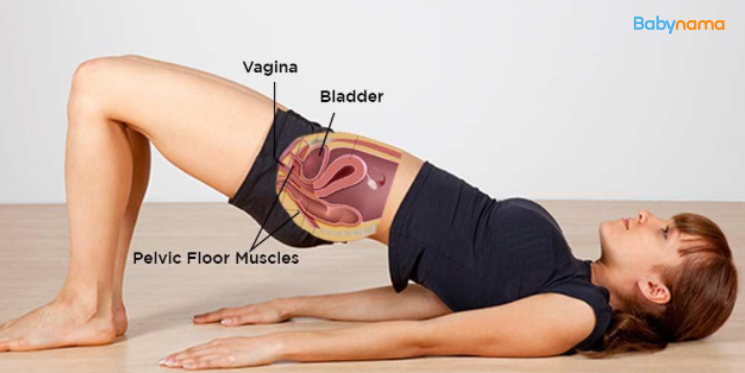
1. Kegel Exercises (Start Immediately)
Why: Strengthens pelvic floor, prevents incontinence
How to do:
- Identify muscles by stopping urine mid-stream (just once to learn - don’t do this regularly)
- Squeeze those muscles tightly
- Hold for 5 seconds
- Release slowly
- Do 10 repetitions, 3-5 times daily 2. Deep Breathing
Why: Gently engages core, promotes relaxation
How to do:
- Lie on back, knees bent, feet flat
- Place hands on belly
- Breathe in deeply - belly should rise
- Exhale slowly - belly falls
- Do 10 breaths, several times daily 3. Gentle Walking
Start: 5-10 minutes
Progress: Add 5 minutes every few days
Where: Inside home or around the neighborhood
Week 2-4: Progressing Slowly
4. Pelvic Tilts
Why: Strengthens lower back and core gently
How to do:
- Lie on back, knees bent, feet flat
- Tighten stomach muscles
- Press lower back into floor
- Hold 5-10 seconds
- Release
- Do 10-15 repetitions 5. Heel Slides
Why: Gentle core engagement
How to do:
- Lie on back, knees bent
- Slowly slide one heel along floor to straighten leg
- Slide back
- Repeat with other leg
- Do 10 each side 6. Shoulder Rolls and Neck Stretches
Why: Releases tension from feeding and holding baby
How to do:
- Roll shoulders forward, then backward
- Gently turn head side to side
- Tilt ear toward shoulder (each side)
- Hold stretches 15-30 seconds
Week 6+: Regular Exercise (After Clearance)
7. Bridge Exercise
Why: Strengthens glutes, back, core
How to do:
- Lie on back, knees bent, feet flat
- Lift hips off floor
- Hold 5-10 seconds
- Lower slowly
- Do 10-15 repetitions 8. Cat-Cow Stretch
Why: Great for back pain, gentle core work
How to do:
- Get on hands and knees
- Arch back upward like a cat, head down
- Then curve downward, head up (cow)
- Move slowly between positions
- Do 10 repetitions 9. Modified Squats
Why: Strengthens legs, practical for picking up baby
How to do:
- Stand with feet hip-width apart
- Hold onto chair for balance
- Lower slowly as if sitting
- Only go halfway down initially
- Return to standing
- Do 10 repetitions 10. Wall Push-Ups
Why: Gentle arm strengthening
How to do:
- Stand arm’s length from wall
- Place hands on wall, shoulder-width apart
- Bend elbows, lean toward wall
- Push back
- Do 10-15 repetitions
Exercise and Breastfeeding (Stanpan ke Saath)
Good News for Breastfeeding Mothers
- Moderate exercise does NOT reduce milk supply
- Quality of breast milk is not affected
- Maa ka doodh remains nutritious for baby
- Exercise can help milk flow!
Tips for Exercising While Breastfeeding
Before Exercise:
-
Feed baby or pump before workout
-
Wear supportive nursing bra
-
Use breast pads if needed During Exercise:
-
Stay hydrated (drink water before, during, after)
-
Avoid very high-intensity workouts initially
-
Wear comfortable, breathable clothes After Exercise:
-
Wait 30-60 minutes before feeding if workout was intense (some babies don’t like the taste of lactic acid)
-
Shower if possible before feeding
-
Express a little milk first if breasts feel full
Does Exercise Affect Milk Taste?
- Very intense exercise may produce lactic acid
- Some babies refuse breast temporarily (tastes different)
- Solution: Moderate exercise, or feed before workout
- Usually not a problem with gentle to moderate exercise
Tips for Success
- Start slowly - Build up gradually
- Listen to your body - Pain means stop
- Stay hydrated - Extra important while breastfeeding
- Wear supportive bra - Especially for walking
- Exercise when baby sleeps - Or involve baby (stroller walks)
- Be consistent - 15-20 minutes daily is better than 1 hour weekly
- Involve baby - Baby-wearing, stroller walks make it easier
Exercises You Can Do With Baby
Stroller Walking: Great cardio, baby comes along!
Baby Wearing + Walking: Burns extra calories
Dance with Baby: Fun, bonding, and exercise
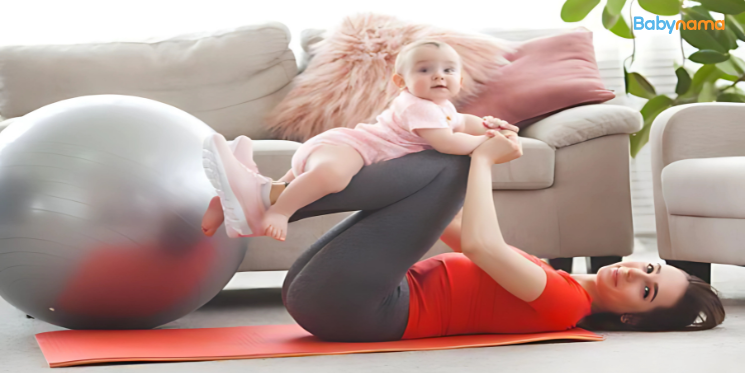
Baby on Chest Bridge: Baby adds gentle resistance
Tummy Time Together: You do modified planks while baby does tummy time
Common Mistakes to Avoid
- Starting too soon - Especially after C-section
- Doing too much - Progress gradually
- Ignoring pain - Pain is a signal to stop
- High-impact exercises too early - Running, jumping can wait
- Skipping warm-up - Always warm up
- Forgetting pelvic floor - Kegels are foundation!
- Not drinking enough water - Dehydration affects everything
When to Stop and Seek Help
Stop exercising if:
- Bleeding increases (more than before exercise)
- Pain during or after exercise
- Dizziness or lightheadedness
- Shortness of breath beyond normal
- Chest pain
- Leaking urine during exercise (pelvic floor needs more work)
- C-section incision pain or opening
🚨 Seek urgent care (go to your nearest hospital, or call 112 (national emergency) or 108 (ambulance)) if you have sudden heavy vaginal bleeding (soaking a pad in an hour or passing large clots), severe chest pain or breathlessness, fever, or a hot, painful, swollen leg — these can signal a serious postpartum complication. Consult a doctor or physiotherapist for:
- Persistent back pain
- Urinary incontinence
- Abdominal bulging (diastasis recti)
- Pelvic floor problems
- Not sure if you’re ready
Frequently Asked Questions
Q: C-section ke baad exercise kab start kar sakti hoon?
A: Very gentle walking can start within 1-2 weeks. Any other exercise should wait until 6-8 weeks after surgery, and only after your doctor gives clearance. Your incision needs to heal completely first. When you start, begin very slowly and avoid any exercise that puts pressure on your abdomen.
Q: Kya exercise se doodh kam ho jayega?
A: No! Moderate exercise does not reduce breast milk supply. In fact, exercise can improve your overall health and mood, which may help breastfeeding. Just stay well hydrated (drink extra water) and eat enough calories. Only extremely intense exercise might temporarily affect milk.
Q: Pet kam karne ke liye konsa exercise karoon?
A: Belly fat is the hardest to lose - be patient. Start with pelvic floor and deep core exercises (pelvic tilts, breathing). Avoid sit-ups and crunches initially, especially if you have diastasis recti (abdominal separation). Walking is excellent for overall fat loss. Core strengthening takes time - expect 6-12 months for significant change.
Q: Ghar pe exercise equipment ke bina kaise exercise karun?
A: All the exercises in this guide can be done at home without equipment! Walking (inside or outside), bodyweight exercises, yoga stretches, and baby-involved activities are all effective. You don’t need a gym or equipment to get fit after delivery.
Q: Kitni der exercise karni chahiye?
A: Start with 10-15 minutes and gradually increase to 30-45 minutes. The goal is 150 minutes of moderate exercise per week (about 30 minutes, 5 days). However, even 10-15 minutes daily is beneficial. Quality and consistency matter more than duration.
This article was reviewed by a healthcare provider. Listen to your body and progress at your own pace. Every mother’s recovery is different.
This article is for general information for parents in India and is not a substitute for professional medical advice. Recovery timelines vary, and you should always get clearance from your own doctor or physiotherapist before starting or progressing postpartum exercise — especially after a C-section or any complicated delivery. For any medical concern, please consult your doctor.
Need personalized guidance? Book a consultation with our pediatricians or explore our Care Plans for 24/7 expert support!
Related Tools