Quick Answer
YES, pelvic floor exercises can significantly improve bladder control and overall health for mothers! If you’re experiencing urine leakage (hassi aane pe peshab nikalna) after pregnancy, you’re not alone - it is very common, with studies reporting that roughly one in three women experience some bladder leakage after childbirth. The good news is that regular Kegel exercises can strengthen these muscles and restore control within weeks. It’s never too late to start!
Why Pelvic Floor Strength Matters
Pelvic Floor Functions:
-
Controls bladder (prevents leakage)
-
Supports pelvic organs
-
Controls bowel movements
-
Affects intimate sensation
-
Supports spine and posture Common Problems from Weak Pelvic Floor:
-
Stress incontinence (leaking when laughing, coughing, sneezing)
-
Urge incontinence (sudden strong urge to urinate)
-
Pelvic organ prolapse (organs dropping)
-
Reduced intimate satisfaction
-
Lower back pain
Why This Happens to Mothers
Causes of Weak Pelvic Floor:
| Cause | How It Affects Pelvic Floor |
|---|---|
| Pregnancy | Baby’s weight stretches muscles |
| Vaginal delivery | Muscles stretched during birth |
| C-section | Pregnancy weight still weakens muscles |
| Multiple pregnancies | Cumulative effect |
| Hormonal changes | After delivery and during menopause |
| Aging | Natural muscle weakening |
| Obesity | Extra weight strains muscles |
| Chronic constipation | Straining damages muscles |
| Heavy lifting | Incorrect lifting strains floor |
Quick Exercise Guide
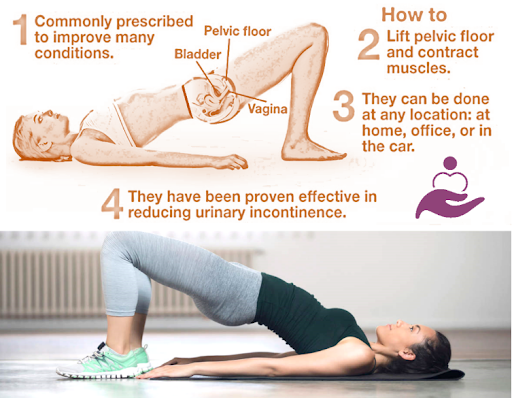
Finding Your Pelvic Floor Muscles
Method 1: Next time you urinate, try to stop the flow midstream. Those muscles are your pelvic floor. (Only do this to identify - don’t practice regularly while urinating.)
Method 2: Imagine you’re stopping gas from passing. The squeeze you feel is your pelvic floor.
Basic Kegel Exercises
Exercise 1: Long Squeezes
-
Squeeze pelvic floor muscles
-
Hold for 5-10 seconds
-
Release slowly for 5 seconds
-
Rest 5 seconds
-
Repeat 10 times Exercise 2: Quick Pulses
-
Squeeze quickly
-
Release immediately
-
Repeat 10 times fast
-
Rest and repeat Daily Routine:
-
Morning: 10 long squeezes + 10 quick pulses
-
Afternoon: Same
-
Evening: Same
-
Total: 3 sets daily
When to Worry (Red Flags)
Contact your doctor if you notice:
- Complete loss of bladder control
- No improvement after 8 weeks of exercises
- Heaviness or bulging in vagina
- Pain during exercises
- Blood in urine (see a doctor the same day)
- Difficulty emptying bladder (see a doctor promptly)
- Bowel control issues
- Worsening symptoms despite exercises
What You Can Do
Start Exercises:
-
Begin gently, especially after delivery
-
Be consistent - daily practice matters
-
Increase duration and repetitions gradually
-
Can do anywhere - cooking, watching TV, in auto Lifestyle Changes:
-
Maintain healthy weight
-
Treat constipation (eat fiber, drink water)
-
Lift correctly (engage pelvic floor, bend knees)
-
Avoid high-impact exercises initially
-
Quit smoking (chronic cough strains muscles) Good Habits:
-
Don’t hold urine for too long
-
Don’t strain during bowel movements
-
Stay hydrated but not excessively before bed
-
Empty bladder before exercise
Timeline for Improvement
| Week | What to Expect |
|---|---|
| 1-2 | Learning to identify muscles correctly |
| 2-4 | Starting to feel some control |
| 4-6 | Noticeable improvement in symptoms |
| 6-8 | Significant improvement for most women |
| 3+ months | Full strength if consistent |
Frequently Asked Questions
Q: Delivery ke baad peshab control nahi ho raha - kya yeh permanent hai?
A: No, it’s not permanent for most women! Urinary incontinence after delivery is very common but usually improves with exercises. Start Kegels as soon as you’re comfortable after delivery. Most women see significant improvement within 6-8 weeks of consistent daily practice. If it doesn’t improve, pelvic floor physiotherapy can help.
Q: Can I do pelvic floor exercises during pregnancy?
A: Yes! Pelvic floor exercises are safe and beneficial during pregnancy. They help support the growing baby’s weight, prepare for delivery, and reduce risk of incontinence after birth. Start early in pregnancy and continue throughout. Just be gentle and stop if you feel discomfort.
Q: How do I know if I’m doing Kegels correctly?
A: You’re doing them correctly if you feel a squeeze and lift sensation. You should NOT be squeezing your buttocks, thighs, or holding your breath. To check: insert a clean finger into vagina and squeeze - you should feel pressure around your finger. If unsure, ask for a pelvic floor physiotherapy referral.
Q: Mere saas kehti hain ki yeh sab apne aap theek ho jata hai - is that true?
A: Some mild issues may improve on their own, but don’t rely on this! Active exercise gives much better results than waiting. Women who do pelvic floor exercises after delivery have significantly better bladder control than those who don’t. Starting exercises early prevents long-term problems that can worsen with age and future pregnancies.
Q: I had a C-section - do I still need pelvic floor exercises?
A: Yes! Even with C-section, your pelvic floor muscles supported your baby’s weight throughout pregnancy, which weakens them. Many C-section mothers experience bladder issues too. Pelvic floor exercises are important for all mothers, regardless of delivery method.
This article was medically reviewed by the Babynama Pediatricians team. Last updated: January 2025
Pelvic floor and bladder concerns are best assessed by an obstetrician-gynaecologist or a pelvic floor physiotherapist. If you have persistent leakage, prolapse symptoms, pain, or blood in the urine, please see your doctor.
Need personalized guidance? Book a consultation with our pediatricians or explore our Care Plans for 24/7 expert support!
Related Tools
Disclaimer: This article is for general information for parents in India and is not a substitute for professional medical advice. Always consult your own doctor, gynaecologist, or pediatrician for guidance specific to you and your baby. In an emergency, call 112 (national emergency) or 108 (ambulance), or go to your nearest hospital.