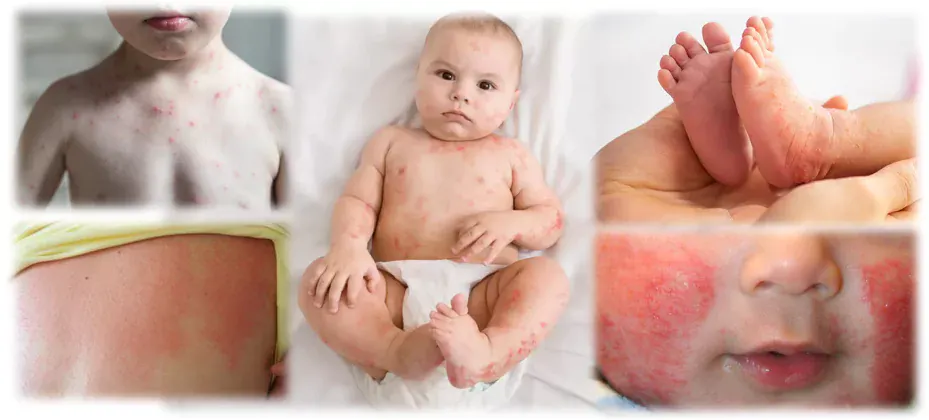
Last updated: January 2026
Quick Answer
My baby has a rash with fever - is it a viral rash? Likely YES - viral rashes are extremely common in infants and usually resolve on their own within a few days to a week.
Seeing a rash on your baby can be scary, but viral rashes are one of the most common reasons babies develop skin rashes. In fact, many common childhood illnesses come with a rash. The good news is that most viral rashes are mild and go away on their own without treatment, though you should always watch for the danger signs below. The key is knowing when a rash is just a normal viral rash versus something more serious that needs immediate attention.
What is a Viral Rash?
A viral rash (also called viral exanthem) is a skin rash caused by a viral infection. It’s your baby’s body responding to fighting off a virus.
Common Characteristics:
- Usually appears during or after a fever
- Often widespread (multiple body parts)
- Usually not itchy (but some can be)
- Goes away on its own
- Child may be irritable but usually not very sick
Types of Viral Rashes in Babies
1. Roseola (Sixth Disease / Roseola Infantum)
Most common in: 6 months to 2 years
Symptoms:
- High fever (39-40°C) for 3-5 days
- Fever suddenly stops
- Pink rash appears AFTER fever goes away
- Rash starts on trunk, spreads to arms/legs
- Child feels better once rash appears Important: Roseola can cause febrile seizures due to high fever. These are frightening to watch but, in children aged 6 months to 5 years, simple febrile seizures are usually benign. If a seizure happens, lay the baby on their side, do not put anything in the mouth, and time it. Seek emergency care (call 112 or 108) if it lasts more than 5 minutes, repeats, or your child does not wake up properly afterwards.
2. Hand, Foot, and Mouth Disease (HFMD)
Most common in: Under 5 years
Symptoms:
- Fever
- Painful mouth sores (chhale)
- Blisters on palms and soles
- Sometimes on buttocks
3. Chickenpox (Chechak)
Most common in: Unvaccinated children
Symptoms:
- Itchy blisters all over body
- Starts as red spots, becomes blisters, then crusts
- Fever
- Very contagious
4. Measles (Khasra)
Most common in: Unvaccinated children
Symptoms:
- High fever, cough, runny nose
- Red eyes
- White spots inside mouth (Koplik spots)
- Red rash starts on face, spreads down
Measles is serious and is still common in parts of India. Any child you suspect has measles should be seen by a doctor — it can lead to pneumonia, encephalitis (brain inflammation) and, in some children, death. Children with measles are given vitamin A as per IAP/WHO guidance. Measles is highly contagious from before the rash appears. The best protection is the MMR vaccine on time — per the IAP schedule, the first dose is given at 9–12 months, the second at 15–18 months, and a third dose at 4–6 years.
5. Fifth Disease (Slapped Cheek)
Symptoms:
- Bright red cheeks (like slapped)
- Lacy rash on body
- Low fever
- Usually mild illness
6. Rubella (German Measles)
Symptoms:
- Mild fever
- Pink rash starting on face
- Swollen lymph nodes behind ears
- Usually mild in children
How to Identify a Viral Rash
Signs It’s Likely Viral:
| Characteristic | Viral Rash |
|---|---|
| Onset | With or after fever |
| Spread | Usually widespread |
| Itching | Usually not itchy (except chickenpox) |
| Child’s condition | Mild illness, recovers well |
| Duration | Most settle within about 1 week |
Concerning Signs (May NOT Be Simple Viral):
- Rash doesn’t fade when pressed (petechiae/purpura)
- Severe headache with rash
- Very high fever with rash
- Child extremely sick or lethargic
- Blisters with pus
- Rash spreading rapidly with worsening condition
Home Care for Viral Rash
For Fever:
- Paracetamol (Crocin/Calpol) dosed by weight. Paracetamol is dosed by your baby’s weight, not age: 15 mg/kg per dose, no more often than every 4–6 hours, maximum 4 doses (60 mg/kg) in 24 hours. Syrup strengths differ — Calpol/Crocin come as 120 mg/5 ml and 250 mg/5 ml, so always check the bottle. Do not give to a baby under 3 months without a doctor seeing them first. Confirm the exact mL with your pediatrician. Never combine more than one paracetamol-containing product.
- Light clothing
- Adequate fluids
- Lukewarm sponging
⚠️ Never give aspirin (or any salicylate-containing medicine, including some combination cold/fever syrups) to a child with chickenpox, flu or any viral fever. It is linked to Reye’s syndrome — a rare but potentially fatal brain and liver condition. Use only paracetamol, dosed by weight as advised by your pediatrician.
⚠️ In a baby under 3 months, ANY fever of 100.4°F (38°C) or higher is a medical emergency — see a doctor the same day, even at night. Do not give paracetamol and wait.
For Itchy Rash (like chickenpox):
- Calamine lotion
- Oatmeal bath
- Keep nails short
- Cotton mittens for babies
- Antihistamine (consult doctor)
For General Care:
- Keep skin clean and dry
- Loose, cotton clothing
- Adequate rest
- Good hydration
- Continue breastfeeding
Traditional Remedies:
Some families use traditional comfort measures. These are widely used but have no proven benefit against the virus — discuss with your pediatrician, and follow these safety rules:
- A lukewarm bath can soothe the skin.
- Do NOT apply oils, neem paste or any home product onto open or blistered skin (e.g. chickenpox) — this can introduce bacteria and cause a secondary infection.
- Calamine lotion on intact skin and keeping the nails short are safe.
- There is no evidence that tulsi water or any home remedy boosts immunity against these viruses, and these are not a substitute for vaccination or medical care.
When to See a Doctor
🚨 Call 112 (national emergency) or 108 (ambulance), or go straight to the nearest hospital, if:
-
Rash doesn’t fade when pressed (glass test)
-
Child is extremely lethargic or difficult to wake
-
Severe headache or neck stiffness
-
Difficulty breathing
-
Very high fever not responding to medicine
-
Signs of dehydration
-
Rash spreading rapidly with child getting sicker
-
Baby under 3 months with any rash and fever Consult pediatrician if:
-
Rash lasts more than 1 week
-
You’re unsure what’s causing the rash
-
Child seems more unwell than expected
-
Rash looks infected (pus, increasing redness)
-
First time seeing this type of rash
Prevention
Vaccination Helps Prevent:
- Chickenpox (Varicella vaccine)
- Measles (MMR vaccine — per the IAP schedule: 1st dose at 9–12 months, 2nd at 15–18 months, 3rd at 4–6 years)
- Rubella (MMR vaccine)
Good Hygiene:
- Hand washing
- Avoid contact with sick children
- Don’t share utensils, towels
What’s Normal with Viral Rash?
Normal (Don’t Worry):
- Rash spreading but child feeling better
- Rash settling within about a week
- Some irritability during illness
- Mild loose stools during viral illness
- Skin peeling after rash heals
Not Normal (Consult Doctor):
- Child getting sicker as rash spreads
- Rash with high persistent fever
- Pus or infection signs
- Difficulty breathing
- Severe pain
Expert Insight: Most viral rashes look alarming, but the child is usually recovering. The two things our pediatricians always check are whether the rash blanches (fades) on pressure and whether the child is feeding, alert and passing urine. A non-blanching rash, or a drowsy, poorly-feeding baby, needs to be seen the same day.
FAQs
Q: My baby has a rash after fever went away - is this normal?
A: Yes! This is classic for Roseola. The rash appears AFTER the fever ends and is actually a sign that baby is recovering. The child usually feels much better once the rash appears.
Q: Should I keep my baby with viral rash away from other children?
A: Usually yes, especially in the contagious period. Chickenpox and HFMD are very contagious. Keep away from pregnant women, newborns, and immunocompromised people.
Q: Can viral rash affect my baby’s potty/digestion?
A: Some viral illnesses cause mild loose stools along with the rash. This is usually temporary. Ensure good hydration. If diarrhea is severe or there’s blood, consult your doctor.
Q: How do I know if it’s viral rash or an allergic rash?
A: Viral rashes usually come with fever and illness. Allergic rashes are often itchy, may have hives, and appear after exposure to food/medicine. When in doubt, consult your pediatrician.
Q: My baby had roseola - can they get it again?
A: Roseola is usually a one-time infection. Once your child has had it, they develop immunity. However, different viruses can cause similar rash patterns.
Q: Is bathing okay during viral rash?
A: Yes, gentle bathing with lukewarm water is fine and can soothe the skin. Avoid harsh soaps. Pat dry gently, don’t rub.
This article was reviewed by a pediatrician. For personalized advice about your baby’s rash, consult with Babynama’s pediatric experts on WhatsApp.
This article is general information for Indian parents, not a substitute for examination by your pediatrician. In an emergency, call 112 or 108.
Need personalized guidance? Book a consultation with our pediatricians or explore our Care Plans for 24/7 expert support!
Related Tools