Quick Answer
Most “sleep rules” you hear from relatives and friends are myths! Your baby is probably sleeping just fine for their age. Night waking is biologically expected for babies - it doesn’t mean you’re doing something wrong. This guide debunks 5 common myths that cause unnecessary stress for Indian parents.
Why Baby Sleep Feels So Hard
Before we bust the myths, understand this: baby sleep is VERY different from adult sleep.
- Babies have shorter sleep cycles (45-60 minutes vs 90 minutes for adults)
- They spend more time in light sleep
- They NEED to wake for feeding (small stomachs!)
- Their circadian rhythm (body clock) takes months to develop
This means frequent waking is expected and healthy, not a problem to fix.
Myth #1: “Baby Should Sleep Through the Night by 4 Months”
The Myth
“Padosi ki beti 3 mahine mein poori raat soti thi. Tumhara bachcha abhi tak kyun nahi sota?”
The Truth
Every baby is different. There is NO magical age when all babies start sleeping through the night.
| Age | Realistic Expectation |
|---|---|
| 0-3 months | Wake every 2-3 hours for feeding - NORMAL |
| 3-6 months | May have one 4-5 hour stretch - if lucky! |
| 6-9 months | Some babies sleep longer, many still wake 1-2 times |
| 9-12 months | Many (not all!) can sleep 6-8 hours |
| 12+ months | Night waking still common during teething, illness, milestones |
“Sleeping through the night” medically means just 5-6 hours - not 8-12 hours!
What to Do
- Stop comparing your baby to others
- Night waking for feeding is biologically normal
- It will improve with time - hang in there!
Myth #2: “Never Wake a Sleeping Baby”
The Myth
“Sote bachche ko kabhi mat jagao - neend mein disturb nahi karna chahiye.”
The Truth
Sometimes you SHOULD wake your sleeping baby!
Wake your baby if:
- Newborn sleeping more than 3-4 hours - They need frequent feeds for weight gain
- Jaundice - Frequent feeding helps clear bilirubin
- Poor weight gain - Doctor advises scheduled feeds
- Breast engorgement - To maintain milk supply
- Too much day sleep - May affect night sleep (especially after 4 months)
What to Do
- For newborns: Don’t let them sleep more than 3-4 hours without feeding
- After 4 months: If baby sleeps too much in day, gentle wake for feeds
- Sick babies may need extra sleep - follow doctor’s advice
Myth #3: “Putting Baby to Sleep Early Will Cause Early Morning Waking”
The Myth
“Jaldi sulaaoge toh jaldi uth jayega. Raat ko 10-11 baje sulaao.”
The Truth
Actually, the opposite is true! Overtired babies sleep WORSE.
- An overtired baby has more cortisol (stress hormone)
- This makes it HARDER to fall asleep and stay asleep
- Overtired babies often wake UP more at night
- Early bedtime often leads to BETTER sleep
Optimal bedtimes by age:
| Age | Ideal Bedtime |
|---|---|
| Newborn | No fixed time - follow cues |
| 3-6 months | 7-8 PM |
| 6-12 months | 6:30-7:30 PM |
| Toddlers | 7-8 PM |
What to Do
- Watch for tired cues (yawning, rubbing eyes, fussiness)
- Don’t wait until baby is overtired
- Earlier bedtime = better night sleep for most babies
Myth #4: “Some Drops/Tonics Will Make Baby Sleep Better”
The Myth
“Dawai ki dukaan se neend ki drops le lo, bachcha achhi neend soyega.”
The Truth
There are NO safe sleep drops for babies!
Dangers of “sleep drops” or “gripe water with sedatives”:
- Can contain harmful ingredients
- May suppress breathing
- Can be habit-forming
- Not regulated for safety
- Can mask underlying problems
What actually helps sleep:
- Consistent bedtime routine
- Dark, quiet room
- White noise
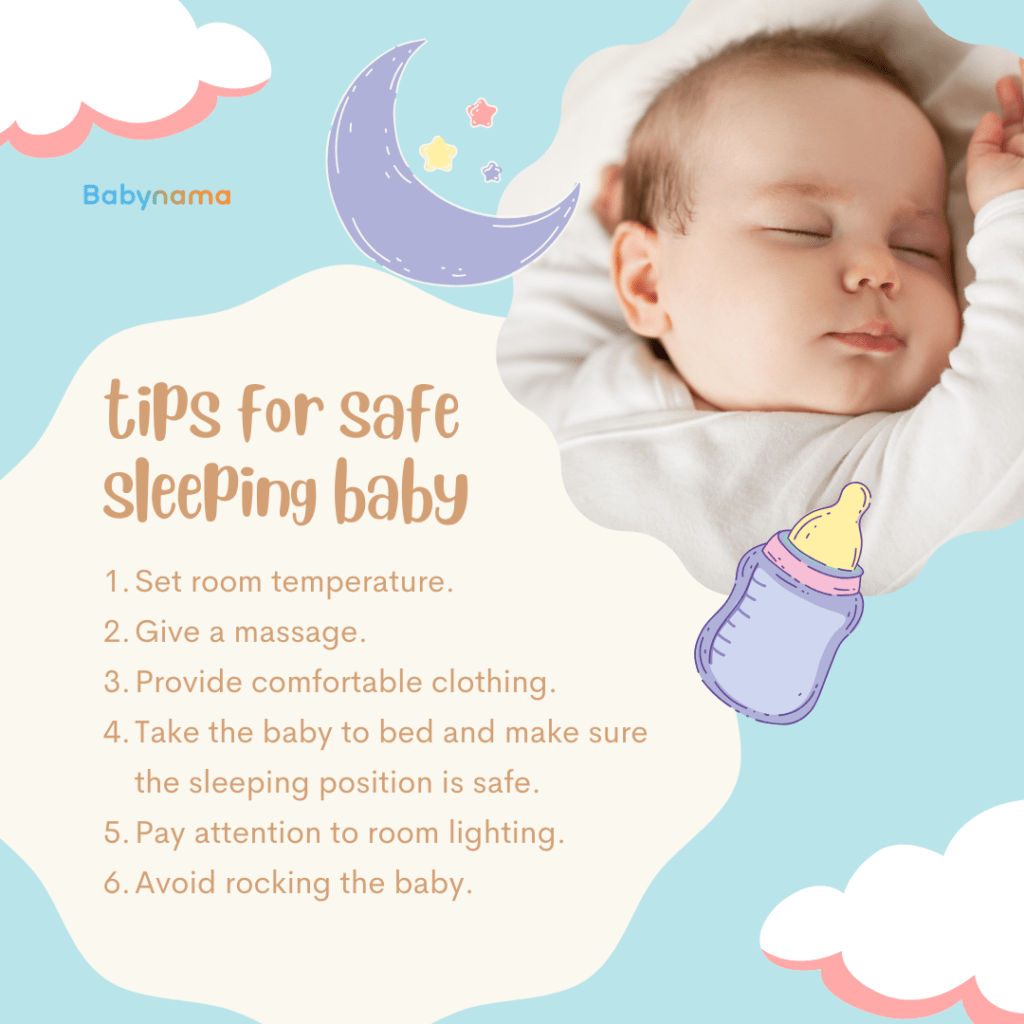
- Swaddling (for young babies)
- Regular day schedule
What to Do
- NEVER give any medicine for sleep without doctor’s prescription
- If baby isn’t sleeping well, look at environment and routine first
- Consult pediatrician if you’re worried
Myth #5: “Starting Solids Early Will Help Baby Sleep Longer”
The Myth
“Thoda cerelac/dal ka paani shuru kar do, pet bhar jayega toh poori raat soyega.”
The Truth
Research does not support this. Starting solids early is not a reliable way to make a baby sleep longer, and it carries real risks.
- Babies wake for many reasons, not just hunger
- Early solids (before 6 months) can cause digestive problems
- Baby’s gut is not ready for solids before 6 months
- Sleep patterns are developmental, not stomach-related
- Before 6 months, babies need only breast milk or formula - nothing else by mouth
What research shows:
- Most babies given solids early did not sleep meaningfully longer
- Some had more digestive discomfort (affecting sleep!)
- Breast milk/formula has more calories per ml than watery dal!
What to Do
- Wait until 6 months to start solids (as per WHO)
- Don’t expect solids to fix sleep
- Night waking often continues after solids are started
What Actually Affects Baby Sleep
Instead of myths, focus on these proven helpers:
Environment
- Dark room - Use blackout curtains
- Cool temperature - 24-26°C is ideal
- White noise - Fan sound, shushing sounds
- Safe sleep surface - Firm mattress, no loose bedding
Routine
- Consistent bedtime - Same time daily
- Calming pre-sleep ritual - Bath, massage, feed, lullaby
- Drowsy but awake - Help baby learn to fall asleep independently
Day Schedule
- Age-appropriate naps - Not too much, not too little
- Morning sunlight - Helps set body clock
- Active awake time - Tummy time, play
When to Worry (Red Flags)
Contact your pediatrician if:
- Baby is excessively sleepy and hard to wake
- Snoring or breathing pauses during sleep
- Baby never settles, constantly crying
- No improvement despite good sleep practices
- Baby is not gaining weight despite feeding well
- Raat ko bahut jagta hai AND seems unwell
🚨 Get emergency help immediately if your baby has pauses in breathing, turns blue, is extremely hard to wake, or is limp and unresponsive. Call 112 (national emergency) or 108 (ambulance), or go to the nearest hospital.
Also remember: in a baby under 3 months, ANY fever of 100.4°F (38°C) or higher is a same-day emergency - see a doctor the same day, do not medicate and wait at home.
Age-Wise Normal Sleep
| Age | Total Sleep (24 hrs) | Night Sleep | Naps |
|---|---|---|---|
| 0-3 months | 14-17 hours | 8-9 hours (interrupted) | 4-5 naps |
| 4-6 months | 12-16 hours | 9-10 hours | 3 naps |
| 6-12 months | 12-16 hours | 10-11 hours | 2 naps |
| 1-2 years | 11-14 hours | 10-11 hours | 1-2 naps |
Remember: These are averages. Your baby may need more or less!
Frequently Asked Questions
Q: Mera 3 mahine ka baby har 2 ghante jagta hai. Kya yeh normal hai?
A: YES! This is expected for a 3-month-old. Their small stomach empties quickly, and they genuinely need to feed frequently. Breast milk digests in about 2-3 hours. This is not a sleep problem - it’s normal infant biology. It will improve with time.
Q: Baby sirf godi mein soti hai, bed par rakhte hi uth jaati hai. Kya karein?
A: This is VERY common! Babies love being held - they spent 9 months in a cozy womb. For newborns, this is normal. After 3-4 months, you can gradually teach independent sleep: put baby down drowsy but awake, use white noise, and lay baby on a firm, flat surface with no loose bedding (never warm the bed with a hot water bottle or heating pad - it’s a burn and overheating risk). Don’t feel guilty about holding - it won’t “spoil” your baby.
Q: Raat ko 3 baje uth jaata hai aur khelna chahta hai. Kya karein?
A: Keep interactions boring! Don’t turn on lights, don’t play, keep voice soft and monotonous. Feed if needed, change diaper only if necessary. Baby will learn that nighttime is not playtime. This phase usually passes. Ensure daytime has enough stimulation and natural light.
Q: Sab kehte hain daytime sleeping kam karao toh raat mein achchi neend aayegi. Sahi hai?
A: Partially true, but not always. Yes, excessive day sleep can affect night sleep, especially after 4 months. But UNDERTIRED babies also sleep poorly! There’s a sweet spot. Age-appropriate naps actually HELP night sleep. Skipping naps usually backfires - overtired babies sleep worse.
Q: 6 month ka baby shuru se hi raat ko bahut jagta hai. Kuch galat toh nahi?
A: Most likely nothing is wrong! Every baby is different. Some babies naturally have “higher sleep needs” and wake more. Check: Is baby gaining weight? Happy when awake? Meeting milestones? If yes, baby is probably fine. Some babies need more parental support to sleep - it’s temperament, not a problem.
This article was reviewed by the Babynama Pediatricians. Last updated: June 2026
General information for Indian parents, not a substitute for your pediatrician. In an emergency, call 112 or 108.
Stressed about your baby’s sleep? Chat with Babynama’s pediatricians on WhatsApp. We can help you understand what’s normal for YOUR baby’s age and suggest gentle improvements - no judgment, just support!
Need personalized guidance? Book a consultation with our pediatricians or explore our Care Plans for 24/7 expert support!
Related Tools
Want Better Sleep for Your Baby?
Our sleep training program helps babies and parents rest better.
Explore Sleep Training