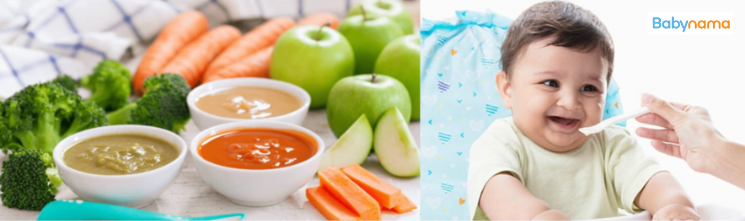
Quick Answer: At 7 months, your baby needs 3 small solid meals plus 2 snacks daily, along with breast milk (maa ka doodh) or formula as the primary nutrition source. Start with single-ingredient purees, then gradually introduce Indian staples like khichdi, dal rice, and ragi porridge. Don’t worry if baby eats very little initially - this is common at this age.
Is Your 7-Month-Old Ready for Solids?
By 7 months, most babies show these signs of readiness:
- Can sit with support
- Shows interest in food (reaching for your plate!)
- Has lost the tongue-thrust reflex
- Can move food from front to back of mouth
Reassurance for new parents: If your baby takes only 1-2 spoons of food and seems uninterested, don’t panic! At this age, breast milk/formula still provides 70-80% of nutrition. Solid foods are for practice and exposure, not for filling tummy.
Best Foods for 7-Month-Old Babies
Fruits (Phal) - Start Here!
| Fruit | How to Prepare | Benefits |
|---|---|---|
| Banana (Kela) | Mash with fork | Easy to digest, energy-rich |
| Apple (Seb) | Steam and puree | Good for digestion |
| Chikoo | Ripe and mashed | Sweet, iron-rich |
| Papaya | Mashed ripe | Aids digestion |
| Mango (Aam) | Pureed (in season) | Vitamin A, loved by babies |
| Pear (Nashpati) | Steam and mash | Gentle on tummy |
Vegetables (Sabzi)
| Vegetable | How to Prepare | Benefits |
|---|---|---|
| Sweet potato (Shakarkandi) | Steam and mash | Vitamin A, naturally sweet |
| Carrot (Gajar) | Steam and puree | Beta-carotene, bright color |
| Lauki (Bottle gourd) | Boil and mash | Light, easy to digest |
| Pumpkin (Kaddu) | Steam and puree | Vitamin A, mild taste |
| Potato (Aloo) | Boil and mash | Energy, filling |
Grains (Anaaj) - Indian Favorites
| Grain | Recipe Idea | Benefits |
|---|---|---|
| Rice (Chawal) | Soft rice with dal water | Easy first grain |
| Ragi | Ragi porridge with jaggery | Calcium, iron-rich |
| Suji (Semolina) | Suji kheer | Easy to digest |
| Oats (Jaee) | Oats porridge | Fiber, fills tummy |
| Dalia | Sweet or savory dalia | Whole grain goodness |
Proteins (Best for Growth)
| Protein Source | How to Give | Notes |
|---|---|---|
| Moong dal | Soft cooked, mashed | Start with this dal |
| Masoor dal | Pureed with rice | Iron-rich |
| Curd (Dahi) | Plain, full-fat | Calcium, probiotics |
| Egg yolk | Boiled, mashed | Start with yolk only |
| Paneer | Mashed soft | Calcium, protein |
7-Month-Old Baby Food Chart - Weekly Meal Plan
Week 1-2 Sample Plan
| Time | Monday | Tuesday | Wednesday | Thursday | Friday | Saturday | Sunday |
|---|---|---|---|---|---|---|---|
| Morning (8 AM) | Breast milk/Formula | BM/Formula | BM/Formula | BM/Formula | BM/Formula | BM/Formula | BM/Formula |
| Breakfast (10 AM) | Banana mash | Apple puree | Ragi porridge | Suji kheer | Oats + banana | Rice cereal | Banana + curd |
| Lunch (1 PM) | Moong dal khichdi | Carrot puree | Lauki puree | Dal rice | Sweet potato mash | Khichdi | Vegetable soup |
| Evening (4 PM) | Breast milk/Formula | BM/Formula | BM/Formula | BM/Formula | BM/Formula | BM/Formula | BM/Formula |
| Dinner (7 PM) | Papaya mash | Pumpkin puree | Chikoo mash | Apple puree | Mashed potato | Fruit puree | Dal water + rice |
| Night | Breast milk/Formula | BM/Formula | BM/Formula | BM/Formula | BM/Formula | BM/Formula | BM/Formula |
Week 3-4 Sample Plan (More Variety)
As baby gets comfortable, introduce:
-
Mixed vegetable khichdi
-
Ragi dosa batter (soft)
-
Curd rice

-
Egg yolk (if non-vegetarian)
-
Combination purees (apple + carrot)
Daily Routine for 7-Month-Old
| Time | Activity |
|---|---|
| 6-7 AM | Wake up, breast milk/formula |
| 8-9 AM | Playtime, tummy time |
| 10 AM | Breakfast (solid food) |
| 10:30-12 PM | Morning nap |
| 12-1 PM | Breast milk/formula, play |
| 1-2 PM | Lunch (solid food) |
| 2-4 PM | Afternoon nap |
| 4-5 PM | Breast milk/formula, play |
| 6 PM | Light snack/fruit |
| 7 PM | Dinner (solid food) |
| 7:30-8 PM | Bath, massage, bedtime routine |
| 8-8:30 PM | Breast milk/formula, sleep |
Flexibility note: This is just a guide! Every baby is different. Follow your baby’s hunger cues and adjust timing as needed.
Easy Indian Recipes for 7-Month-Old
1. Simple Moong Dal Khichdi
Ingredients: 1 tbsp rice, 1 tbsp moong dal, pinch of turmeric, water
Method:
- Wash rice and dal, soak for 30 minutes
- Pressure cook with 1 cup water and turmeric (3-4 whistles)
- Mash well until smooth
- Add a drop of ghee while serving
2. Ragi Porridge (Ragi Kanji)
Ingredients: 1 tbsp ragi flour, 1/2 cup water, 1/2 cup milk (breast milk/formula/cow’s milk)
Method:
- Mix ragi flour with water to make smooth paste
- Cook on low heat, stirring continuously
- Add milk and cook for 2-3 minutes
- Cool and serve (can add mashed banana or jaggery for sweetness)
3. Apple-Carrot Puree
Ingredients: 1 small apple, 1 small carrot
Method:
- Peel and chop apple and carrot
- Steam until soft (10-15 minutes)
- Blend or mash to smooth consistency
- Serve warm
4. Curd Rice (Thayir Sadam)

Ingredients: 2 tbsp cooked rice, 2 tbsp fresh curd
Method:
- Mash rice well
- Mix with fresh curd
- Serve at room temperature
Tips for Successful Feeding
Do’s:
- Start with single ingredients - Wait 3 days before introducing new food to check for allergies
- Keep consistency smooth - Gradually make it thicker as baby adjusts
- Offer water in sippy cup - 2-3 sips after meals
- Feed in upright position - Use high chair or sit baby on your lap
- Make mealtime fun - Sing, talk, make eye contact
- Be patient - May need to offer food 10-15 times before baby accepts it
Don’ts:
- Don’t add salt or sugar - Baby’s kidneys can’t handle salt; sugar creates bad habits
- Avoid mixing milk with fruits if it upsets baby - This is a widely held belief in many Indian families but has no proven harm for most babies; if you notice your baby is fussy after such combinations, discuss it with your pediatrician
- Don’t force feed - Creates negative association with food
- Don’t distract with screens - Baby needs to focus on eating
- Don’t give honey - Risk of infant botulism until age 1
Common Mistakes to Avoid
- Expecting baby to finish everything - Even 1-2 spoons is a success initially!
- Starting with fruit only - Balance with vegetables to prevent sweet preference
- Giving packaged foods too often - Homemade is always better than Cerelac
- Not offering water - Especially important in Indian summer
- Comparing with other babies - Every child has different appetite
When to Seek Help
Consult your pediatrician if:

- Baby refuses all solid foods even after trying for 2-3 weeks
- Baby is losing weight or not gaining adequately
- Persistent constipation or diarrhea with new foods
- Gagging or choking happens frequently
- Baby shows no interest in food by 8-9 months
🚨 Emergency: A severe allergic reaction (anaphylaxis) can be life-threatening. If after a new food your baby has swelling of the lips/face/tongue, difficulty breathing, persistent vomiting, widespread hives, or becomes floppy/unresponsive, call 112 (national emergency) or 108 (ambulance), or go to the nearest hospital immediately. If an adrenaline auto-injector has been prescribed, use it first. Do not wait.
Frequently Asked Questions
Q: My baby only wants breast milk and refuses all solid food. What should I do?
A: This is common! Continue offering small amounts without pressure. Make sure baby is hungry (not right after a milk feed). Try different textures and temperatures. Some babies take a few weeks to accept solids.
Q: Can I give my 7-month-old non-vegetarian food?
A: Yes! Egg yolk, chicken, and fish can be introduced after 6 months. Start with well-cooked, finely pureed meat. Many pediatricians recommend egg as an early food due to its excellent nutrition.
Q: Is homemade food better than Cerelac?
A: Yes, homemade food is preferred. It’s fresher, has no preservatives, and helps baby get used to family foods. Cerelac can be used occasionally for convenience, but shouldn’t replace homemade meals.
Q: My baby gags on food. Is this choking?
A: Gagging is different from choking - it’s a normal protective reflex and actually prevents choking. Baby may make faces, cough, or bring food forward. True choking is silent - baby can’t make sounds. If gagging is excessive, try smoother textures.
Q: How much water should I give?
A: A small amount - roughly 60-120 ml (about half to one cup) spread across the day - is enough at this age. Offer a few sips from a katori or sippy cup during and after meals. Breast milk/formula still provides most of your baby’s hydration.
Q: Can I add ghee to baby’s food?
A: Yes! Ghee is excellent for babies. It provides healthy fats for brain development. Add 1/4 to 1/2 teaspoon to khichdi, dal, or vegetables.
Key Takeaways
- Breast milk/formula is still primary nutrition - Solids are supplementary at 7 months
- Introduce one new food every 3 days - Watch for allergies
- Homemade Indian foods are perfect - Khichdi, dal rice, ragi are excellent choices
- Don’t stress about quantity - Focus on variety and exposure
- Every baby is different - Follow your baby’s cues, not rigid schedules
This article was reviewed by pediatricians at Babynama. Last updated: January 2026
General information for Indian parents, not a substitute for your pediatrician. In an emergency, call 112 or 108.
Need personalized guidance? Book a consultation with our pediatricians or explore our Care Plans for 24/7 expert support!
Related Tools
Starting Solids? We Can Help!
Expert-guided nutrition plans for your baby.
Explore Nutrition Program