Quick Answer
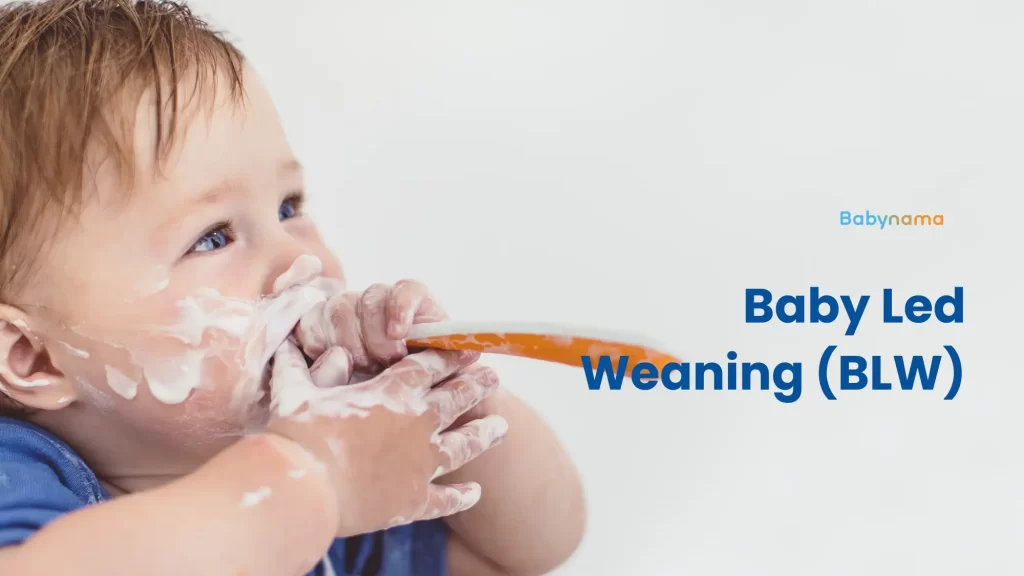
YES, Baby Led Weaning (BLW) is a safe and effective way to introduce solids - and it works great with Indian foods! Instead of spoon-feeding purees, you let your baby (6 months+) feed themselves soft finger foods from the start. Many Indian babies thrive with BLW using foods like idli, roti pieces, and steamed vegetables. Don’t worry - gagging is normal and different from choking!
What is Baby Led Weaning (BLW)?
BLW is an approach where your baby:
-
Feeds themselves from the very start of solids (6 months)
-
Sits with the family at mealtimes
-
Explores different textures, tastes, and shapes
-
Controls how much they eat (self-regulation)
-
Develops fine motor skills through handling food It’s NOT about:
-
Giving dangerous hard foods
-
Leaving your baby unsupervised
-
Forcing them to eat a certain amount
-
Skipping breastmilk/formula (these remain primary nutrition until 12 months)
Is My Baby Ready for BLW?
Your baby should meet ALL these signs (usually around 6 months):

| Readiness Sign | What It Looks Like |
|---|---|
| Can sit upright | Sits with minimal support, good head control |
| Lost tongue-thrust reflex | Doesn’t push food out of mouth automatically |
| Shows interest in food | Reaches for your food, watches you eat |
| Can grab objects | Brings things to mouth purposefully |
| Chewing motions | Makes munching movements even without teeth |
Note: Teeth are NOT required! Babies can gum soft foods effectively.
Indian BLW-Friendly Foods for Weight Gain
6-7 Months (First Foods):

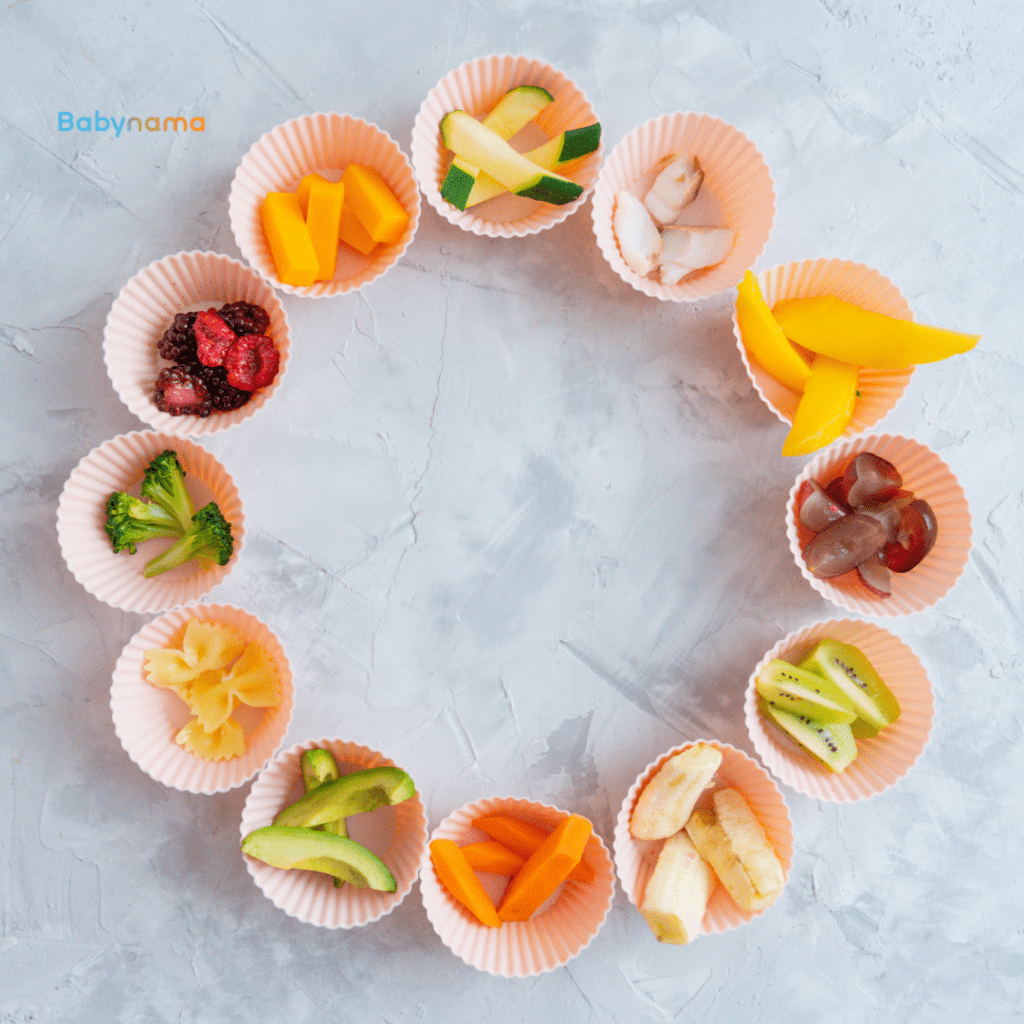
- Steamed idli pieces (soft, perfect grip size!)
- Soft dosa strips
- Ripe banana spears
- Steamed carrot/sweet potato sticks (finger-length) — cooked until they mash easily between your thumb and finger; if it doesn’t squash, it’s not soft enough
- Avocado wedges
- Soft roti pieces dipped in dal (without whole spices)
- Khichdi balls (moong dal + rice)
Softness test: Every stick, wedge, or piece must squash easily between your thumb and finger before you offer it. Never give hard fruit or vegetables raw (including apple) — carrot and sweet potato are firm and must be steamed soft. 8-9 Months (More Variety):
-
Paneer cubes (soft, fresh)
-
Soft paratha pieces with ghee
-
Dhokla pieces
-
Steamed broccoli/cauliflower florets
-
Uttapam pieces
-
Appam (soft center)
-
Egg omelette strips 10-12 Months (Advanced):
-
Soft poori pieces
-
Vegetable cutlets (home-made, soft)
-
Fish pieces (boneless, soft)
-
Chicken pieces (well-cooked, tender)
-
Fruit pieces (mango, chikoo, papaya)
-
Upma balls For Extra Weight Gain (Wajan Badhana):
-
Add ghee to foods
-
Include ragi-based foods (ragi dosa, ragi roti)
-
Offer cheese cubes
-
Use coconut in cooking
-
Include nut butters (if no family allergy history) — always thinned with water or milk, or spread very thinly on roti; never a thick spoonful
Understanding Gagging vs. Choking
THIS IS CRUCIAL FOR BLW:
| Gagging (NORMAL) | Choking (EMERGENCY) |
|---|---|
| Loud coughing/retching sounds | Silent or very quiet |
| Face may turn red | Face turns blue/purple |
| Baby can breathe | Cannot breathe |
| Self-resolving | Needs intervention |
| Learning reflex | Airway blocked |
Gagging is your baby’s safety mechanism! It’s how they learn to manage food. A baby’s gag reflex is triggered further forward on the tongue than an adult’s, which is protective. Stay calm - your baby will learn!
🚨 If your baby is actually choking — silent, can’t breathe, going pale, grey or blue — start back blows and chest thrusts immediately and call 112 (national emergency) or 108 (ambulance) at once. Do not wait. This is why learning infant CPR/first aid before you start BLW matters.
When to Worry (Red Flags)
Stop BLW and consult your pediatrician if:
- Baby chokes frequently (actual choking, not gagging)
- No interest in any food by 7-8 months
- Weight loss or no weight gain for 3+ weeks
- Persistent vomiting during or after meals
- Baby seems to have difficulty swallowing
- Any signs of allergic reaction (rash, swelling, breathing issues)
- Developmental delays affecting sitting or hand coordination
Safety Tips for Indian Parents
DO:
-
Always supervise mealtimes (never leave baby alone with food)
-
Learn infant CPR/first aid before starting
-
Ensure baby is sitting upright in a high chair
-
Cut round foods (grapes, cherry tomatoes) lengthwise
-
Remove seeds, bones, and tough skins
-
Offer small amounts of water in an open cup or sippy cup with meals DON’T:
-
Give whole nuts, popcorn, or hard raw vegetables
-
Offer sticky foods like peanut butter by the spoonful
-
Include whole spices (elaichi, laung) in baby’s food
-
Let baby eat in a moving car
-
Rush or distract baby during meals
-
Force food into baby’s mouth
BLW Meal Plan Sample (8-Month-Old)
Morning (with family breakfast):
-
Soft idli pieces with sambar (cooled, no whole spices)
-
Banana wedges Afternoon (lunch time):
-
Khichdi balls
-
Steamed gajar (carrot) sticks with ghee
-
Curd (let baby dip fingers!) Evening (dinner with family):
-
Soft roti pieces with dal
-
Steamed lauki/pumpkin wedges Remember: Breast milk or formula remains the main nutrition. BLW is about exploration and learning!
Frequently Asked Questions
Q: Baby BLW se patla reh jayega kya? Will they get enough nutrition?
A: Don’t worry! In the beginning (6-9 months), babies are learning and exploring - they don’t need to eat large amounts. In the early months of solids, most of your baby’s nutrition still comes from breast milk or formula; solids gradually take over through the first year — but iron-rich foods matter from 6 months. As they master eating, intake naturally increases. Most BLW babies have similar or better weight gain than spoon-fed babies by 12-18 months.
Q: No teeth hai - how will baby chew?
A: Babies don’t need teeth to eat soft foods! Their gums are surprisingly strong. Teeth are for biting, not chewing. Most first teeth (front incisors) don’t help with chewing anyway. Ensure foods are soft enough to mash between your fingers.
Q: Can I do combination feeding - BLW plus spoon feeding?
A: Absolutely! Many Indian parents do “baby-led feeding with spoons too” - offering finger foods while also giving khichdi or dal-chawal by spoon. This is perfectly fine and often practical. Let baby hold a loaded spoon too!
Q: What about allergies? Should I avoid certain foods?
A: For most babies, introduce common allergens (well-cooked egg, smooth peanut/nut butter thinned with water or milk, dairy, fish) once solids start around 6 months, and keep offering them regularly — early, regular introduction can actually reduce allergy risk (the LEAP study found early peanut introduction cut peanut allergy by about 80% in high-risk infants). Babies with severe eczema or an existing egg allergy are higher-risk — talk to your pediatrician before introducing peanut, ideally before 6 months. Introduce one new food at a time, wait 2-3 days, and watch for reactions.
🚨 Call 112 (national emergency) or 108 (ambulance), or go straight to the nearest hospital, if after a new food you see: difficulty or noisy breathing; swelling of the face, lips or tongue; widespread hives with vomiting; pale, grey or blue skin; floppiness or unresponsiveness; or a seizure. These can be a severe allergic reaction (anaphylaxis). If an adrenaline auto-injector has been prescribed, use it first, then go. Do not wait for a clinic appointment.
Q: BLW bahut messy hai - how to manage?
A: Yes, BLW is messy - embrace it! Use a large bib with a food catcher, put a mat under the high chair, and let baby explore. The mess phase is temporary, but the eating skills and relationship with food last a lifetime. Many parents do BLW before bath time!
Q: What if baby just throws food and doesn’t eat?
A: This is normal exploration, especially in the first 1-2 months! Babies learn about food through all senses - touching, squishing, throwing. Stay patient, keep offering, eat with your baby (they learn by watching you), and trust that intake will improve with time.
This article was reviewed by a Babynama pediatrician. Last updated: June 2026
This article is general information for Indian parents, not a substitute for examination by your pediatrician. In an emergency, call 112 or 108.
Need personalized guidance? Book a consultation with our pediatricians or explore our Care Plans for 24/7 expert support!
Related Tools
Starting Solids? We Can Help!
Expert-guided nutrition plans for your baby.
Explore Nutrition Program