Quick Answer
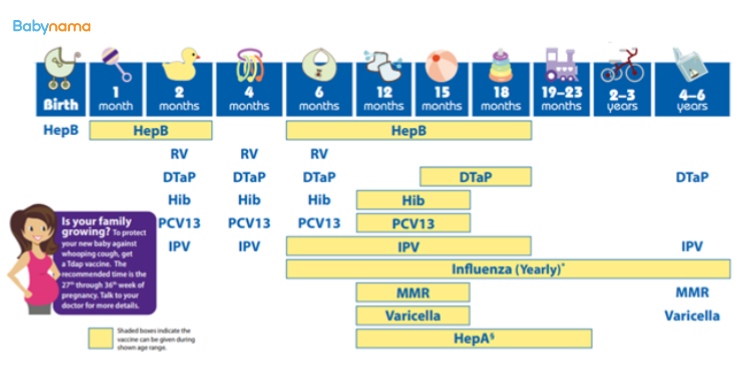
At 15 months, your toddler is walking (or should be close), saying 3-5 words beyond “mama” and “dada”, pointing to communicate, copying other children, and using objects correctly — holding a phone to their ear, drinking from a cup, looking at a book the right way up. This is another milestone checkpoint with your pediatrician. The MMR-2 and Varicella-1 vaccines are due. Self-feeding with fingers is well-established, and your toddler’s personality is unmistakable.
Development Milestones This Month
Movement & Motor Skills
Most 15-month-olds are walking independently, though the gait is still wide-based and wobbly. They can bend over to pick things up, carry objects while walking, and attempt stairs with help. Self-feeding with fingers is confident — your toddler picks up food deliberately and gets it to their mouth efficiently.
- Walking independently — most toddlers are walking by 15 months. If not, see “When to worry” below
- Self-feeding — finger feeding is efficient, spoon attempts getting better
- Stacking — 2+ blocks, deliberately placed
- Functional object use — holds phone to ear, drinks from cup, tries to brush hair
If your toddler is not yet walking at 15 months, it’s worth a conversation with your pediatrician — not panic, but a check. Walking range extends to 18 months, but by 15 months most pediatricians want to see at least some independent steps or a clear trajectory toward them.
Language & Communication
At 15 months, the typical developmental check expects your toddler to try 1-2 words beyond “mama” and “dada.” Most toddlers at this age have 3-5 words total. Milestones are ranges, not deadlines. These words may be unclear to outsiders but are consistently used for the same thing.
Pointing is a dominant communication method. Your toddler points to:
- Request — “I want that” (points at a cookie on the counter)
- Share interest — “Look at that!” (points at a dog walking by)
- Answer — points at the right object when you ask “Where’s the ball?”
Pointing to share interest (not just to request) is a critical social-communication milestone. If your toddler points only to request but never to share interest, mention it to your pediatrician.
Social & Emotional
Copying other children is a new milestone. Your toddler watches what other kids do and tries it — if one child bangs a toy, yours will too. If one child runs, yours follows. This observational learning is how toddlers pick up new skills and behaviors.
Showing objects, hugging stuffed animals and people, and clapping when excited all show healthy social-emotional development. Early pretend play is emerging — feeding a doll, talking on a toy phone, stirring in a pot.
The 15-Month Developmental Check
Your pediatrician will assess milestones at the 15-month visit:
- Motor: Walking, self-feeding, stacking blocks
- Language: Words (at least mama/dada + 1-2 others), pointing, following directions
- Social: Copying, showing, joint attention
- Cognitive: Functional object use, problem-solving
The 15-month check is also where developmental screening tools (like the M-CHAT) are sometimes administered to screen for early signs of autism spectrum disorder. This is routine screening, not a diagnosis — it’s a good thing that catches issues early when intervention is most effective.
Feeding Guide
Self-Feeding Is the Norm
By 15 months, your toddler self-feeds with fingers at every meal. Spoon use is developing — some meals they’ll try the spoon, others they’ll abandon it for hands. Both are fine. Let them lead.
What a Day of Eating Looks Like
| Meal | Options |
|---|---|
| Breakfast | Paratha with curd, upma, egg in any form, ragi porridge, dosa |
| Mid-morning snack | Fruit (banana, mango, apple slices), cheese cubes, ragi biscuit |
| Lunch | Dal + rice + sabzi, rajma chawal, curd rice, roti + paneer bhurji |
| Afternoon snack | Makhana, steamed corn, peanut butter on roti strips, curd with fruit |
| Dinner | Khichdi, vegetable pulao, dalia, roti + dal |
| Milk | 300-400 ml cow’s milk or breast milk through the day |
Iron-Rich Foods to Prioritize
Between 12-24 months, iron deficiency is common — especially if milk intake is high and solid food intake is low. Prioritize:
- Eggs (especially yolk)
- Green leafy vegetables — palak, methi (cooked with dal or paratha)
- Jaggery with peanuts (gudh-mungfali)
- Ragi — naturally high in iron and calcium
- Meat/fish — if non-vegetarian, these are the best iron sources
- Sprouted moong/chana — iron + vitamin C for better absorption
Pair iron-rich foods with vitamin C (lemon, amla, orange) for better absorption. Avoid giving milk with iron-rich meals — calcium blocks iron absorption.
Picky Eating Continues
This is the era of food refusal. Some days your toddler eats enthusiastically, other days they survive on two bites of roti and milk. This is normal toddler eating. Look at the weekly pattern, not the daily intake. If your toddler has energy, is growing, and isn’t losing weight — they’re eating enough.
Sleep This Month
Total sleep: 11-14 hours Night sleep: 10-11 hours Naps: Most on 1 nap (midday, 1.5-2.5 hours) Wake windows: 4-5.5 hours
One Nap Schedule
Most 15-month-olds have transitioned (or are transitioning) to 1 nap. A typical schedule:
- Wake: 6:30-7:00 AM
- Nap: 12:00-2:00 PM (adjust based on your child)
- Bedtime: 7:00-7:30 PM
If your toddler is still on 2 naps and doing fine — sleeping well at night, happy during the day — there’s no rush to transition.
Vaccination Schedule
Due at 15 Months (IAP Schedule)
| Vaccine | Details |
|---|---|
| MMR-2 | Measles, Mumps, Rubella — second dose |
| Varicella-1 | Chickenpox vaccine — first dose (optional/paid) |
| PCV Booster | Due at 15 months (booster dose after primary series at 6 and 14 weeks) |
MMR-2 at 15 months ensures strong, lasting immunity against measles, mumps, and rubella. Mild fever or rash 7-10 days after the vaccine is a normal immune response. If your toddler has a high fever that won’t settle, difficulty breathing, a seizure, or is unusually drowsy or floppy, see a doctor the same day.
Varicella (chickenpox) vaccine is optional but recommended — chickenpox can cause serious complications in some children. The second dose is given at 4-6 years.
Common Concerns
”My 15-month-old isn’t walking yet”
This warrants a conversation with your pediatrician. While the normal range extends to 18 months, by 15 months most babies are walking and your doctor will want to check muscle tone, reflexes, and overall motor development. This doesn’t mean something is wrong — many late walkers turn out fine — but it’s worth a professional assessment rather than “wait and see” at this point.
”Only says 2-3 words — is that enough?”
At 15 months, having “mama”, “dada”, and 1-2 other words is within normal range. The more important signs are: does your toddler point? Do they follow simple directions? Do they understand words even if they don’t say them? Do they babble with consonants? If pointing and understanding are present, the words will likely follow. If there’s no pointing, no understanding of words, and no attempt at words — discuss with your pediatrician.
Toddler Biting and Hitting
Around 15 months, some toddlers bite, hit, or pull hair. This is almost always frustration-based — they can’t express themselves verbally, so they express physically. It’s not aggression in the adult sense.
How to handle:
- Say “No biting/hitting” firmly and calmly
- Remove them from the situation briefly
- Give words for the feeling: “You’re angry. You wanted that toy.”
- Don’t bite/hit back “to show them how it feels” — this teaches violence
- It typically decreases as language develops over the next 6-12 months
Molar Teething
First molars may appear between 13-19 months. These are larger teeth and can cause more discomfort than incisors. Signs: drooling, chewing on hands, irritability, mild sleep disruption, possible low appetite. Chilled teething rings and gentle gum massage help. For pain, Paracetamol is dosed by your baby’s weight, not age: 15 mg/kg per dose, every 4–6 hours, max 4 doses (60 mg/kg) in 24 hours. Check the syrup strength (120 vs 250 mg/5 ml). Confirm the exact mL with your pediatrician.
When to See a Doctor
See your pediatrician if your 15-month-old:
- Is not walking at all (not even a few steps)
- Does not point to show you things or to ask for things
- Does not know what familiar objects are for (cup, phone, brush)
- Does not copy other children or adults
- Has fewer than 3 words (including mama/dada)
- Does not notice or care when a caregiver leaves or returns
- Does not follow simple directions with gestures
- Has lost skills they previously had
The 15-month visit is an important developmental checkpoint. Bring up any concern, however small it seems.
Aapke Sawaal
15 months mein kitne words hone chahiye?
3-5 words total, including mama/dada. “Papa”, “ball”, “doodh”, “nahi” — ye sab count hote hain, chahe clearly na bole. Zyada important hai ki baby point kare, aapki baat samjhe, aur gestures use kare. Agar sirf 2 words hain lekin pointing hai aur samajh hai — toh usually OK hai. Agar koi word nahi hai AUR pointing bhi nahi hai — toh pediatrician se baat karo.
MMR-2 vaccine zaroori hai kya? Pehla dose toh de diya tha
Haan, zaroori hai. Pehla dose 85-90% immunity deta hai. Doosra dose immunity ko 95%+ tak le jaata hai aur lifelong protection deta hai. 15 months pe MMR-2 IAP schedule ka standard part hai. Halka fever ya rash 7-10 din baad aa sakta hai — normal hai. Vaccine se measles nahi hota — ye suno toh kisi ki mat maano.
Baby doosre bacchon ko maarta hai — kya karein?
15 months mein hitting/biting frustration ki wajah se hota hai — baby bol nahi paata toh haath se express karta hai. Ye “aggressive” hona nahi hai. Calmly bolo “nahi maarenge” aur situation se hatao. Feeling ko naam do: “tum gussa ho, tumhe woh toy chahiye tha.” Wapas maarke “seekhana” kabhi kaam nahi karta — ye sirf violence seekhata hai. Language develop hone ke saath (next 6-12 months) ye behavior kam hoga.
15 months mein walk nahi kar raha — kitna worry karein?
15 months tak walk na karna “panic” ki baat nahi hai lekin “check karo” ki baat zaroor hai. Pediatrician se milke muscle tone, reflexes, aur overall motor development check karao. Kuch late walkers bilkul normal hote hain — lekin professional assessment zaroori hai taaki agar koi issue hai toh early intervention mil sake. 18 months tak ka wait karo lekin doctor ko ab dikha do.
Real Questions from Indian Mothers
These are real questions asked by parents in the Babynama community, answered by our pediatricians.
“My Baby is 12 months old Exclusively on bf and solids..she still asks me for breastfeeding more than 10 times a day..even after eating solid food she asks for milk.. how to wean?”
U can continue breastfeeding until 2 years as recommended by WHO. Needn’t worry, as baby gradually increases solids ur breast milk supply wil decrease and baby wil gradually stop milk. As of now u needn’t wean
“hi doctor mere baby 5months ki hui h kya hum usko cow milk de skte h bcz m working women and uska weight 6.8 kg h kya weight gain shi h”
It is recommended to give mother’s milk up to 6 months of age. Why don’t you try expressing the milk and storing the milk . Katori spoon feeding can be done with stored breast milk
General information for Indian parents, not a substitute for your pediatrician. In an emergency, call 112 or 108.