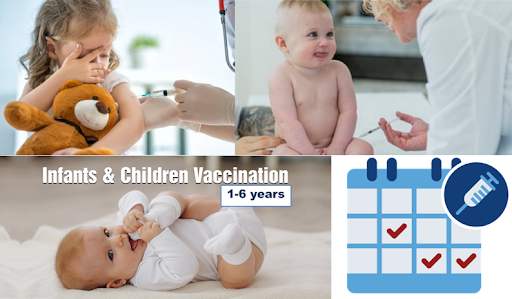
Quick Answer: Vaccines are very safe and one of the most important things you can do for your child’s health. The IAP (Indian Academy of Pediatrics) recommends a specific vaccination schedule that protects children from serious diseases like polio, measles, and diphtheria. Vaccines have been extensively tested and have saved millions of lives. Mild side effects like fever and soreness are common, while serious reactions are rare — and the risk from the diseases themselves is far higher than from the vaccine. Vaccinating your child, mummy-papa, is one of the best things you can do for their health.
Why Should I Vaccinate My Child?
The Facts
| Statement | Reality |
|---|---|
| ”Vaccines are dangerous” | Vaccines undergo rigorous testing - far safer than the diseases they prevent |
| ”These diseases don’t exist anymore” | They’re rare BECAUSE of vaccination - stopping would bring them back |
| ”Natural immunity is better” | Some diseases can kill or disable before natural immunity develops |
| ”Too many vaccines overwhelm babies” | Babies’ immune systems handle thousands of antigens daily |
What Vaccines Protect Against
In India, vaccines protect children from:
- Polio - Paralysis, disability
- Measles - Can be fatal, causes brain damage
- Diphtheria - Throat infection, can suffocate
- Pertussis (whooping cough) - Dangerous for newborns
- Tetanus - Muscle spasms, can be fatal
- Hepatitis B - Liver disease, cancer
- Tuberculosis (TB) - Lung disease, common in India
- Rotavirus - Severe diarrhea
- Pneumococcal disease - Pneumonia, meningitis
- Typhoid - Fever, intestinal problems
- Chickenpox - Complications can be serious
Reassurance: Measles vaccination is estimated to have prevented over 21 million deaths worldwide between 2000–2017 (WHO/CDC, Progress Toward Regional Measles Elimination, Worldwide, 2000–2017). Your child’s vaccines are protecting their future!
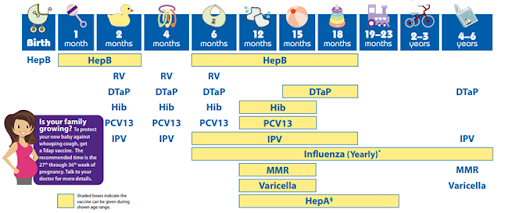
IAP Recommended Vaccination Schedule (India)
Birth to 6 Weeks
| Age | Vaccine | Protects Against |
|---|---|---|
| At Birth | BCG | Tuberculosis |
| At Birth | OPV-0 | Polio |
| At Birth | Hepatitis B-1 | Hepatitis B |
| 6 Weeks | DTwP/DTaP-1 | Diphtheria, Tetanus, Pertussis |
| 6 Weeks | IPV-1 | Polio |
| 6 Weeks | Hib-1 | Haemophilus influenzae |
| 6 Weeks | Hepatitis B-2 | Hepatitis B |
| 6 Weeks | Rotavirus-1 | Rotavirus diarrhea |
| 6 Weeks | PCV-1 | Pneumococcal disease |
10 Weeks to 6 Months
| Age | Vaccine |
|---|---|
| 10 Weeks | DTwP/DTaP-2, IPV-2, Hib-2, Hepatitis B-3, Rotavirus-2, PCV-2 |
| 14 Weeks | DTwP/DTaP-3, IPV-3, Hib-3, Hepatitis B-4, Rotavirus-3, PCV-3 |
| 6 Months | Influenza (annual) |
Note on Hepatitis B: After the birth dose, Hepatitis B is usually given inside the combination (“hexavalent”) shot alongside DTwP/DTaP, IPV and Hib at 6, 10 and 14 weeks, completing by about 6 months — so it is not a separate injection. The exact doses on your child’s card may be labelled differently depending on the brand used. (Source: IAP Immunization Schedule 2025–26, ACVIP.)
9 Months to 2 Years
| Age | Vaccine |
|---|---|
| 9 Months | Measles-containing dose — government UIP gives MR (measles-rubella, no mumps); IAP/private practice may give MMR |
| 9-12 Months | Typhoid conjugate |
| 12 Months | Hepatitis A-1 |
| 15 Months | MMR-2, Varicella-1 (Chickenpox), PCV Booster |
| 16-18 Months | DTwP/DTaP Booster, IPV Booster, Hib Booster |
| 18 Months | Hepatitis A-2 |
Boosters (4-6 Years and Beyond)
| Age | Vaccine |
|---|---|
| 4-6 Years | DTwP/DTaP-2nd Booster, MMR-3, Varicella-2 |
| 10-12 Years | Tdap Booster, HPV (for girls) |
Common Questions Answered
Are Vaccines Safe?
Vaccines are very safe, and serious reactions are rare. Here’s why:
-
All vaccines undergo years of clinical trials before approval
-
They’re monitored continuously even after release
-
The risk from vaccines is far lower than from the diseases
-
Millions of children receive vaccines safely every year Common side effects (usually mild):
-
Mild fever (below 38.5°C)
-
Soreness at injection site
-
Fussiness for 1-2 days
-
Mild rash (some vaccines) Serious reactions (rare):
-
Severe allergic reaction (on the order of about 1 in a million doses)
-
This is why you wait at the clinic after vaccination — 15 minutes for most children, and 30 minutes if your child has a history of a severe allergic reaction (Source: CDC/ACIP General Best Practice Guidelines for Immunization.)
Can My Baby Handle Multiple Vaccines?
YES! Consider this:
- Babies are exposed to thousands of antigens (germs) daily
- A common cold challenges the immune system more than vaccines do
- Combination vaccines reduce the number of injections
- The immune system handles multiple vaccines easily
Do Vaccines Cause Autism?
NO. This has been thoroughly debunked:
- The original study claiming this link was proven fraudulent
- The doctor who published it lost his medical license
- Multiple large studies (millions of children) found NO connection
- Autism signs often appear around the same age as vaccines, leading to false association
Can I Delay or Skip Vaccines?
Not recommended:
- Every day without protection is a day at risk
- Diseases can spread from unvaccinated individuals
- Catch-up schedules exist if you miss doses, but prevention is better
- Talk to your pediatrician if you have specific concerns
Managing Vaccine Side Effects
Before Vaccination
- Ensure baby doesn’t have fever or illness
- Feed baby normally (breastfeeding before/after is fine)
- Inform doctor of any previous reactions
- Stay calm - babies sense anxiety
During Vaccination
For infants:
-
Breastfeed during or immediately after the shot
-
Hold baby close, provide skin-to-skin contact
-
Use swaddling and gentle rocking For older babies/toddlers:
-
Sit on parent’s lap
-
Distract with toy, song, or video
-
Stay calm and confident
-
Praise them afterward
After Vaccination
| Symptom | What to Do |
|---|---|
| Mild fever | Give paracetamol (Crocin/Calpol) — see dosing below |
| Soreness at site | Cold compress, avoid rubbing |
| Fussiness | Cuddle, feed, comfort |
| Mild swelling | Usually settles on its own in 2-3 days |
Paracetamol dosing: Paracetamol is dosed by your baby’s weight, not age: 15 mg/kg per dose, no more often than every 4–6 hours, maximum 4 doses (60 mg/kg) in 24 hours. Syrup strengths differ — Calpol/Crocin come as 120 mg/5 ml and 250 mg/5 ml, so always check the bottle. Do not give to a baby under 3 months without a doctor seeing them first. Confirm the exact mL with your pediatrician. (Standard IAP pediatric paracetamol dosing, 15 mg/kg/dose.)
⚠️ In a baby under 3 months, ANY fever of 100.4°F (38°C) or higher is a medical emergency — see a doctor the same day, even at night. Do not give paracetamol and wait. This applies even after a vaccine.
If your baby is unwell or has a fever on the day of vaccination, tell the doctor before the shot.
When to Call Doctor
Call your pediatrician or go to the nearest hospital straight away if:
- Fever above 40°C (104°F)
- Continuous crying for more than 3 hours
- Severe swelling or rash spreading
🚨 Call 112 (national emergency) or 108 (ambulance), or go straight to the nearest hospital, if you see: difficulty or noisy breathing; swelling of the face, lips or tongue; widespread hives with vomiting; pale, grey or blue skin; floppiness or unresponsiveness; or a seizure. These can be a severe allergic reaction (anaphylaxis). If an adrenaline auto-injector has been prescribed, use it first, then go. Do not wait for a clinic appointment.
Missed a Vaccine? What to Do
| Situation | Action |
|---|---|
| Missed by a few days | Get it as soon as possible |
| Missed by weeks | Continue from where you left off (no restart needed) |
| Multiple missed vaccines | Consult pediatrician for catch-up schedule |
| Unsure of vaccine history | Blood tests can check immunity; doctor can advise |
Good news: You don’t need to restart the entire schedule if you miss a dose. Just pick up where you left off!
Vaccines and Breastfeeding
Can I Breastfeed After Baby Gets Vaccinated?
YES! Breastfeeding after vaccination:
- Provides comfort during pain
- May help reduce fever
- Does not interfere with vaccine effectiveness
- Breastmilk antibodies complement (don’t replace) vaccine protection
Should Breastfeeding Mothers Get Vaccinated?
- Most vaccines are safe while breastfeeding
- Flu vaccine is recommended for nursing mothers
- COVID-19 vaccine is safe while breastfeeding
- Consult doctor for specific concerns
Indian Context: Practical Tips
Government vs Private Vaccination
| Government | Private |
|---|---|
| Free | Paid |
| Basic IAP schedule | Additional optional vaccines available |
| May use DTwP (whole cell) | Usually DTaP (acellular, fewer side effects) |
| Limited combination vaccines | More combination options |
Important: Both provide essential protection. Private clinics may offer more comfort and combination vaccines, but government vaccines are equally effective.
Government (UIP) vs Additional IAP Vaccines
In the government UIP (free):
- BCG, OPV, Hepatitis B, Pentavalent (DPT + Hep B + Hib), IPV, Rotavirus, PCV, and a measles-containing dose given as MR (measles-rubella). Rotavirus and PCV have now been rolled out nationally under the UIP. (Source: MoHFW Universal Immunization Programme.)
Additional vaccines recommended by IAP (usually in private practice):
- Typhoid conjugate, Hepatitis A, Varicella (chickenpox), Influenza (annual), and HPV.
Talk to your pediatrician about which additional vaccines make sense for your child.
Frequently Asked Questions
Q: My family is pressuring me not to vaccinate. What should I do?
A: Share this article and scientific evidence. The diseases vaccines prevent are far more dangerous than any vaccine side effect. Your child’s health comes first.
Q: Can I give paracetamol before vaccination to prevent fever?
A: Not recommended. Giving paracetamol BEFORE vaccination may reduce immune response. Give it AFTER if fever develops.
Q: My baby had a reaction to a previous vaccine. Can they still get vaccinated?
A: It depends on the reaction. Mild fever and fussiness are normal. True allergic reactions are rare. Discuss with your doctor - alternative vaccines may be available.
Q: Is it safe to vaccinate a premature baby?
A: Yes — premature babies need extra protection, and vaccines are given based on chronological age (not corrected age). One important exception: for very small or premature babies under about 2 kg, the birth-dose Hepatitis B may be delayed until the baby reaches roughly 2 kg or is discharged, on the pediatrician’s advice, because the response to the vaccine is weaker at very low birth weight. All other vaccines follow the usual schedule by chronological age. Always confirm your baby’s plan with your pediatrician. (Source: AAP, Immunizations for Preterm Babies; IAP preterm immunization guidance.)
Q: My baby is on antibiotics. Can they get vaccinated?
A: Usually yes, unless they have a fever. Antibiotics don’t affect most vaccines. Consult your doctor.
Q: Are combination vaccines safe?
A: Yes! Combination vaccines (like those covering 5-6 diseases in one shot) are thoroughly tested. They reduce pain for baby and number of clinic visits.
Key Takeaways
- Vaccines are very safe - Extensively tested and monitored; serious reactions are rare
- Follow the IAP schedule - Timely vaccination provides best protection
- Don’t delay - Every day without vaccination is a day at risk
- Mild side effects are normal - Fever and soreness resolve quickly
- No link to autism - This myth has been thoroughly debunked
- Breastfeeding helps - Comfort baby during and after vaccination
- Catch-up is possible - Missed vaccines can be given later
This article was reviewed by pediatricians at Babynama. Last updated: January 2026
This article is general information for Indian parents, not a substitute for examination by your pediatrician. In an emergency, call 112 or 108.
Need personalized guidance? Book a consultation with our pediatricians or explore our Care Plans for 24/7 expert support!
Related Tools