Eruption Cysts in Infants: Causes, Symptoms, and Treatment
Quick Answer
Don’t panic! Eruption cysts (also called teething cysts) look scary but are harmless and usually resolve on their own without any treatment. They appear as bluish-purple or clear bubbles on your baby’s gums when a new daant (tooth) is about to come through. In most cases, the cyst bursts naturally when the tooth erupts. No medical intervention is typically needed.
What is an Eruption Cyst?
An eruption cyst is a fluid-filled sac that forms over a tooth that’s about to break through the gum. Think of it as a little “water bubble” on the masoodhe (gums) where the daant is trying to come out.
Key Facts Parents Should Know:
- Very common: Happens in many babies during teething (daant aana)
- Usually harmless: Looks worse than it is
- Self-resolving: Goes away on its own in most cases
- Painless: Rarely causes significant discomfort
- No infection risk: It’s not an infection
What Does an Eruption Cyst Look Like?
The appearance can vary:
| Type | Appearance | Cause |
|---|---|---|
| Clear/translucent | See-through, dome-shaped swelling | Clear fluid inside |
| Bluish-purple | Blue or purple bump | Contains some blood (called eruption hematoma) |
| Reddish-brown | Darker colored bump | Blood mixed with fluid |
Common Locations:
- Usually appears where front teeth (incisors) come in
- Can occur where molars erupt (less common in infants, more in toddlers)
- Most common on lower front gums
Age-Specific Information
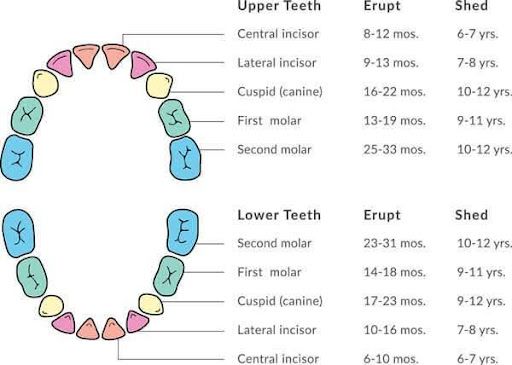
Babies 4-12 Months (First Teeth)
- Most eruption cysts occur during this time
- Usually over the lower front teeth first
- May see one or two at a time
- Resolves within 1-2 weeks typically
Toddlers 12-24 Months
- May occur with lateral incisors or first molars
- Molars can have larger cysts
- Same self-resolving pattern
Children 6-9 Years (Permanent Teeth)
- Can occur when adult teeth come in
- More common with first permanent molars
- Same treatment approach - usually observation
Causes of Eruption Cysts
Eruption cysts happen naturally during teething. Here’s why:
- Normal teething process:
- When a tooth pushes up toward the gum surface, fluid can accumulate between the tooth and gum tissue
- Soft tissue separation:
- The dental follicle (protective covering around the tooth) separates slightly
- Fluid fills this space, creating the cyst
- Blood vessel involvement:
- Sometimes small blood vessels break, causing blood to mix with fluid
- This creates the blue-purple color (eruption hematoma)
Risk Factors (Don’t Worry - These Don’t Mean Problems!):
- Early tooth decay (rare in infants)
- Crowded teeth
- Thick gum tissue
- Genetics - some families see this more often
Symptoms to Watch For
Normal Signs:
- Bluish-purple or translucent bump on gums
- Soft, fluid-filled swelling
- Baby may touch or bite at the area
- Slight increase in drooling
- Mild fussiness
Signs That Everything is Okay:
- Bump is soft, not hard
- No spreading redness
- No fever
- Baby is eating normally
- No pus or bad smell
When to See a Doctor
You Can Wait and Watch If:
- Bump is small (less than 1 cm)
- Baby is comfortable
- No fever
- Eating normally
- Been there less than 2 weeks
See Your Pediatrician or Dentist If:
- Cyst lasts more than 2-3 weeks without the tooth coming through
- Baby seems very uncomfortable or refuses to eat
- There’s spreading redness or swelling beyond the cyst
- You see pus or there’s a bad smell
- Baby has fever
- Multiple large cysts at once
- The cyst is very large (bigger than a pea)
- You’re just worried and want reassurance!
Home Care for Eruption Cysts (Gharelu Upchar)
What You CAN Do:
- Cold Teething Toys:
- Offer chilled (not frozen) teether
- Helps soothe the area
- Pressure may help tooth break through
- Gentle Gum Massage:
- Clean your finger with soap and water
- Gently rub the area around (not directly on) the cyst
- Can provide relief
- Chilled Cloth:
- Wet a clean cloth, chill in fridge
- Let baby chew on it
- Cold Foods (for 6+ months):
- Chilled banana or cucumber
- Cold apple slices
- Frozen fruit in mesh feeder
- Keep Mouth Clean:
- Wipe gums with clean, wet cloth after feeds
- Helps prevent any secondary infection
What NOT to Do:
- Don’t pop or puncture the cyst: This can cause infection
- Don’t apply numbing gels with benzocaine: Not recommended for babies
- Don’t use ice directly: Too cold can damage delicate gum tissue
- Don’t apply honey: Not safe for babies under 1 year
- Don’t ignore it if symptoms worsen: Trust your instincts
Medical Treatment (When Needed)
In rare cases where the cyst doesn’t resolve or is very large:
Simple Incision:
- Done by a pediatric dentist
- Quick procedure under local anesthesia
- Small cut allows fluid to drain
- Tooth usually erupts soon after
- Minimal discomfort
When Surgery is Recommended:
- Cyst persists more than 4-6 weeks
- Tooth is not erupting
- Cyst is infected
- Very large cyst causing feeding problems Reassurance: Most eruption cysts NEVER need treatment. They burst on their own when the tooth pushes through.
Preventing Eruption Cysts
There’s no proven way to prevent eruption cysts since they’re a natural part of teething. However, good oral care helps overall:
- Clean gums daily:
- Even before teeth appear
- Use soft, wet cloth
- Limit sugary foods:
- No fruit juice in bottles
- No sugar on pacifiers
- Regular dental check:
- First visit by age 1
- Teething toys:
- Safe pressure on gums may help teeth come through smoothly
Expert Insight: As our pediatricians remind parents: ‘Milestones have wide ranges. Focus on progress, not comparison.‘
FAQs
Q: Is an eruption cyst the same as a tooth abscess?
A: No! An eruption cyst is harmless and not an infection. A tooth abscess is an infection that causes fever, pus, and needs treatment. Eruption cysts are soft, not painful, and don’t have pus.
Q: My baby’s cyst is dark purple. Should I be scared?
A: No need to worry! A dark purple or blue cyst means there’s a little blood mixed with the fluid (called an eruption hematoma). This is normal and will resolve just like a clear cyst.
Q: Will the cyst damage my baby’s tooth?
A: Not at all. The tooth is safely developing underneath. Once the cyst resolves and the tooth erupts, everything will be completely normal.
Q: How long does an eruption cyst last?
A: Most eruption cysts resolve within 1-2 weeks when the tooth erupts. Some may last up to 3-4 weeks. If it persists longer, consult a dentist.
Q: Can eruption cysts happen with every tooth?
A: They can, but usually don’t. Most babies get them only once or twice during the teething process, or not at all.
Q: Should I take my baby to the dentist for an eruption cyst?
A: For most eruption cysts, no dental visit is needed. See a dentist if the cyst lasts more than 3 weeks, is very large, appears infected, or if you’re worried.
This article was reviewed by a pediatric dentist. Last updated: January 2025
Worried about your baby’s gums? Chat with Babynama’s pediatricians on WhatsApp for quick reassurance and guidance.
Need personalized guidance? Book a consultation with our pediatricians or explore our Care Plans for 24/7 expert support!
Related Tools