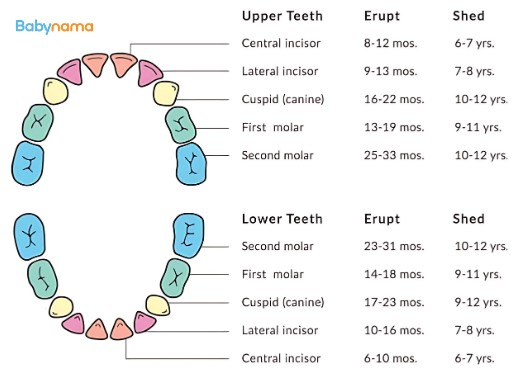
Eruption Cyst (Teething) In Infants: Causes & Treatment
Quick Answer
Relax, mummy-papa! That bluish bump on your baby’s gums is likely an eruption cyst - a harmless, fluid-filled bubble that forms during teething (daant aana). It looks alarming but almost always resolves on its own when the tooth breaks through. No treatment is needed in most cases. It’s a normal part of your baby’s teething journey!
What Parents Need to Know First
When you spot a strange blue or purple bump on your baby’s masoodhe (gums), your first instinct might be to panic. But here’s the reassuring truth:
- It’s common: Many babies develop eruption cysts
- It’s harmless: Not an infection, not dangerous
- It’s temporary: Usually goes away in 1-2 weeks
- It needs no treatment: Nature takes care of it
Understanding Eruption Cysts in Simple Terms
What Exactly Is It?
Imagine a small “pani wala bubble” (water bubble) sitting on top of a tooth that’s trying to come out. That’s an eruption cyst. When a tooth pushes up through the gum, sometimes fluid collects in the space between the tooth and the gum surface, creating this bubble.
Why Does It Look Blue or Purple?
- Clear/white: Contains clear fluid only
- Blue/purple: Contains a little blood mixed with fluid (called eruption hematoma)
- Reddish-brown: Contains more blood The color doesn’t indicate anything serious - it just depends on whether tiny blood vessels were disturbed as the tooth moved up.
Age-by-Age Guide
4-7 Months (Early Teethers)
What to expect:
- Baby may show teething signs before you see any cyst
- If a cyst appears, it’s usually small
- Lower front teeth area most common Your action: Just observe. Keep the area clean.
6-12 Months (Typical First Teeth)
What to expect:
- Most eruption cysts occur during this time
- May see cyst before tooth appears
- Cyst usually resolves when tooth emerges Your action: Offer teething toys. Cold compress if baby seems uncomfortable.
12-24 Months (More Teeth Coming)
What to expect:
- Cysts can occur with any tooth
- Molars may have larger cysts
- Same pattern of natural resolution Your action: Same observation approach. See dentist if concerned.
Signs and Symptoms
What You’ll See:
- Dome-shaped swelling on the gum
- Soft, fluid-filled bubble
- Size: Usually 5-10mm (size of a pea or smaller)
- Color: Clear, blue, purple, or reddish
What Your Baby May Experience:
- May be completely unbothered
- Slight increase in drooling
- May want to chew or bite more
- Occasionally fussy (but often not!)
What You WON’T See (If It’s Just a Cyst):
- No fever
- No pus
- No spreading redness
- No bad smell
- No refusal to eat
Home Care Tips (Ghar Par Kya Karein)
DO This:
- Keep the Area Clean:
- Wipe gums with clean, wet muslin cloth
- Do this after feeds
- Prevents any secondary issues
- Offer Cold Comfort:
- Chilled teething ring (from fridge, not freezer)
- Clean cold cloth for baby to chew
- Frozen banana in mesh feeder (for 6+ months)
- Gentle Gum Massage:
- Wash hands well
- Use clean finger
- Massage gently around the area
- Give Teething Toys:
- Silicone teethers (Mee Mee, Chicco, Pigeon)
- Texture helps and is safe
- Pressure may help tooth emerge
- Continue Normal Feeding:
- Don’t stop breastfeeding or bottle
- Baby may eat a bit less temporarily
- This is okay
DON’T Do This:
- Never pop or puncture it: This can cause infection
- Don’t apply numbing gels: Not safe for babies
- No ice directly: Too cold damages tissue
- No home remedies on the cyst: Keep it natural
- Don’t worry excessively: Stress doesn’t help!
When to Call the Doctor
You Can Wait and Watch If:
- Baby is eating normally
- No fever
- Baby is happy and playful
- Cyst has been there less than 2 weeks
- Bump is soft and small
See Your Pediatrician or Dentist If:
- Cyst persists beyond 3-4 weeks
- Baby has fever
- Baby refuses to eat or drink
- You see pus or spreading redness
- There’s a bad smell
- Cyst is very large (bigger than a pea)
- Baby seems in significant pain
- You’re worried and want peace of mind
What the Doctor Will Do (If Needed)
In rare cases where treatment is needed:
- Examination: Doctor will check if it’s truly an eruption cyst
- Observation: Often, they’ll recommend waiting and watching
- Simple procedure (rare): A tiny cut to drain the fluid if the cyst is very large or not resolving
- Follow-up: Ensure the tooth erupts normally Good news: Over 95% of eruption cysts need NO treatment at all!
Common Myths Busted
Myth 1: “Eruption cysts are a sign of bad oral health”
Truth: They happen in perfectly healthy babies with excellent oral care. It’s just a variation of normal teething.
Myth 2: “I should pop it to help the tooth come out”
Truth: Never! This can introduce bacteria and cause infection. Let it resolve naturally.
Myth 3: “Blue color means internal bleeding emergency”
Truth: The blue color is just a small amount of blood mixed with fluid - completely harmless and will resolve.
Myth 4: “My baby needs antibiotics”
Truth: Eruption cysts are not infections. Antibiotics are not needed unless there’s a true secondary infection (which is rare).
Myth 5: “This will damage my baby’s tooth”
Truth: The tooth is safely developing underneath. Once the cyst resolves, you’ll have a perfect pearly white daant!
Expert Insight: As our pediatricians remind parents: ‘Milestones have wide ranges. Focus on progress, not comparison.‘
FAQs
Q: My baby has a blue bump on their gum. Is this an emergency?
A: Most likely not! If baby has no fever, is feeding well, and isn’t in severe distress, it’s probably an eruption cyst. Watch it for a few days. It usually resolves when the tooth comes through.
Q: How long until the cyst goes away?
A: Usually 1-2 weeks, when the tooth erupts. Some may take up to 3-4 weeks. If it lasts longer, see a dentist.
Q: Can I give pain medicine for the cyst?
A: Most eruption cysts don’t cause pain. If your baby seems uncomfortable, a doctor-approved dose of paracetamol (Crocin/Calpol) is safe. Consult your pediatrician for correct dosing.
Q: Will my baby get eruption cysts with every tooth?
A: Usually not. Most babies who get them only experience one or two during the entire teething process.
Q: Is this genetic? Will my other children have it too?
A: There’s no strong genetic link. Each child’s teething experience is different.
Q: The cyst burst on its own. Is that okay?
A: Yes! This is exactly what’s supposed to happen. The tooth will now come through. Just keep the area clean.
This article was reviewed by a pediatric dentist. Last updated: January 2025
Questions about your teething baby? Chat with Babynama’s pediatricians on WhatsApp for personalized guidance anytime.
Need personalized guidance? Book a consultation with our pediatricians or explore our Care Plans for 24/7 expert support!
Related Tools