Quick Answer
Tuberculosis (TB) in children is TREATABLE and CURABLE with proper medication! India has high TB burden, but with early diagnosis and complete treatment, children recover fully. If your child has prolonged cough (2+ weeks), unexplained fever, weight loss, or has been exposed to someone with TB, get them tested. BCG vaccine at birth provides protection, and TB treatment is available FREE at government hospitals.
What Is Tuberculosis? (TB Kya Hai)
Understanding TB
Key facts:
-
Caused by Mycobacterium tuberculosis bacteria
-
Spread through air (coughing, sneezing)
-
Most commonly affects lungs
-
Can affect other organs too
-
India has the world’s highest TB burden (roughly a quarter of global cases) In children:
-
Often get TB from infected adults in household
-
Children usually don’t spread TB to others
-
Can be latent (no symptoms) or active (sick)
Types of TB
| Type | Meaning | Symptoms | Contagious |
|---|---|---|---|
| TB exposure | Been around someone with TB | None | No |
| Latent TB infection | Bacteria in body, not active | None | No |
| Active TB disease | Bacteria causing illness | Yes, sick | Usually not in children |
How Children Get TB
Transmission
Main ways:
- Close contact with adult who has active lung TB
- Breathing in bacteria when infected person coughs/sneezes
- Usually requires prolonged exposure
- Most common source: household member Risk factors:
| Risk Factor | Why It Matters |
|---|---|
| Household contact with TB patient | Most common cause in children |
| Crowded living conditions | More exposure risk |
| Malnutrition | Weakened immunity |
| HIV infection | Compromised immunity |
| Under 5 years age | Immature immune system |
| Not vaccinated (BCG) | Less protection |
Signs and Symptoms (Lakshan)
When to Suspect TB
Classic symptoms:
- Cough lasting more than 2 weeks (khansi jo theek nahi ho rahi)
- Fever lasting more than 2 weeks (bukhar)
- Night sweats (raat ko pasina)
- Unexplained weight loss (wajan kam ho raha hai)
- Loss of appetite (bhook nahi lagti)
- Fatigue, weakness
Symptoms in Children
May differ from adults:
- Persistent fever (low-grade, ongoing)
- Poor weight gain or weight loss
- Cough (may not always be present)
- Enlarged lymph nodes (especially neck)
- Reduced playfulness, tiredness
- Not growing well
By Age Group
| Age | Common Presentations |
|---|---|
| Infants | Poor feeding, failure to thrive, fever |
| Toddlers | Fever, cough, weight loss, swollen glands |
| Older children | More like adults: cough, fever, night sweats |
TB in Other Organs
TB can affect:
- Lungs (most common) - cough, fever
- Lymph nodes - swollen glands in neck
- Bones/spine - pain, deformity
- Brain (TB meningitis) - headache, vomiting, seizures - EMERGENCY
- Abdomen - stomach pain, swelling
When to Worry (Red Flags)
Seek Immediate Help If:
- Contact with known TB patient + any symptoms
- Persistent fever not responding to treatment
- Cough more than 2 weeks
- Unexplained weight loss
- Severe headache with vomiting (possible TB meningitis)
- Swelling in neck that doesn’t go away
- Child not growing or gaining weight
Emergency Signs:
- Stiff neck with fever
- Seizures
- Altered consciousness
- Difficulty breathing
- Coughing blood
🚨 If your child has any of these signs, this is an emergency. Take your child to the nearest hospital immediately, or call 112 (national emergency) or 108 (ambulance). These can be signs of TB meningitis or other serious illness and need urgent care.
Diagnosis
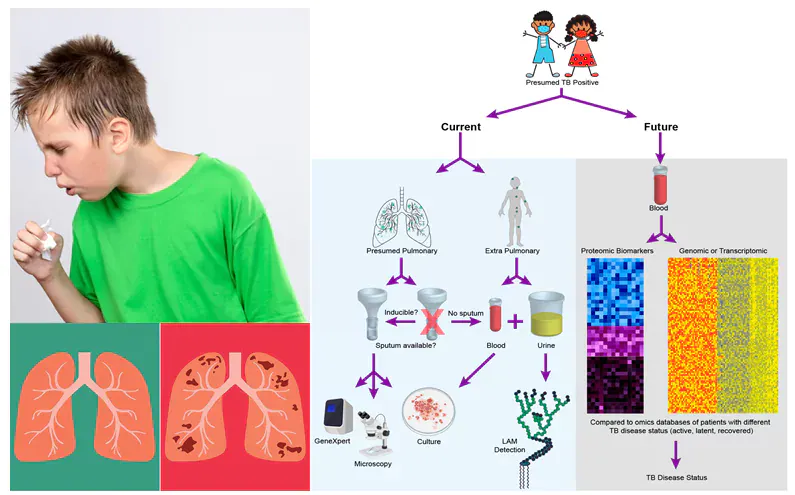
How TB Is Detected
Tests used:
| Test | What It Shows | Notes |
|---|---|---|
| Mantoux/TST (skin test) | TB exposure/infection | Positive in infection, may be false negative |
| Chest X-ray | Lung involvement | Important for diagnosis |
| Sputum test (GeneXpert) | Active TB bacteria | Difficult to get from children |
| Gastric aspirate | TB bacteria | For children who can’t cough sputum |
| IGRA blood test | TB infection | Alternative to skin test |
Diagnosis in children is often “clinical” - based on:
- Contact history
- Symptoms
- Tests
- Response to treatment
Getting Tested
Available at:
- Government hospitals (FREE)
- DOTS centers
- Private hospitals
- Any TB diagnostic center
Treatment (Ilaj)
TB Is Curable!
Standard treatment:
- Combination of antibiotics
- Duration: 6 months (or longer for some types)
- First 2 months: 4 drugs (intensive phase)
- Next 4 months: 2 drugs (continuation phase) Treatment is FREE under the government’s National TB Elimination Programme (NTEP, formerly RNTCP)!
Medicines Used
| Medicine | Abbreviation |
|---|---|
| Isoniazid | H |
| Rifampicin | R |
| Pyrazinamide | Z |
| Ethambutol | E |
Child-friendly formulations available!
Importance of Complete Treatment
Why you must complete:
- Stopping early causes drug-resistant TB
- Drug-resistant TB is harder to treat
- Full course ensures cure
- Prevents spread to others NEVER stop medicines even if child feels better!
What You Can Do (Ghar Pe Kya Karein)
During Treatment
Medication management:
-
Give medicines at same time daily
-
Give on empty stomach (or as directed)
-
Never miss doses
-
Complete full course (6 months)
-
Regular follow-up appointments Nutrition is key:
-
High-protein diet (eggs, dal, paneer, meat)
-
Fresh fruits and vegetables
-
Adequate calories (child needs extra nutrition)
-
Vitamin supplements if advised Home care:
-
Ensure good ventilation
-
Good hygiene practices
-
Adequate rest
-
Emotional support
Supporting Recovery
| Do | Avoid |
|---|---|
| Give all medicines on time | Skipping doses |
| Nutritious diet | Junk food only |
| Fresh air, sunlight | Crowded, closed spaces |
| Regular doctor visits | Ignoring follow-ups |
| Encourage rest | Overexertion |
Prevention (Bachao)
BCG Vaccine
Given at birth:
- Part of universal immunization program
- Provides protection especially against severe forms
- TB meningitis prevention in children
- Available FREE at government hospitals Note: BCG does not fully prevent TB, but it reduces the risk of severe disease (like TB meningitis) in young children
Preventing Transmission
If adult in house has TB:
- Adult should complete their treatment
- Adult should cover mouth when coughing
- Good ventilation in home
- Children may need preventive treatment (IPT)
- Regular screening of child
Infection Prevention Treatment (IPT)
For children exposed to TB but not infected:
- 6 months of isoniazid
- Prevents development of active TB
- Very important for children under 5
- Ask doctor about this
Government Resources
Free TB Services in India
DOTS Program provides:
-
Free diagnosis
-
Free treatment
-
Free monitoring
-
Available at government hospitals Nikshay (National TB Program):
-
Patient registration
-
Treatment monitoring
-
Nutritional support (Nikshay Poshan Yojana - Rs 500/month)
Where to Go
- Government hospital TB clinic
- Primary Health Center (PHC)
- DOTS center
- District TB Center
Prognosis
Outlook for Children
Good news:
- TB is CURABLE
- Most children respond well to treatment
- Full recovery with complete treatment
- Can return to normal life after treatment Key to success: Complete the full course of treatment!
Frequently Asked Questions
Q: Ghar mein kisi ko TB hai. Bachche ko bhi ho sakta hai?
A: Yes, children usually get TB from adults at home. If someone has active TB, get your child tested. Doctor may recommend: Mantoux test, chest X-ray. Even if tests are negative, child may need preventive treatment (IPT) for 6 months. Most important: ensure the adult completes their treatment! Good ventilation and covering cough helps prevent spread.
Q: BCG lagwa diya toh TB nahi hoga?
A: BCG provides partial protection, especially against severe forms like TB meningitis. But it doesn’t fully prevent lung TB. Even vaccinated children can get TB if exposed. BCG scar is not guarantee of immunity. If child has symptoms or exposure, still get tested. BCG is important but does not give full protection.
Q: TB ka ilaj FREE hota hai kya?
A: YES! TB diagnosis and treatment is FREE under the government’s National TB Elimination Programme (NTEP). Available at government hospitals, PHCs, and DOTS/treatment centers. Treatment includes all medicines for 6 months. Also Nikshay Poshan Yojana provides Rs 500/month nutrition support. Register at any government TB center.
Q: Bachche ko TB hai. Kya school bhej sakte hain?
A: After starting treatment, children usually become non-infectious within 2-3 weeks. Pediatric TB is generally less contagious than adult TB. Doctor will advise when safe to return to school (usually after 2-4 weeks of treatment). Ensure child takes medicines on time, even at school. Inform school if needed.
Q: TB ke 6 mahine baad bhi dawai khilani padegi?
A: Standard TB treatment is 6 months - no longer needed after that IF completed properly. Some forms (bone TB, TB meningitis) need longer treatment (9-12 months). NEVER stop before completing course even if child seems well - this causes drug-resistant TB which is very difficult to treat. After completion, no ongoing medicine needed.
This article was reviewed by Babynama Pediatricians. Last updated: January 2025
Disclaimer: This article is for general information for parents in India and is not a substitute for professional medical advice. TB in children must be diagnosed and treated by a qualified doctor — never start, change, or stop TB medicines on your own, as incomplete treatment can cause drug-resistant TB. In an emergency, call 112 (national emergency) or 108 (ambulance), or go to your nearest hospital. Always consult your pediatrician or a government TB centre for advice specific to your child.
Concerned about TB exposure or symptoms in your child? Babynama’s pediatricians can guide you on testing and treatment. Chat with us on WhatsApp!
Need personalized guidance? Book a consultation with our pediatricians or explore our Care Plans for 24/7 expert support!
Related Tools