Quick Answer: Nutrition Milestones at a Glance
| Age | What to feed | How often |
|---|---|---|
| 0–6 months | Breast milk only (or formula) | On demand, 8–12 feeds/day (newborn) |
| 4–6 months | Breast milk/formula; Vitamin D drops from Day 1 | 6–8 feeds/day |
| 6–8 months | Breast milk + soft purées and mashes; start iron-rich foods first | 2–3 solid meals + frequent milk feeds |
| 9–11 months | Breast milk + finger foods, lumpy textures, family foods | 3 solid meals + 2 snacks + milk feeds |
| 12–18 months | Whole cow milk introduced; family table foods | 3 meals + 2 snacks; 2–3 cups milk/day |
| 18–36 months | All family foods; focus on variety | 3 meals + 2 snacks |
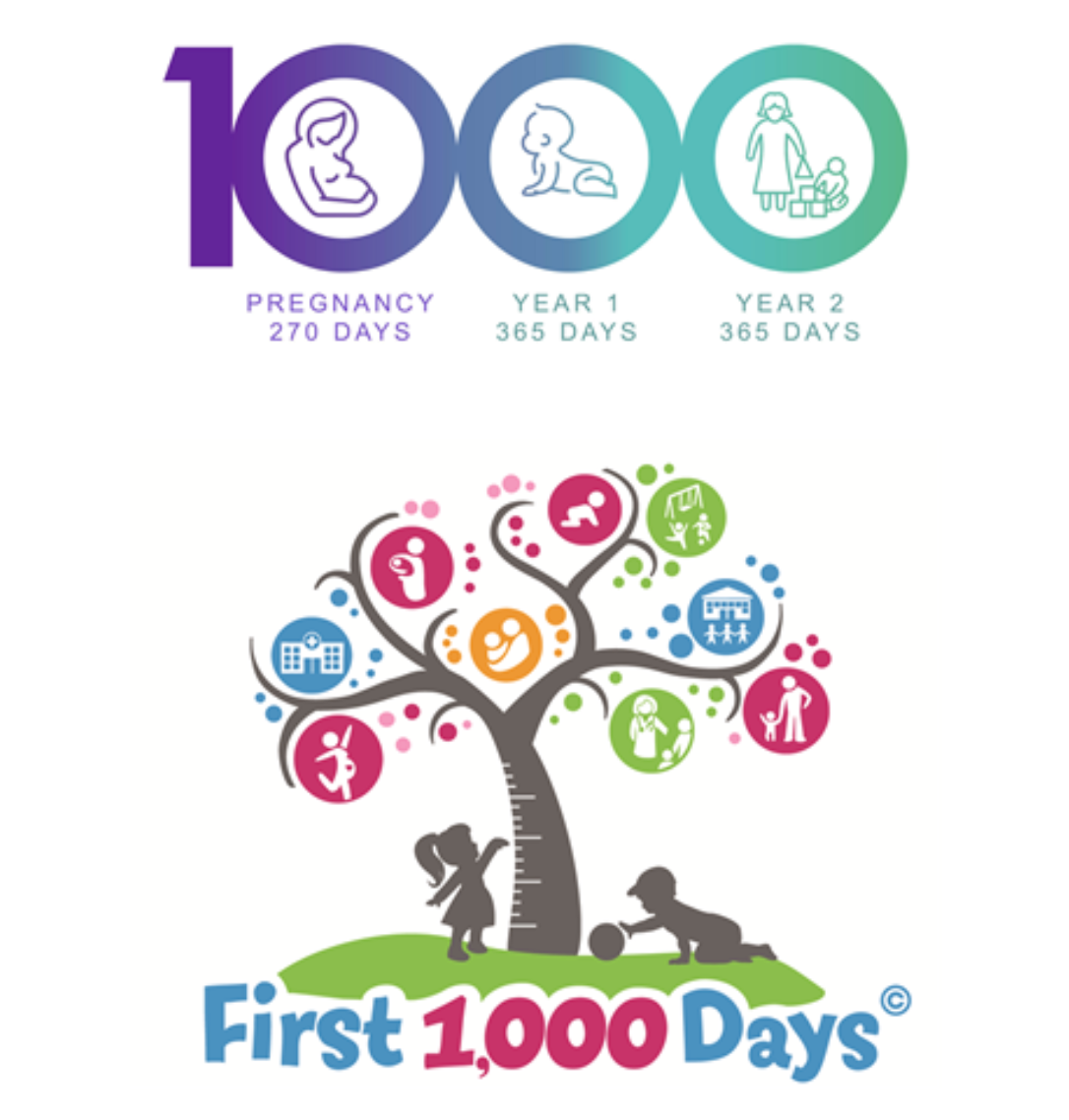
The first 1,000 days — from conception to your baby’s second birthday — are the single most important window for nutrition. Deficiencies during this period affect brain development, immunity, and growth in ways that are hard to reverse later.
Breast Milk and Formula: 0–6 Months
Breast milk is the gold standard
Exclusive breastfeeding for the first 6 months is recommended by the Indian Academy of Pediatrics (IAP), WHO, and every major health body globally. Breast milk is not just nutrition — it contains antibodies, growth factors, hormones, and live cells that no formula can replicate.
How much, how often:
- Newborns feed 8–12 times every 24 hours. This is normal. Hunger cues (rooting, sucking hands, turning head) are more reliable than the clock.
- By 1 month, most breastfed babies settle into 7–9 feeds per day.
- By 4 months, 6–8 feeds per day is typical.
- It is very hard to overfeed a breastfed baby. A breastfed baby who is gaining weight and producing 6+ wet nappies per day is usually getting enough. If your baby is feeding poorly, very sleepy, has fewer than 6 wet nappies, or is not gaining weight, see your pediatrician.
Vitamin D drops: start from Day 1
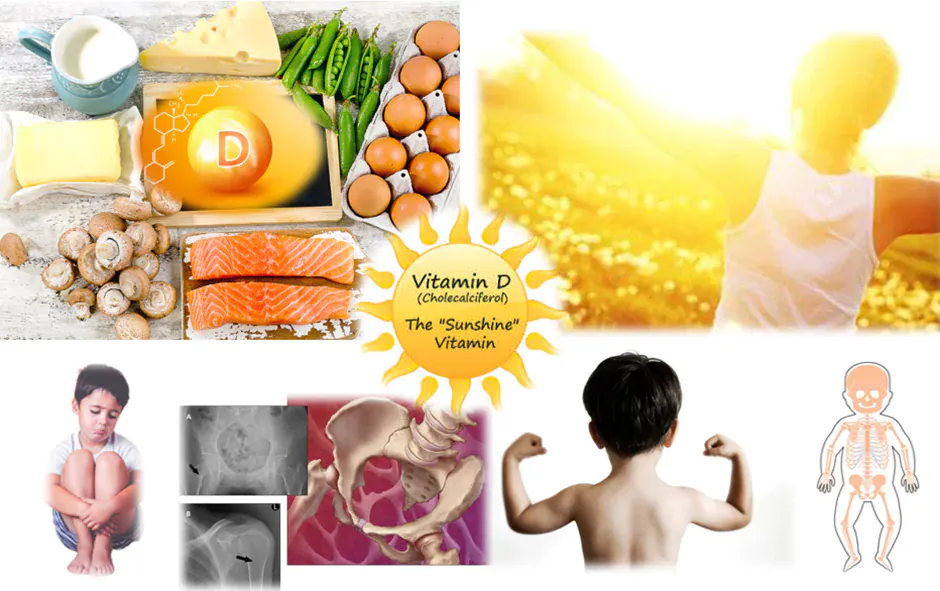
This is one of the most important things Indian parents miss. The IAP recommends 400 IU of Vitamin D3 drops daily for all breastfed babies from birth — regardless of whether the mother is supplementing herself or whether you live in a sunny city. Breast milk does not contain enough Vitamin D, full stop. Formula-fed babies who drink at least 500 ml of formula daily get adequate Vitamin D from the fortified formula and do not need separate drops.
Ask your pediatrician for a brand — common options include Calcitas D, D-Rise, or Calcigen D drops. A single drop per day is all it takes.
If you are formula feeding
Formula is a complete and nutritionally adequate alternative to breast milk. There is no nutritional reason to feel guilty about using formula. Choose a standard cow milk-based infant formula (Stage 1 / NAN, Similac, Dexolac, Aptamil are common in India) unless your doctor advises a specialised formula (e.g., for colic, reflux, or cow milk allergy).
Preparation rules that matter:
- Always boil and cool water before making formula. Use water at 70°C (not fully cooled) to kill potential bacteria in the powder.
- Do not dilute formula. Follow the scoop-to-water ratio exactly.
- Discard any formula your baby does not finish within 1 hour of starting a feed.
- Never add extra scoops thinking it will help your baby gain more weight — this is a common and dangerous mistake.
How much formula:
- 0–4 months: approximately 150–200 ml per kg of body weight per day, divided into feeds.
- A 3 kg newborn needs roughly 450–600 ml per day, split across 8 feeds (about 60–75 ml per feed initially).
- By 4 months, most formula-fed babies take 150–200 ml per feed, 5–6 times a day.
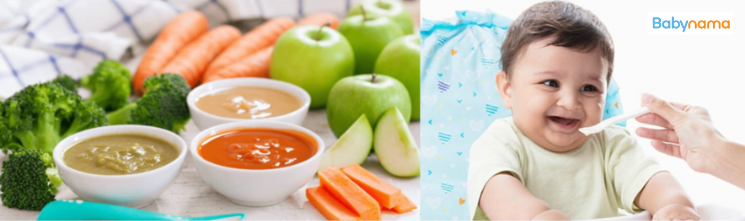
Starting Solids at 6 Months
The full guide is in our Starting Solids guide. The key points for nutrition:
- Start at 6 months, not before. The digestive system is not ready before this.
- The first foods do not need to be bland single-ingredient purées — the evidence now supports offering a variety of tastes and textures early.
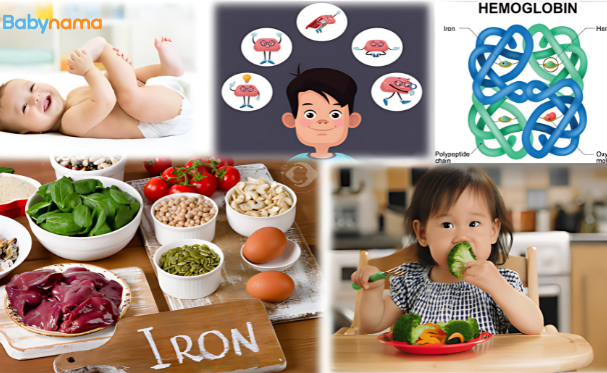
- Start with iron-rich foods. This is the most important principle. Breast milk iron is well absorbed, but after 6 months, babies need dietary iron. Fortified cereals, meat, dal, and ragi are the building blocks of early feeding.
- Continue breast milk or formula alongside solids until at least 12 months.
Iron-Rich Indian Foods for Babies
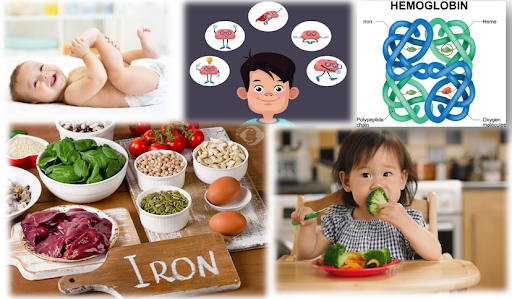
Iron deficiency is the most common nutritional deficiency in Indian children. National surveys consistently find that a large share of Indian children under 2 — well over half in many surveys — have anaemia or some degree of iron deficiency. The consequences — impaired brain development, poor immunity, fatigue — are serious and largely preventable with food.
The critical point: There are two types of dietary iron.
- Haem iron (from animal sources) is absorbed at 15–35%
- Non-haem iron (from plant sources) is absorbed at only 2–8% — but absorption increases significantly when paired with Vitamin C
| Food | Iron content | How to serve |
|---|---|---|
| Ragi (finger millet) | 3.9 mg/100g | Ragi porridge, ragi dosa, ragi khichdi |
| Masoor dal | 7.6 mg/100g cooked | Dal with rice/roti |
| Rajma | 6.4 mg/100g cooked | Boiled and mashed |
| Chicken liver | 8.5 mg/100g | Mashed with dal or rice |
| Mutton | 2.5 mg/100g | Well-cooked, mashed |
| Pomegranate | 0.3 mg/100g | Fresh juice, seeds |
| Dried apricots (khubani) | 2.7 mg/100g | Soaked and puréed |
| Spinach (palak) | 2.7 mg/100g | Cooked (cooking breaks down oxalate) |
| Methi (fenugreek) | 1.9 mg/100g | Cooked, mixed into khichdi |
Pair with Vitamin C to boost absorption: Dal with tomatoes, palak with lemon, rajma with amla chutney. The iron absorption from plant foods can triple with this combination.
Avoid giving cow milk, tea, or calcium-rich foods alongside iron-rich meals — these significantly reduce iron absorption.
Calcium Sources for Babies and Toddlers
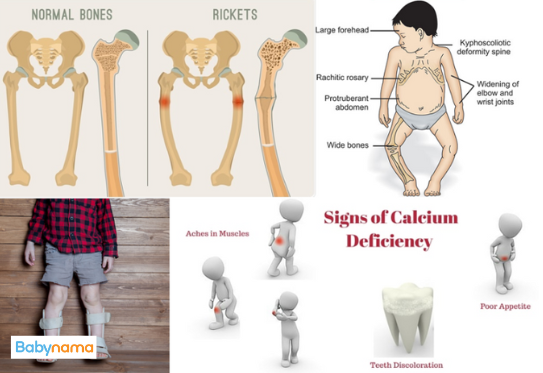
Calcium is essential for bone development, nerve function, and muscle contraction. Indian diets can be excellent for calcium when the right foods are included.
| Food | Calcium content | Notes |
|---|---|---|
| Ragi (finger millet) | 344 mg/100g | The single best plant calcium source in India |
| Sesame seeds (til) | 975 mg/100g | Mix into laddoos, use as powder on food |
| Paneer | 208 mg/100g | Soft paneer from 8 months |
| Dahi (yoghurt) | 120–150 mg/100g | Excellent and easily tolerated |
| Cow milk | 120 mg/100g | Introduce as a drink after 12 months |
| Tofu | 350 mg/100g (if set with calcium salt) | From 8 months |
| Rajma | 83 mg/100g cooked | Regular dal |
| Leafy greens (cooked) | 50–200 mg/100g | Spinach, amaranth, drumstick leaves |
Cow milk as a main drink: Do not use cow milk as the primary drink before 12 months. The protein and sodium load is too high for infant kidneys and it displaces breast milk or formula. Small amounts in cooking (on cereal, in purées) from 8–9 months are fine.
After 12 months, 2–3 cups (approximately 500 ml) of whole cow milk daily meets calcium and Vitamin D needs (if fortified). Full-fat milk is important — toddlers need fat for brain development.
Foods to Avoid by Age
Under 12 months, never give:
- Honey — risk of infant botulism. This is a hard rule. No honey, not even a tiny amount.
- Whole cow milk as main drink — see above.
- Salt — infant kidneys cannot handle sodium. Do not add salt to food until after 12 months.
- Sugar and jaggery — no nutritional benefit; habituates babies to sweet taste; jaggery carries the same botulism risk as honey (use limited after 12 months).
- Whole nuts and other hard, round, or sticky foods (whole grapes, whole nuts, popcorn, hard candy, chunks of raw carrot/apple) — choking hazard. Give nuts as smooth nut butter or finely ground powder; cut round foods lengthwise into small pieces.
- Large fish (shark, swordfish, king mackerel) — high mercury content.
🚨 Choking is an emergency. If your baby is choking and cannot cry, cough, or breathe, give back blows and chest thrusts and call 112 (national emergency) or 108 (ambulance) immediately, or go to the nearest hospital. Learn infant choking first aid before starting solids.
⚠️ Honey and botulism: if a baby under 12 months has eaten honey and develops constipation, weak cry, poor feeding, floppiness, or weak muscle tone, see a doctor the same day — these can be signs of infant botulism.
Under 24 months, minimise:
- Packaged biscuits, rusks, and baby snacks — these typically contain hidden salt, sugar, and refined flour.
- Fruit juices — even 100% juice. The fibre is gone; it is essentially liquid sugar. Whole fruit is always better.
- Cow milk more than 500 ml/day after 12 months — excess milk can displace iron-rich solids and cause milk-induced iron deficiency.
Healthy Indian Meal Ideas by Age
6–8 months (purées and soft mashes)
- Breakfast: Ragi porridge with breast milk, or moong dal water with ghee
- Lunch: Soft-cooked rice + moong dal + mashed pumpkin
- Dinner: Ragi kheer (no sugar), or mashed banana with dahi
- Notes: Introduce one new food every 3 days. Watch for allergies — eggs, groundnut (peanut), and fish are common triggers. Mild reactions (a few hives, mild rash) warrant stopping the food and calling your pediatrician.
🚨 Call 112 (national emergency) or 108 (ambulance), or go to the nearest hospital, if you see: difficulty/noisy breathing; swelling of face/lips/tongue; widespread hives with vomiting; pale/grey/blue skin; floppiness/unresponsiveness; or a seizure. If an adrenaline auto-injector is prescribed, use it first, then go.
Texture should be smooth initially, then gradually lumpier.
9–11 months (soft finger foods and lumpy textures)
- Breakfast: Soft idli with sambar, or oats porridge with mashed banana
- Lunch: Khichdi with dal and chopped vegetables, small pieces of soft roti
- Dinner: Dahi rice, or soft pasta with dal sauce, or egg yolk scrambled soft
- Snacks: Small pieces of ripe mango, soft steamed carrot sticks, banana
- Notes: This is the window to introduce family foods. Babies who eat varied textures at 9–11 months are significantly less likely to be picky at 18 months.
12–18 months (family table foods)
- Breakfast: Egg on toast, poha, upma, or dalia with milk
- Lunch: Roti with dal and sabzi (soft), rice with rajma, or paneer bhurji
- Dinner: Similar to lunch; vary the grain and dal/protein
- Snacks: Banana, boiled egg, small cubes of paneer, soaked dry fruits (chopped small)
- Notes: Introduce cow milk now. Drop formula. Keep breast milk as long as mutually desired.
18–36 months (toddler food)
Full family meals with appropriate textures. Some things to build in:
- Ragi roti, sattu paratha, missi roti for iron and calcium
- Dal in some form daily
- One egg or serving of paneer/chicken daily if possible
- Fruit at every meal for Vitamin C
- Dahi daily for calcium and gut bacteria
Picky Eating: What is Normal and What Actually Works
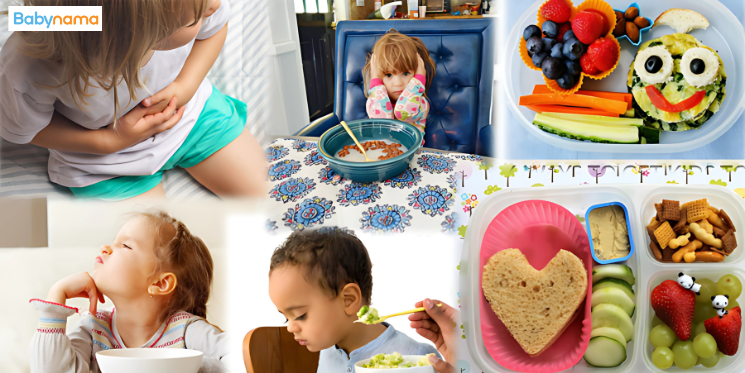
Almost every parent of a 15–24 month old believes their child is a picky eater. Most of them are right — and most of them do not need to worry.
Why it happens: Between 12 and 24 months, growth slows down dramatically. A baby who tripled its birth weight in year one gains only about 2–3 kg in year two. The appetite drops accordingly. This is normal, not a problem.
What backfires:
- Forcing, pressuring, or bribing (“one more bite for Dadi”)
- Distracting with screens during meals
- Offering a safe food every time the child rejects something
- Showing visible anxiety about how much the child eats
These approaches work in the short term and cause worse picky eating long term. They also undermine the child’s ability to regulate their own hunger.
The Division of Responsibility (Ellyn Satter):
This is the evidence-based framework used by dietitians worldwide. It is simple:
- Parent’s job: What food is offered, when it is offered, and where eating happens.
- Child’s job: Whether to eat, and how much.
You serve the meal. They decide whether to eat it. No pressure, no alternative, no anxiety. Repeated exposure to rejected foods without pressure — research shows it takes 10–15 exposures on average before a child accepts a new food — is the only thing that reliably expands the palate.
When to refer: If your child eats fewer than 20 different foods, gags or vomits at textures, refuses entire food groups for more than 2 months, or is losing weight, speak to a pediatric dietitian or occupational therapist. This may be Avoidant/Restrictive Food Intake Disorder (ARFID), not typical picky eating.
Common Nutritional Deficiencies in Indian Babies
Iron Deficiency
As above — the most common. Signs include pallor of inner eyelids and gums, unusual tiredness, reduced appetite, and delayed developmental milestones. Confirmed with a blood test (serum ferritin is the most sensitive test; haemoglobin alone misses early deficiency).
Prevention: Start iron-rich foods at 6 months. For preterm or low birth weight babies, IAP recommends supplemental iron drops at 2 mg/kg/day, started at around 4–6 weeks of age and continued through about 12 months — confirm the exact dose and timing with your pediatrician.
Vitamin D Deficiency
India has a paradox: a tropical country with high rates of Vitamin D deficiency. Melanin (dark skin) reduces Vitamin D synthesis. Most homes have limited outdoor time for babies. Supplements are not optional — they are essential.
- Breastfed babies: 400 IU/day from birth
- After 12 months: 600 IU/day if dietary intake is insufficient
- Signs of severe deficiency: bowing of legs (rickets), delayed tooth eruption, increased fracture risk, recurrent respiratory infections
Vitamin B12 (especially for vegetarian families)
B12 is found almost exclusively in animal products. Vegetarian Indian diets that include dahi and paneer provide some B12, but not reliably enough for infants.
If your family is vegetarian:
- Breastfeeding mother should take a B12 supplement (your doctor will advise the dose; oral doses around 500 mcg/day are commonly used) so the baby receives B12 through her milk
- After weaning, ensure dahi and fortified foods daily, or give a B12 drop/syrup
- Vegan families must supplement — B12 deficiency causes irreversible neurological damage
Signs of B12 deficiency: developmental regression, loss of skills already achieved, unusual irritability, poor weight gain.
Supplements: When Are They Needed?
| Supplement | Who needs it | Dose | When to start |
|---|---|---|---|
| Vitamin D3 | All breastfed babies | 400 IU/day | Day 1 |
| Iron drops | Preterm/LBW babies | 2 mg/kg/day | ~4–6 weeks |
| B12 | Babies of vegan mothers, or vegan babies | Per pediatrician | After 6 months if diet insufficient |
| Vitamin D3 | Toddlers with limited sun/dairy | 600 IU/day | After 12 months if needed |
IAP does not recommend routine multivitamin supplementation for healthy, full-term babies eating a varied diet. If a baby is growing well, eating a range of foods, and getting Vitamin D drops, additional supplements are usually unnecessary. Resist the pharmacy push for “growth tonics” and “appetite stimulants” — none of these have proven efficacy and some contain harmful compounds.
Frequently Asked Questions
Q: My 8-month-old refuses all vegetables. Should I worry?
No. Vegetable refusal is almost universal at this age. Keep offering without pressure. Try different preparations — roasted is often more palatable than steamed. Mix vegetables into dal or khichdi. The goal at 6–9 months is exposure and exploration, not consumption.
Q: Should I give my baby ragi or wheat first?
Either is fine. Ragi is nutritionally superior (more iron and calcium than wheat), but wheat is also safe as a first cereal. There is no evidence that delaying wheat prevents wheat allergy — introduce it normally.
Q: My 18-month-old only wants milk and refuses solids. What do I do?
Limit milk to 2–3 cups (500 ml) per day and space it away from meals. A full milk feed in the hour before a meal blunts appetite significantly. Offer solids first, then milk. Do not use milk as a meal replacement after 12 months.
Q: Is it OK to add ghee to baby food?
Yes. Ghee is a good source of fat-soluble vitamins and calories. A small amount (1/4 to 1/2 teaspoon) added to khichdi or porridge from 6 months is appropriate and traditional for good reason. Do not overdo it — ghee does not need to float on the food.
Q: At what age can I give whole eggs?
Whole eggs (yolk and white) can be introduced from 6 months. Delaying eggs does not prevent egg allergy — in fact, current evidence shows that introducing well-cooked egg around 6 months reduces the risk of egg allergy. Always serve egg fully cooked, never raw or runny.
General information for Indian parents, not a substitute for your pediatrician. In an emergency, call 112 or 108.